

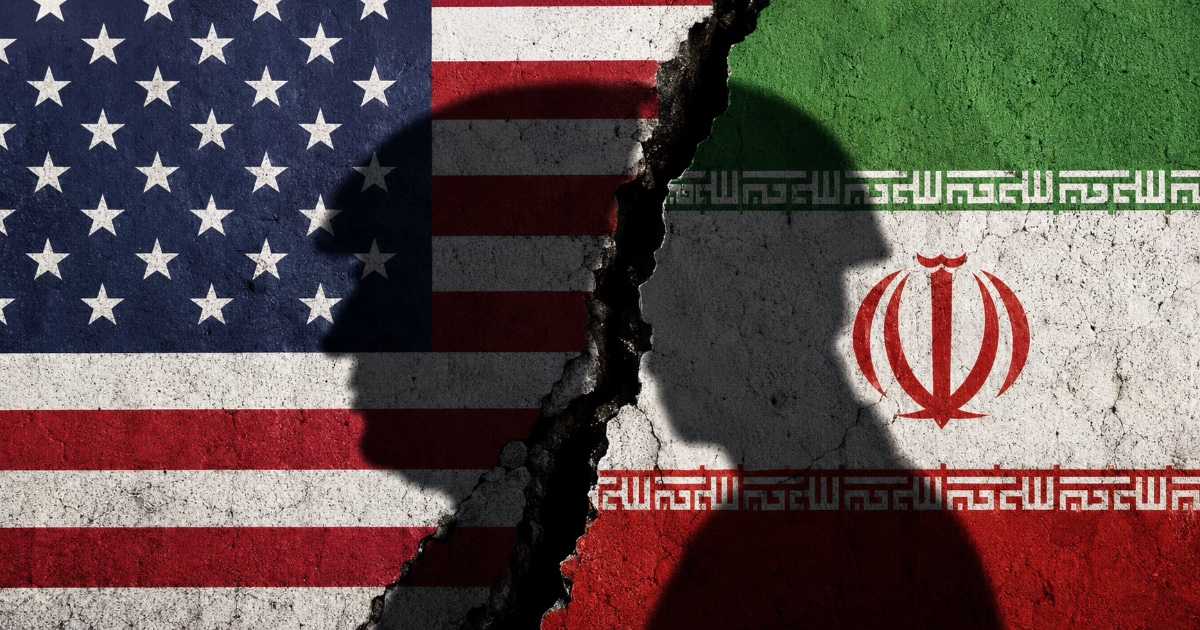
The United States has unveiled another round of sanctions targeting Iran’s financial and energy-related operations, intensifying Washington’s pressure campaign against Tehran at a time of persistent regional instability and fragile diplomatic relations between the two countries.
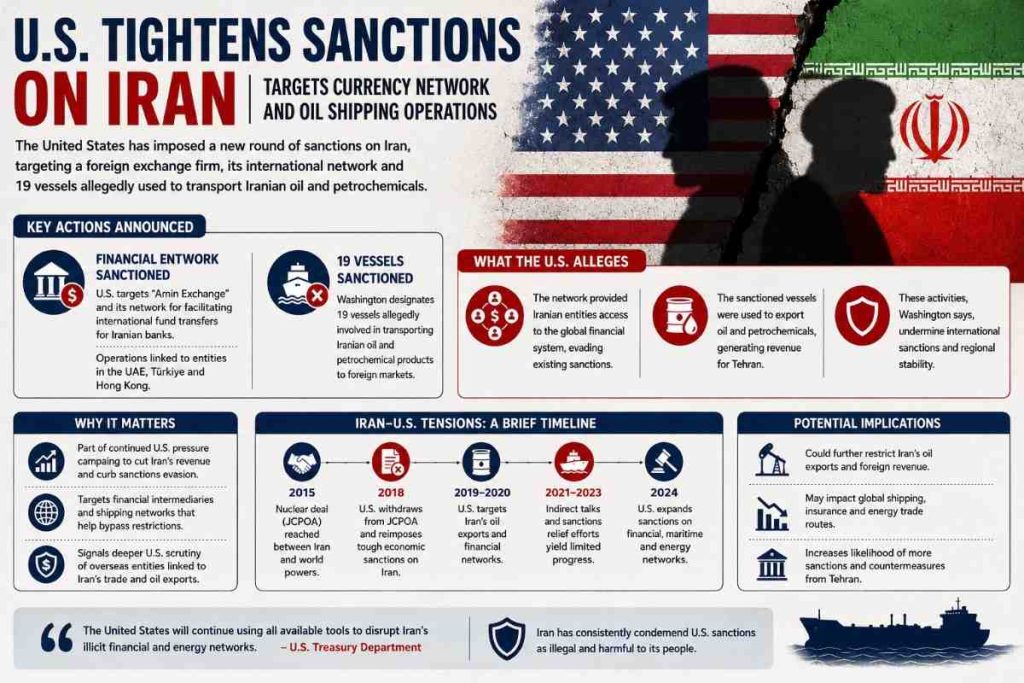
The latest measures, announced by the U.S. Department of the Treasury, focus on a foreign currency exchange company accused of helping Iranian-linked entities move money through international financial systems, along with a wider commercial network spanning multiple jurisdictions. Washington also imposed restrictions on 19 vessels allegedly connected to Iranian oil and petrochemical shipments.
The sanctions reflect the Biden administration’s continuing effort to constrain Iran’s access to foreign revenue sources amid ongoing disputes over Tehran’s nuclear activities, regional influence and sanctions-evasion networks.
Treasury Targets Alleged Financial Facilitation Network
At the center of the new sanctions package is a company identified by U.S. authorities as “Amin Exchange,” which Washington alleges was involved in facilitating foreign exchange and cross-border financial transactions for Iranian banks and associated institutions.
According to the Treasury Department, the network operated through interconnected companies and intermediaries across jurisdictions including the United Arab Emirates, Türkiye and Hong Kong. American officials claim the structure was designed to help Iranian-linked actors bypass existing international restrictions and maintain access to overseas financial systems.
U.S. authorities allege that the network enabled international payments and currency transfers that supported broader Iranian commercial activity despite longstanding sanctions targeting the country’s banking sector.
The latest move signals Washington’s increasing focus not only on direct Iranian entities, but also on the complex overseas financial ecosystems that allegedly help Tehran sustain international trade and revenue generation.
Oil Shipping Remains a Major Focus
Alongside the financial sanctions, the United States imposed restrictions on 19 vessels allegedly linked to the transportation of Iranian oil and petrochemical products.
American officials said the ships were part of broader logistical networks used to move Iranian energy exports across international markets despite existing sanctions regimes.
For years, Iranian oil exports have remained a key area of confrontation between Tehran and Washington. While U.S. sanctions formally restrict much of Iran’s oil trade, analysts say Iran has continued exporting energy products through indirect shipping routes, intermediary firms, reflagged vessels and complex ownership arrangements.
Shipping-tracking experts note that global enforcement of sanctions on oil transport has become increasingly difficult due to evolving maritime practices designed to obscure cargo origins and ownership structures.
The new sanctions are intended to disrupt those networks by targeting both commercial facilitators and transportation infrastructure tied to Iranian exports.
Pressure Campaign Continues Despite Diplomatic Uncertainty
The sanctions come during a period of continuing uncertainty surrounding the future of U.S.-Iran relations.
Negotiations aimed at reviving broader understandings related to Iran’s nuclear program have repeatedly stalled in recent years, while tensions across the Middle East have further complicated diplomatic engagement.
Washington continues to accuse Tehran of destabilizing regional activities, expanding military cooperation with allied groups and advancing strategic capabilities that concern Western governments and regional partners.
Iran, meanwhile, has consistently argued that U.S. sanctions amount to economic warfare that unfairly targets the country’s economy and ordinary citizens.
Iranian officials have also maintained that many of the sanctions violate international norms and undermine diplomatic trust at a time when broader regional stability remains fragile.
Global Financial Networks Under Greater Scrutiny
The latest sanctions also highlight how modern sanctions enforcement increasingly extends beyond national borders into international financial and shipping systems.
Rather than targeting only domestic Iranian institutions, U.S. authorities are now focusing heavily on overseas intermediaries, logistics operators, shipping companies and financial facilitators believed to support Iranian commercial activity.
Experts say such measures reflect a broader shift in sanctions strategy, where governments attempt to isolate targeted economies by restricting access to international banking systems, insurance providers, shipping infrastructure and cross-border currency flows.
The involvement of entities operating across the Gulf region and Asian financial hubs also underscores the challenges global regulators face in monitoring complex international transaction networks.
Energy Markets Watching Closely
Although the latest sanctions are unlikely to immediately disrupt global oil markets, analysts say continued tightening of restrictions on Iranian exports could contribute to broader uncertainty in energy trade flows.
Iran remains an important producer in global energy markets, particularly within the broader Middle East energy ecosystem. Any escalation involving shipping restrictions or regional tensions has the potential to influence freight costs, insurance markets and broader supply-chain stability.
At the same time, enforcement challenges remain significant. Energy analysts note that Iran has continued maintaining portions of its oil exports through alternative commercial channels despite years of sanctions pressure.
Much will depend on how aggressively the United States pursues enforcement actions against companies and countries allegedly involved in facilitating Iranian trade.
Strategic Significance Beyond Economics
The sanctions carry geopolitical significance beyond financial restrictions alone.
They arrive amid wider global tensions involving maritime security, regional conflicts, sanctions enforcement and competition over international trade routes.
The measures also reinforce Washington’s broader message that it intends to continue using economic tools to counter what it views as destabilizing Iranian activities across finance, energy and regional security sectors.
For Tehran, however, the new sanctions are likely to deepen concerns about economic pressure at a time when the country is already grappling with inflation, currency instability and broader economic strain.
As diplomatic engagement between Washington and Tehran remains uncertain, the latest sanctions indicate that economic confrontation continues to remain a central feature of the relationship between the two longtime adversaries.
Key Highlights
- The United States imposed a new round of sanctions on Iran, targeting a foreign currency exchange firm, associated financial networks and 19 vessels allegedly linked to Iranian oil exports.
- U.S. authorities accused “Amin Exchange” of helping Iranian banks access international financial systems through operations spanning the UAE, Türkiye and Hong Kong.
- Washington claims the sanctioned vessels were involved in transporting Iranian oil and petrochemical products despite existing international restrictions.
- The move reflects continued American efforts to tighten economic pressure on Tehran amid stalled diplomatic engagement and broader regional tensions.
- Analysts say the sanctions highlight growing U.S. focus on disrupting overseas financial intermediaries and shipping networks allegedly used to bypass restrictions.
- The measures come as Iran continues facing economic challenges including inflation, currency pressure and restricted access to global markets.
- Energy and geopolitical observers are closely monitoring whether stricter enforcement could affect regional trade flows, maritime operations and broader Middle East stability.
Input & Images : Hindusthan Samachar
Add outlooknews.in as preferred source on google – click here
Also read – PM Modi’s Rome Visit Highlights India-Italy Strategic Convergence as Ties Deepen Across Europe
Last Updated on: Wednesday, May 20, 2026 12:56 pm by Monisha Angara | Published by: Monisha Angara on Wednesday, May 20, 2026 12:52 pm | News Categories: News
About The Author