

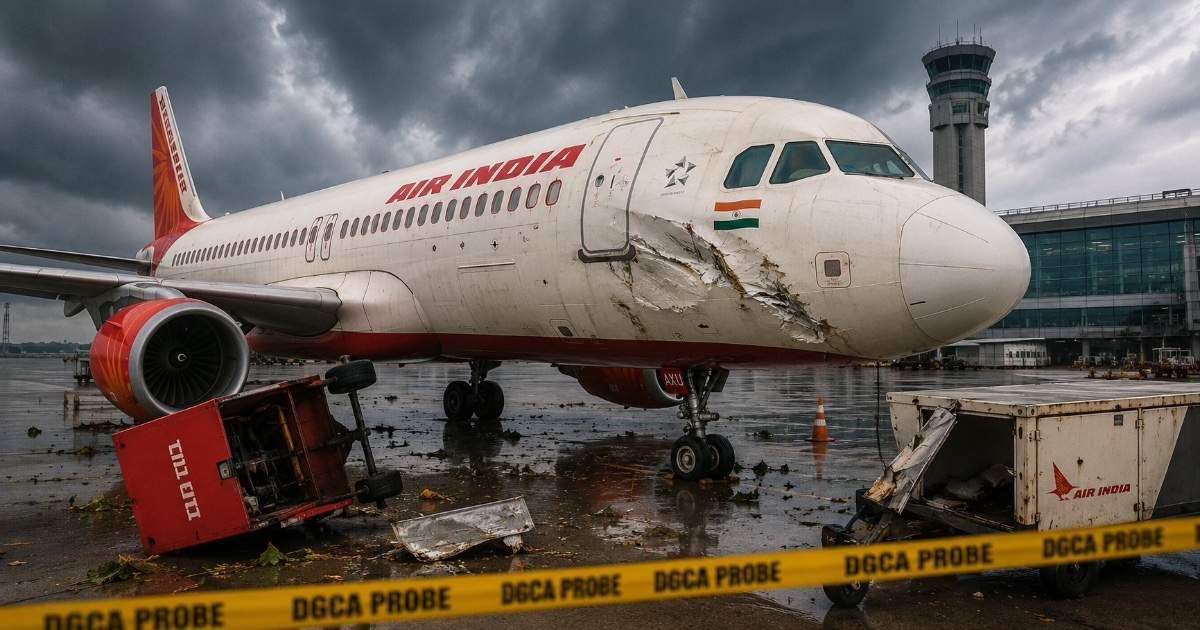
Three Air India aircraft parked at Delhi’s Indira Gandhi International Airport sustained damage during adverse weather conditions, prompting India’s aviation regulator to launch an investigation into the incident and review ground-handling safety procedures.
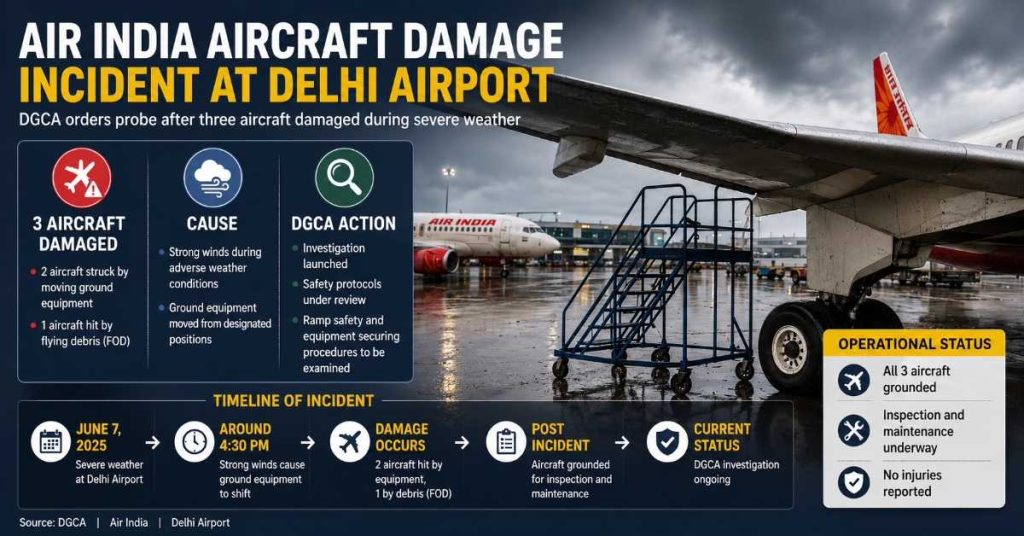
The Directorate General of Civil Aviation (DGCA) confirmed that the aircraft were damaged on June 7 while stationed near Terminal-II after strong winds caused ground-support equipment and airborne debris to move unexpectedly across the apron area.
While no passengers or crew members were injured, the incident has raised fresh attention on airport ground operations during periods of severe weather, particularly as airlines and airports face increasingly frequent weather-related disruptions.
Strong Winds Trigger Ground Incidents
According to preliminary information released by the regulator, powerful wind conditions affected aircraft parking stands and adjacent operational areas during the afternoon.
Two separate pieces of ground equipment reportedly shifted from their designated positions and struck parked Air India Airbus A320 aircraft. In a separate occurrence, debris carried by the wind damaged a window component on another aircraft.
The affected aircraft have been withdrawn from service and placed under inspection to assess structural integrity and determine the extent of repairs required before returning to operations.
Aviation experts note that even relatively minor external damage can require extensive technical evaluation, particularly when aircraft windows, fuselage panels, sensors, or flight-critical systems are involved.
DGCA Launches Investigation
The aviation regulator has initiated a formal investigation to determine whether existing safety protocols were followed and whether additional preventive measures may be necessary.
The inquiry is expected to examine multiple factors, including:
- Ground equipment securing procedures
- Weather monitoring and warning systems
- Ramp safety protocols
- Airport operational responses during high-wind conditions
- Compliance with established aviation safety standards
Investigators will also review whether the equipment involved had been adequately restrained and whether operational restrictions should have been implemented as weather conditions deteriorated.
Weather Risks Extend Beyond Flight Operations
While public attention often focuses on turbulence, delays, and flight diversions during storms, severe weather also poses risks on the ground.
High winds can move baggage carts, maintenance equipment, boarding stairs, containers, and other airport assets if they are not properly secured. Foreign Object Debris (FOD) a term used for loose objects capable of damaging aircraft remains a significant concern for airports worldwide.
International aviation authorities routinely emphasize the importance of strict ramp-management procedures during adverse weather events because aircraft parked on the ground can be vulnerable to damage even when they are not operating.
Operational Impact Expected to Be Limited
Industry observers believe the immediate impact on Air India’s broader network is likely to remain limited, given the airline’s fleet size and operational flexibility. However, the grounding of the affected aircraft may require schedule adjustments until inspections and repairs are completed.
The incident comes as Indian aviation continues to experience rapid growth in passenger traffic and aircraft movements, increasing the importance of maintaining robust safety systems across both flight and ground operations.
Focus on Preventive Measures
Aviation safety specialists often describe weather preparedness as a critical component of airport risk management. Modern airports rely on a combination of forecasting systems, operational alerts, equipment restraints, and emergency procedures to minimize weather-related hazards.
The findings of the DGCA investigation could lead to updated recommendations for airlines, airport operators, and ground-handling agencies regarding equipment security and ramp operations during severe weather conditions.
For now, authorities have emphasized that no injuries occurred and that the damaged aircraft remain under technical assessment while the investigation continues.
Key Highlights
- Three Air India Airbus A320 aircraft were damaged at Delhi Airport during severe weather conditions.
- Strong winds reportedly caused ground-support equipment to move and strike two parked aircraft.
- A third aircraft suffered damage after being hit by foreign object debris (FOD).
- No injuries were reported in the incident.
- The DGCA has ordered a formal investigation into the circumstances surrounding the damage.
- All three aircraft have been grounded for inspection, assessment, and maintenance.
- The probe will examine ramp safety procedures, equipment securing protocols, and weather-response measures.
- The incident highlights the risks adverse weather poses to airport ground operations, not just flight operations.
Input & Images : Hindusthan Samachar
Add outlooknews.in as preferred source on google – click here
Also read – India Moves to Make Government Bonds More Attractive With Tax-Free Returns for Foreign Investors
Last Updated on: Monday, June 8, 2026 11:33 pm by Monisha Angara | Published by: Monisha Angara on Monday, June 8, 2026 11:31 pm | News Categories: India
About The Author