
Former DGMO says armed forces were given operational freedom during cross-border anti-terror operation commemorated in Jaipur
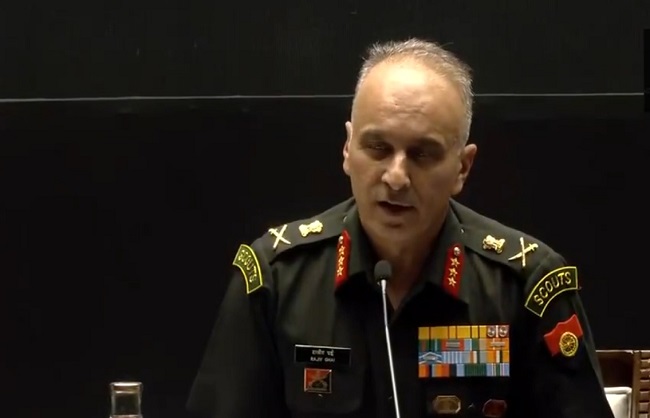
Rajiv Ghai on Wednesday said Operation Sindoor demonstrated India’s coordinated military capabilities and the growing role of indigenous defence systems in modern warfare. Speaking on the first anniversary of the operation, he stated that the armed forces were given full operational freedom to carry out precision strikes against terror infrastructure across the Line of Control and beyond.
Key Announcements / Highlights
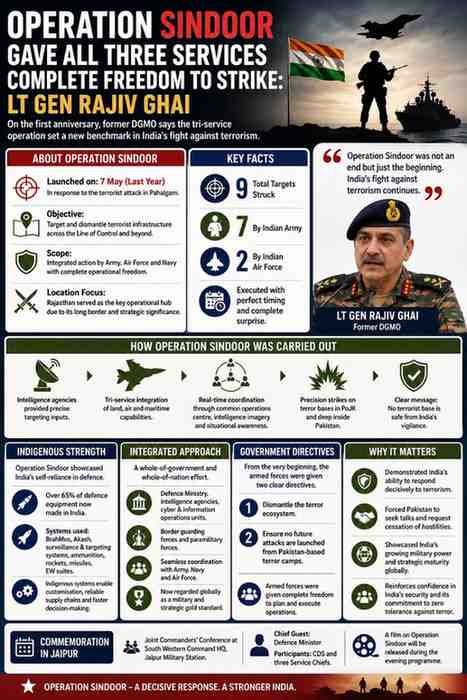
Operation Sindoor involved coordinated action by the Army, Air Force, and Navy.
Nine targets were reportedly struck during the operation.
Officials highlighted the role of indigenous defence technology and intelligence coordination.
Joint Military Commemoration in Jaipur
The Indian armed forces marked the first anniversary of Operation Sindoor with events in Jaipur, Rajasthan, which officials described as a key operational region during the mission due to its strategic border location.
A Joint Commanders’ Conference was scheduled at the South Western Command headquarters, with participation from senior defence leadership, including the Defence Minister, Chief of Defence Staff, and service chiefs.
Official Statement
Speaking during a press briefing, Lt Gen Rajiv Ghai said the operation was designed to target terror infrastructure with precision and coordination across land, air, and maritime domains.
He stated that intelligence agencies, cyber units, surveillance systems, and operational commands worked together in real time during the mission. According to him, the operation reflected an integrated national security approach involving multiple institutions.
Ghai also said the government’s directives focused on dismantling terror networks and preventing future attacks while allowing the military flexibility in planning and execution.
Indigenous Defence Systems Highlighted
Officials stressed that several key systems used during the operation were developed within India under the broader push for defence self-reliance.
These reportedly included missile systems, surveillance tools, electronic warfare equipment, ammunition, and precision targeting platforms.
According to Ghai, domestically manufactured defence equipment strengthened operational readiness and logistical flexibility during the mission.
Context / Background
Operation Sindoor was launched following the terror attack in Pahalgam last year. Indian forces carried out coordinated strikes targeting terror-related infrastructure across the Line of Control and other areas linked to militant activity.
The operation has since been cited by defence officials as an example of joint-force coordination and rapid-response capability.
Public Impact
The anniversary events and official statements highlight India’s continued focus on counter-terror operations and military modernisation.
The emphasis on indigenous defence production also aligns with the government’s broader “Atmanirbhar Bharat” initiative aimed at reducing dependence on imported military equipment.
Conclusion and Outlook
Defence officials indicated that lessons from Operation Sindoor continue to shape India’s military preparedness and strategic planning.
The discussions during the Joint Commanders’ Conference are expected to focus on future security challenges, operational coordination, and strengthening indigenous defence capabilities.
Input & Images : Hindusthan Samachar
Add outlooknews.in as preferred source on google – click here
Also read – Crude Oil Climbs Above $101 Per Barrel as Markets Track US-Iran Developments
Last Updated on: Thursday, May 7, 2026 7:33 pm by Monisha Angara | Published by: Monisha Angara on Thursday, May 7, 2026 7:33 pm | News Categories: India
About The Author