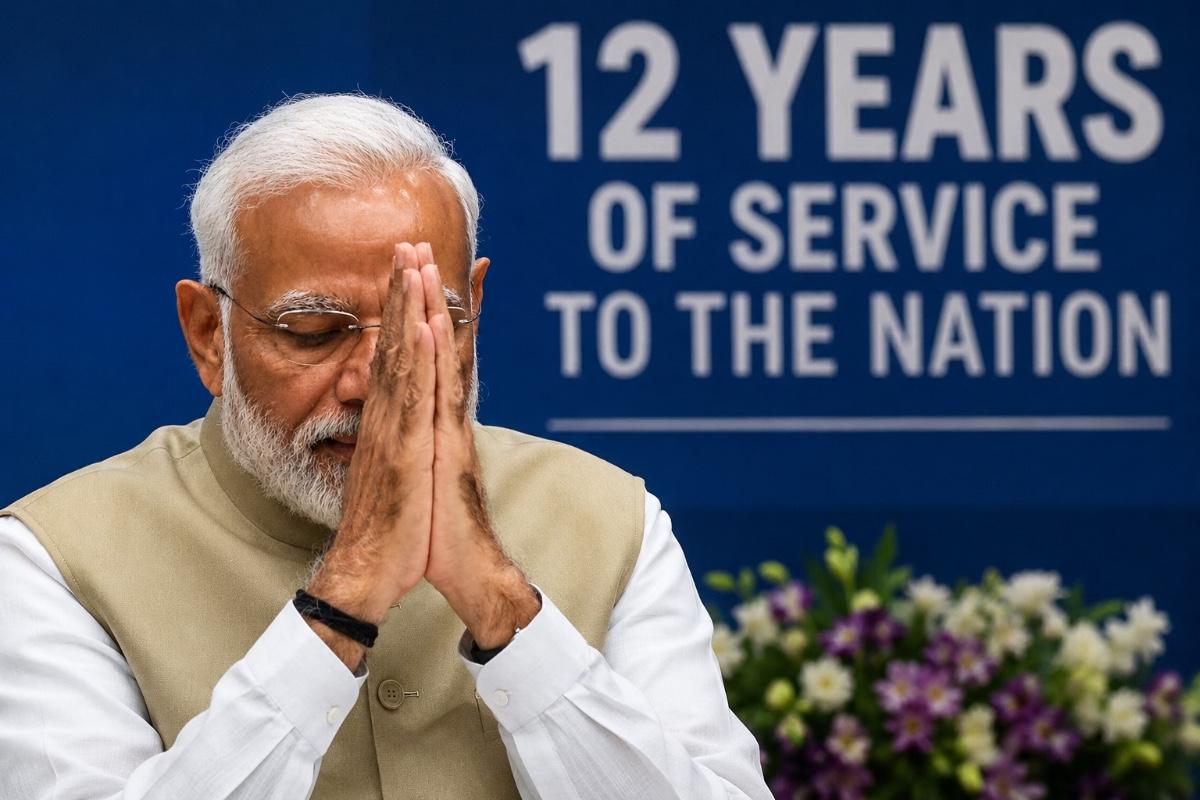

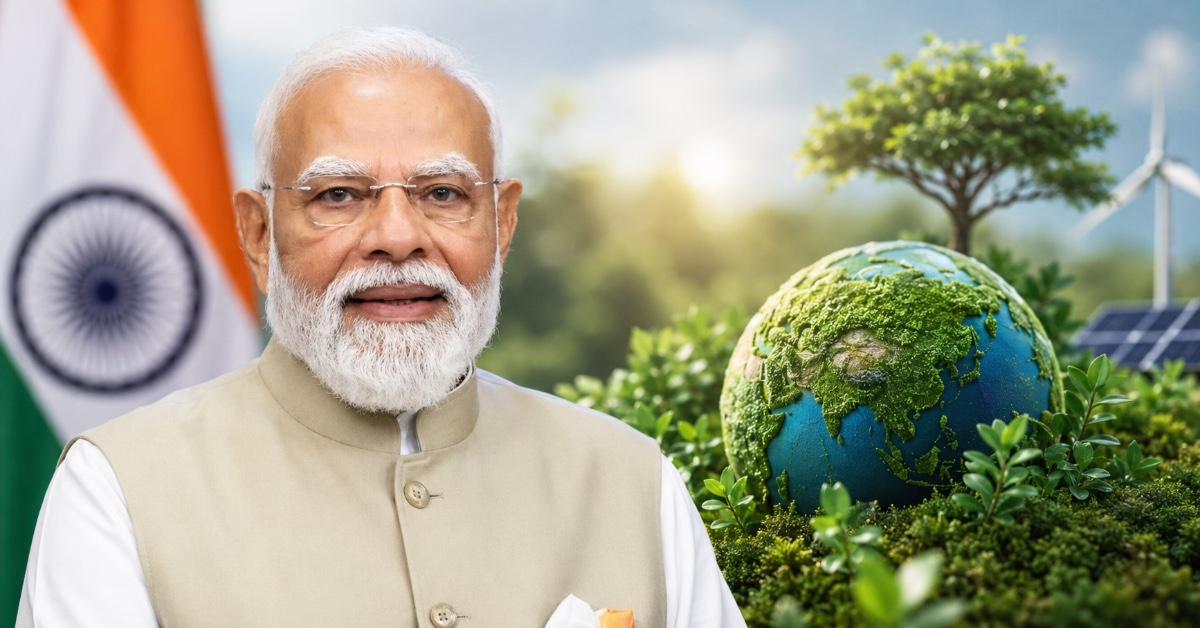
As countries around the world observe World Environment Day, Prime Minister Narendra Modi used the occasion to reaffirm India’s commitment to environmental stewardship, emphasizing that protecting nature is deeply rooted in the country’s cultural identity and developmental vision.
In a message released on Thursday, the Prime Minister extended greetings to citizens and environmental advocates, describing the annual observance as an opportunity to strengthen collective efforts toward ecological protection, sustainable development, and responsible lifestyles. He praised the contributions of communities, scientists, conservationists, and policymakers who have supported India’s environmental initiatives in recent years.
The remarks come at a time when nations worldwide are grappling with increasingly complex environmental challenges, including climate change, biodiversity loss, water stress, and rising pollution levels.
Environmental Protection and Development: A Dual Priority
India’s environmental agenda has increasingly focused on balancing economic growth with ecological sustainability. Over the past decade, government policies have sought to expand renewable energy capacity, improve forest cover, strengthen wildlife conservation programs, and promote climate-resilient development.
The Prime Minister noted that environmental progress has been driven not only by policy interventions but also by public participation, technological innovation, and scientific research. He highlighted that conservation efforts are yielding visible results across several ecological indicators, including improvements in green cover and wildlife protection.
Experts note that India’s environmental strategy has gained international attention because of its attempt to combine economic expansion with sustainability objectives. As one of the world’s fastest-growing major economies, India’s environmental choices carry significant implications for global climate and biodiversity goals.
Biodiversity Conservation Remains a Key Focus
India is recognized as one of the world’s most biodiverse countries, hosting a wide range of ecosystems that support thousands of plant and animal species.
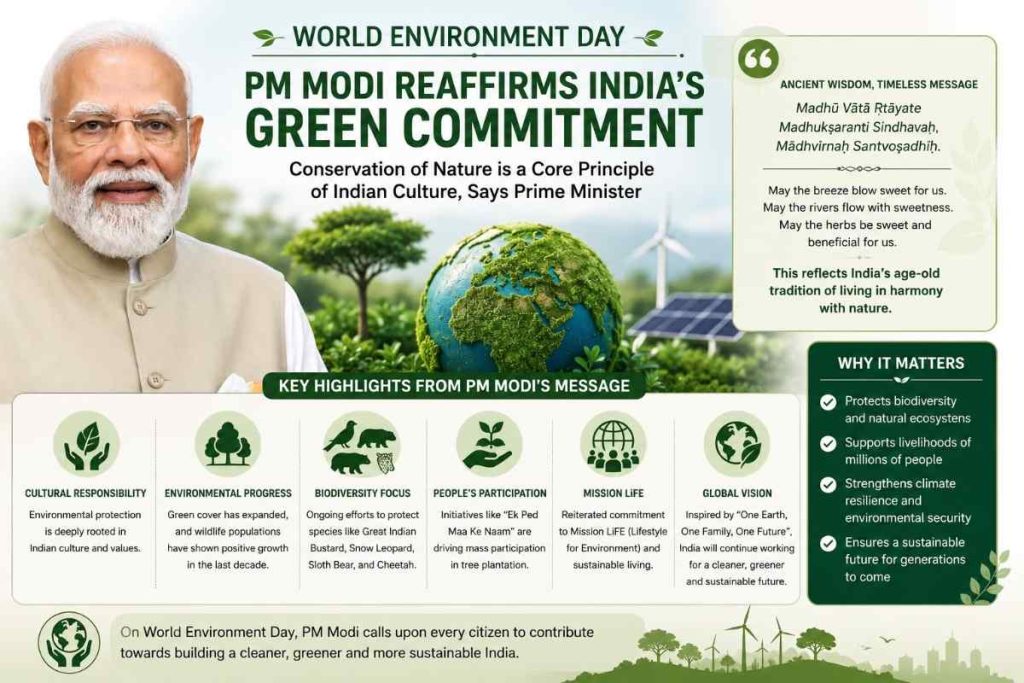
The Prime Minister referenced ongoing conservation efforts involving species such as the Great Indian Bustard, Snow Leopard, Sloth Bear, and cheetah, highlighting them as examples of long-term ecological restoration initiatives. Wildlife conservation programs have increasingly focused on habitat protection, scientific monitoring, community engagement, and reducing human-wildlife conflict.
Conservation specialists often point out that protecting biodiversity serves purposes beyond preserving wildlife. Healthy ecosystems contribute to food security, water availability, climate resilience, and livelihoods for millions of people, particularly in rural and forest-dependent communities.
The continued emphasis on species recovery reflects a broader global recognition that biodiversity loss poses significant economic and environmental risks.
Community Participation Gains Importance
A notable theme in India’s environmental strategy has been encouraging citizen involvement in conservation activities.
Programs such as “Ek Ped Maa Ke Naam” have sought to transform tree plantation efforts into community-driven initiatives. By linking environmental action with social and cultural values, policymakers aim to generate wider public participation in sustainability efforts.
Environmental experts frequently stress that large-scale ecological goals cannot be achieved through government action alone. Community engagement, behavioral change, and local participation are increasingly viewed as essential components of successful conservation strategies.
Such approaches also align with broader international efforts to promote sustainable lifestyles and reduce environmental footprints through individual and collective action.
Mission LiFE and Sustainable Living
The Prime Minister reiterated support for Mission LiFE (Lifestyle for Environment), an initiative that encourages environmentally conscious choices in daily life.
Launched as a global movement, Mission LiFE promotes sustainable consumption patterns, resource conservation, and climate-friendly habits. The initiative reflects a growing understanding that addressing environmental challenges requires both systemic policy changes and behavioral shifts at the household level.
Climate researchers have repeatedly emphasized that individual actions, when adopted at scale, can contribute meaningfully to emissions reduction, waste management, and resource efficiency.
By connecting sustainability with everyday decision-making, Mission LiFE seeks to broaden public engagement in environmental protection beyond traditional conservation programs.
Ancient Values and Modern Environmental Challenges
A significant element of the Prime Minister’s message was the linkage between environmental protection and India’s cultural heritage.
Referring to a Sanskrit verse from ancient Indian tradition, he emphasized the long-standing belief that human well-being is inseparable from the health of nature. The message reflected themes commonly found in Indian philosophical traditions, which often emphasize harmony between people, ecosystems, and natural resources.
Environmental historians note that many traditional societies incorporated ecological principles into cultural practices, religious beliefs, and community life long before modern environmental movements emerged. Such perspectives are increasingly being revisited as policymakers seek sustainable approaches to contemporary challenges.
Looking Ahead
World Environment Day serves as both a celebration of environmental progress and a reminder of the work that remains ahead.
For India, the challenge will be maintaining rapid economic growth while continuing to strengthen climate resilience, protect biodiversity, expand green infrastructure, and encourage sustainable consumption patterns.
As global environmental concerns become increasingly interconnected with economic stability, public health, and national development, policymakers are expected to place greater emphasis on sustainability in the years ahead.
The Prime Minister’s message underscores a broader theme gaining prominence worldwide: environmental protection is no longer viewed solely as a policy objective but as a long-term societal responsibility requiring cooperation among governments, businesses, communities, and citizens alike.
Key Highlights
- Prime Minister Narendra Modi extended greetings on World Environment Day and urged collective action for environmental protection.
- He said conservation of nature is a core principle of Indian culture and civilizational values.
- Modi highlighted India’s progress in expanding green cover and strengthening wildlife conservation efforts.
- He cited initiatives supporting species such as the Great Indian Bustard, Snow Leopard, Sloth Bear, and cheetah.
- The Prime Minister praised public participation, scientific innovation, and policy support in achieving environmental goals.
- He emphasized the role of the “Ek Ped Maa Ke Naam” campaign in promoting afforestation and ecological awareness.
- Modi reiterated India’s commitment to Mission LiFE (Lifestyle for Environment) and sustainable development.
- Referring to the theme of “One Earth, One Family, One Future,” he called for a cleaner and greener future.
- He shared a Sanskrit verse highlighting harmony between humans and nature.
- The Prime Minister said environmental stewardship remains essential for biodiversity protection, livelihoods, and long-term sustainability.
Input & Images : Hindusthan Samachar
Add outlooknews.in as preferred source on google – click here
Also read – Bodoland Territorial Council Introduces Temporary Salary Reduction as Part of Cost-Control Measures
Last Updated on: Friday, June 5, 2026 3:19 pm by Monisha Angara | Published by: Monisha Angara on Friday, June 5, 2026 3:16 pm | News Categories: India
About The Author