

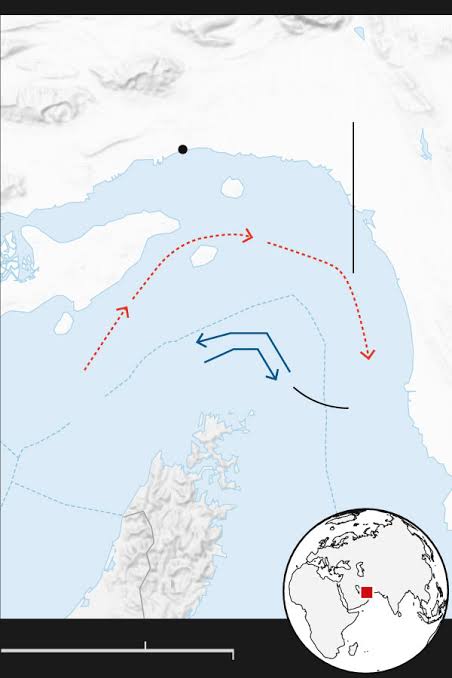
Maritime confrontations escalate as both sides accuse each other of violations; global oil supply concerns intensify
Iran has declined to reopen the strategically vital Strait of Hormuz, citing ongoing US naval restrictions as a violation of a fragile ceasefire. The development raises concerns about regional stability and potential disruptions to global energy supplies.
Key Announcements / Highlights
Iran has refused to restore shipping access through the Strait of Hormuz.
Maritime incidents involving multiple vessels have increased tensions.
Both Iran and the United States have accused each other of breaching the ceasefire.
Maritime Developments
Iran’s Islamic Revolutionary Guard Corps reported taking action against vessels in the Strait, alleging violations of its warnings.
According to maritime tracking reports, at least two container ships were seized, while another vessel sustained damage during the confrontation.
These incidents follow US interceptions of ships linked to Iran, further escalating tensions in the region.
Official Statements
Iranian officials have stated that restrictions imposed by the United States undermine the ceasefire framework and hinder diplomatic progress.
Government representatives have also indicated that key issues including maritime access and broader security concerns remain unresolved in ongoing discussions.
Context / Background
The Strait of Hormuz is one of the world’s most critical oil transit routes, handling a significant portion of global petroleum shipments.
Any disruption in this region can have immediate effects on international oil prices and global markets.
The current tensions stem from a broader conflict involving regional security concerns and unresolved diplomatic issues between Iran and the United States.
Public Impact
Prolonged disruption in the Strait of Hormuz could affect global oil supply, potentially leading to higher fuel prices and economic uncertainty.
Countries dependent on energy imports, including India, may face increased costs and inflationary pressures.
Conclusion and Outlook
With negotiations stalled and tensions rising, the situation remains uncertain.
Future developments will depend on diplomatic efforts to resolve disputes and restore stability in one of the world’s most critical energy corridors.
Input & Images : Hindusthan Samachar
Add outlooknews.in as preferred source on google – click here
Also read – PM Modi Urges High Voter Turnout in Tamil Nadu and West Bengal Assembly Elections
Last Updated on: Thursday, April 23, 2026 1:49 pm by Monisha Angara | Published by: Monisha Angara on Thursday, April 23, 2026 1:49 pm | News Categories: News
About The Author