
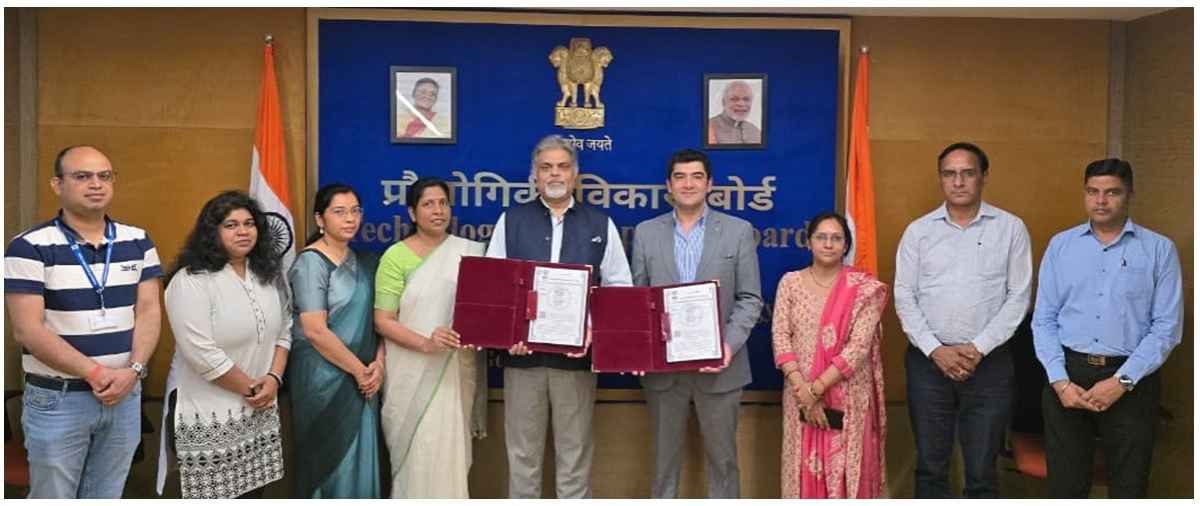
The Technology Development Board (TDB) under the Department of Science and Technology (DST) has extended financial support to a Delhi-based firm to develop an indigenous cybersecurity solution designed for secure data transfer across air-gapped networks.
The project, led by Matisoft Cyber Security Labs Pvt. Ltd., focuses on enabling controlled and secure movement of data between highly restricted systems, particularly those used in defence and critical infrastructure.
Key Announcements / Highlights
- Government support for development of indigenous cybersecurity technology
- Focus on secure data transfer across air-gapped (offline) networks
- Designed for high-security sectors such as defence and critical infrastructure
- Integration of advanced tools like data loss prevention and threat detection
- System to operate without internet connectivity
What the Project Aims to Do
The proposed system is built to address a major cybersecurity challenge transferring data between isolated networks without exposing them to threats.
Air-gapped networks are systems that are physically disconnected from the internet to prevent cyberattacks. However, transferring data into or out of such systems can still pose risks, especially through external devices like USB drives.
To tackle this, the new solution will include a USB-based data sanitisation tool. It will scan, verify, and clean files before allowing them to move between networks, reducing the chances of malware infiltration or unauthorised access.
Official Statement
According to TDB Secretary Rajesh Kumar Pathak, secure digital infrastructure has become essential in today’s interconnected environment.
He noted that supporting indigenous cybersecurity technologies will help India build systems tailored to its own defence and infrastructure needs, while also reducing reliance on foreign solutions.
How the Technology Works
The platform combines several cybersecurity mechanisms into a single system:
- Data Loss Prevention (DLP): Prevents sensitive data leaks
- Endpoint Detection & Response (EDR): Monitors and responds to threats in real time
- Content Disarm & Reconstruction (CDR): Removes malicious elements from files
The system also includes features such as centralised control policies, audit logs, automated updates, and strict USB usage rules.
Importantly, it is designed to function without internet access, making it suitable for secure environments like military networks.
Context / Background
Cybersecurity has become a critical priority as governments and industries increasingly rely on digital systems. Sensitive sectors such as defence, energy, and telecommunications often use air-gapped networks to minimise exposure to cyber threats.
However, even these isolated systems are vulnerable during data transfers. This has created demand for specialised tools that can ensure safe and controlled data exchange.
India has been focusing on building domestic capabilities in this area as part of its broader push for technological self-reliance.
Public Impact
The development of such indigenous solutions can have wider implications:
- Strengthening national security by protecting critical systems
- Reducing dependence on imported cybersecurity technologies
- Supporting Indian startups and innovation in deep-tech sectors
- Enhancing trust in digital infrastructure across industries
For organisations handling sensitive data, the solution could offer a safer and more reliable way to manage information transfers.
Conclusion
The project marks a step forward in India’s efforts to develop homegrown cybersecurity technologies for high-risk environments.
As cyber threats continue to evolve, tools designed specifically for secure and isolated systems are expected to play a key role in safeguarding critical infrastructure.
Source: PIB
Last Updated on: Monday, March 23, 2026 5:06 pm by Monisha Angara | Published by: Monisha Angara on Monday, March 23, 2026 5:06 pm | News Categories: Kolkata
About The Author