


Amazon India Cuts Referral Fees in Fresh Push to Boost Seller Growth
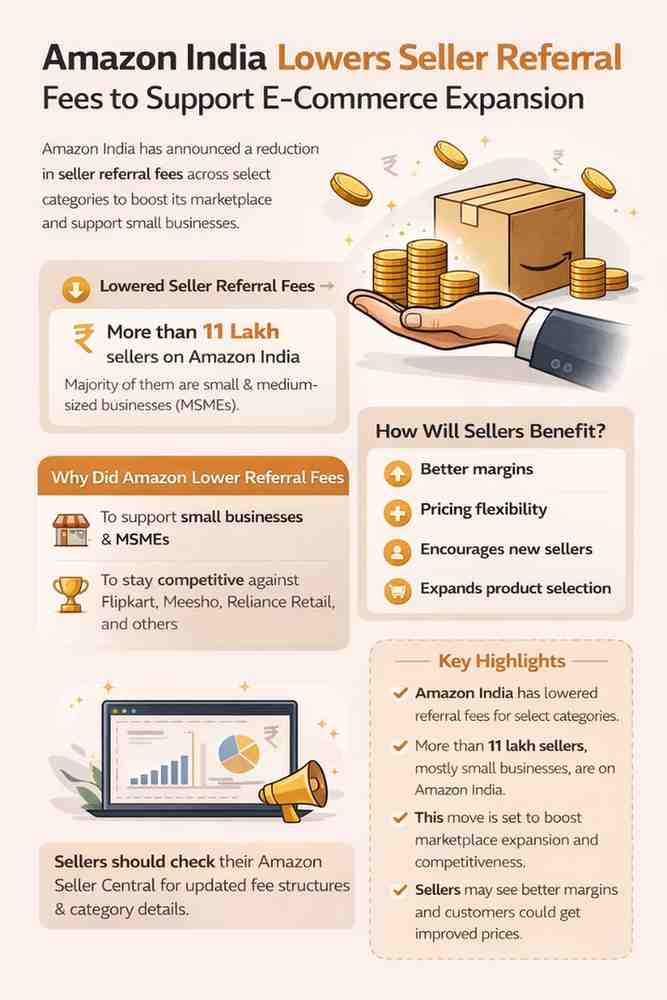
In a major move aimed at strengthening India’s fast-growing online retail market, Amazon India has announced a reduction in seller referral fees across select categories. The decision is part of the company’s broader effort to support small and medium businesses and expand product selection on its platform.
The announcement comes at a time when India’s e-commerce sector is witnessing steady growth, increasing competition, and rising participation from regional sellers. Lower referral fees can directly impact seller margins and may encourage more businesses to sell online.
For millions of sellers and buyers across India, this development matters because it could lead to lower costs, better pricing, and a wider range of products on Amazon’s marketplace.
What Are Seller Referral Fees?
Seller referral fees are charges that Amazon collects from sellers for each product sold on its platform.
These fees are usually calculated as a percentage of the product’s selling price. The percentage varies by category such as fashion, electronics, home goods, books, or grocery.
By reducing referral fees, Amazon is effectively lowering the cost of doing business for sellers.
Why Amazon India Lowered Referral Fees
Supporting Small Businesses and MSMEs
India has millions of micro, small, and medium enterprises (MSMEs). Many of them depend on online platforms to reach customers beyond their local markets.
Amazon India has consistently said that empowering small sellers is a core focus. Lower referral fees can:
- Improve profit margins for sellers
- Encourage new sellers to join
- Support growth in Tier 2 and Tier 3 cities
- Boost product selection in regional markets
This aligns with Amazon’s long-term strategy to strengthen its marketplace model.
Strengthening Competitive Position
India’s e-commerce space is highly competitive. Major players include:
- Flipkart
- Meesho
- Reliance Retail
With competition intensifying, platforms are focusing on seller-friendly policies, faster deliveries, and better pricing to retain market share.
Lowering referral fees can help Amazon remain attractive to sellers, especially those comparing multiple platforms.
Which Categories Benefit From the Fee Reduction?
Amazon has indicated that referral fee reductions apply to select product categories. While category specifics may vary based on seller notifications and policy updates, fee revisions typically focus on:
- Fashion and apparel
- Home and kitchen products
- Beauty and personal care
- Low-priced everyday items
These categories are highly competitive and price-sensitive. Reducing referral fees in these segments can directly support sellers dealing in mass-market products.
Sellers are advised to check their Amazon Seller Central dashboard for exact category updates and revised fee structures.
How This Move Impacts Sellers
1. Better Margins
Lower referral fees mean sellers retain a higher share of their product price. This can help them:
- Invest in advertising
- Offer discounts
- Improve packaging
- Expand inventory
For small businesses operating on tight margins, even small fee reductions can make a meaningful difference.
2. Pricing Flexibility
With reduced platform charges, sellers may pass on some savings to customers. This can lead to:
- Competitive product pricing
- Increased sales volume
- Improved Buy Box visibility
However, pricing decisions remain at the discretion of sellers.
3. Encouraging New Sellers to Join
Lower entry costs may attract:
- Local artisans
- D2C brands
- Startups
- Regional manufacturers
This supports Amazon’s goal of increasing seller diversity and expanding product selection.
Impact on Customers
While the announcement directly targets sellers, customers may also benefit.
Potential Benefits for Shoppers
- More competitive prices
- Wider product variety
- Increased availability of regional brands
- Greater participation in sales events
If sellers pass on cost savings, consumers could see better deals during major sale events such as festive sales.
Amazon’s Long-Term Strategy in India
India remains one of the most important markets for Amazon globally.
Over the years, Amazon has invested heavily in:
- Fulfilment centers
- Logistics infrastructure
- Digital payments
- Seller education programs
- Local language support
The company has also focused on enabling exports through its Global Selling program, helping Indian sellers reach international markets.
Reducing referral fees aligns with Amazon’s broader strategy of increasing seller participation and strengthening the marketplace ecosystem.
E-Commerce Growth in India
India’s online retail market continues to expand due to:
- Rising internet penetration
- Growth in smartphone usage
- UPI-based digital payments
- Increasing demand from Tier 2 and Tier 3 cities
Government initiatives supporting digital commerce and small businesses have also helped accelerate growth.
As more consumers shift to online shopping, platforms are competing not only for buyers but also for quality sellers.
What Sellers Should Do Now
Sellers currently operating on Amazon India should:
- Review updated referral fee structures
- Recalculate pricing and margins
- Monitor category-specific changes
- Evaluate advertising strategies
New sellers considering joining the platform may find this an attractive time to start.
However, sellers should always check official policy updates within Seller Central before making financial decisions.
Industry Reaction and Market Outlook
Policy changes that reduce seller costs are generally seen as positive within the e-commerce ecosystem.
Lower referral fees can:
- Increase seller retention
- Drive product listing growth
- Improve marketplace competitiveness
At the same time, sustained growth will depend on factors such as:
- Logistics efficiency
- Customer trust
- Regulatory clarity
- Consumer spending patterns
India’s e-commerce market remains dynamic, and policy adjustments like this show how platforms are adapting to evolving market conditions.
Key Highlights at a Glance
- Amazon India has reduced referral fees across select categories.
- The move aims to support sellers and strengthen marketplace growth.
- Lower fees may improve seller margins and pricing flexibility.
- The decision comes amid rising competition in India’s e-commerce sector.
- Customers could benefit from better pricing and wider product selection.
Why This Update Matters Today
In a competitive and price-sensitive market like India, even small changes in fee structures can reshape seller strategies.
For small businesses, reduced referral fees can mean improved survival and expansion opportunities. For customers, it may translate into better prices and product availability.
As e-commerce adoption continues to grow across the country, decisions like this reflect how major platforms are adapting to local market needs.
Amazon India’s latest move signals that seller-first policies remain central to its expansion strategy in one of the world’s fastest-growing digital economies.
This development will be closely watched by sellers, competitors, and industry observers in the coming months.
Disclaimer: The information presented in this article is intended for general informational purposes only. While every effort is made to ensure accuracy, completeness, and timeliness, data such as prices, market figures, government notifications, weather updates, holiday announcements, and public advisories are subject to change and may vary based on location and official revisions. Readers are strongly encouraged to verify details from relevant official sources before making financial, investment, career, travel, or personal decisions. This publication does not provide financial, investment, legal, or professional advice and shall not be held liable for any losses, damages, or actions taken in reliance on the information provided.
Last Updated on: Monday, March 2, 2026 10:40 am by Outlook News Team | Published by: Outlook News Team on Monday, March 2, 2026 10:39 am | News Categories: Tech
About The Author