

Data Analytics and Artificial Intelligence Help Tax Officials Crack Down on Fake Invoicing Worth Thousands of Crores
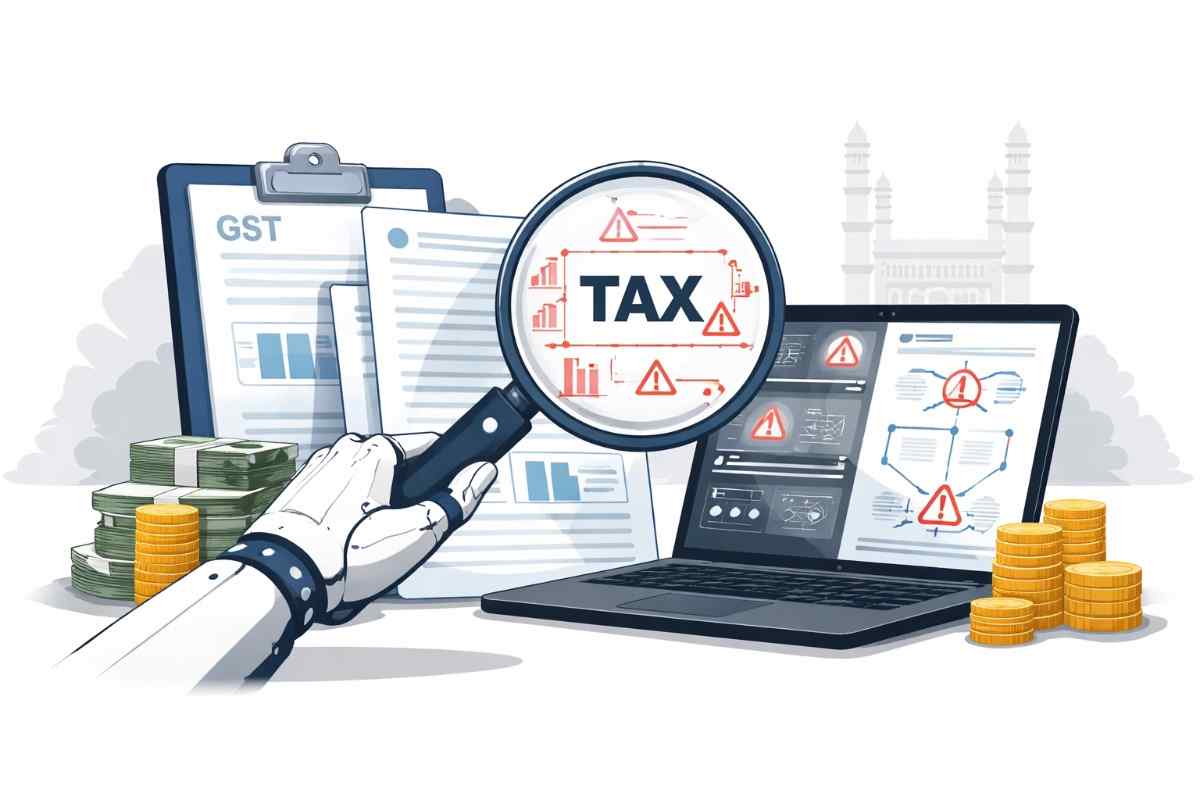
New Delhi/Hyderabad: Indian tax authorities have intensified their crackdown on large-scale Goods and Services Tax (GST) fraud by using advanced data analytics and artificial intelligence (AI) tools. Investigations in recent months have uncovered widespread fake invoicing networks, with financial trails traced to several cities, including Hyderabad.
Officials have stated that AI-driven systems have played a major role in identifying suspicious transactions, shell companies, and fraudulent input tax credit (ITC) claims. The scale of suspected tax evasion across multiple cases runs into tens of thousands of crores, based on enforcement updates shared publicly by the government in recent years.
The development is significant because it shows how technology is now central to tax enforcement in India. It also signals tighter scrutiny for businesses engaged in GST filings.
How AI Is Being Used to Detect Tax Evasion
The Central Board of Indirect Taxes and Customs (CBIC) and the Directorate General of GST Intelligence (DGGI)have strengthened their digital monitoring systems since the rollout of GST in 2017.
Under the GST framework, companies can claim input tax credit based on invoices issued by suppliers. Fraud networks often create fake firms to generate bogus invoices and illegally claim tax credits.
To detect such activity, authorities now use:
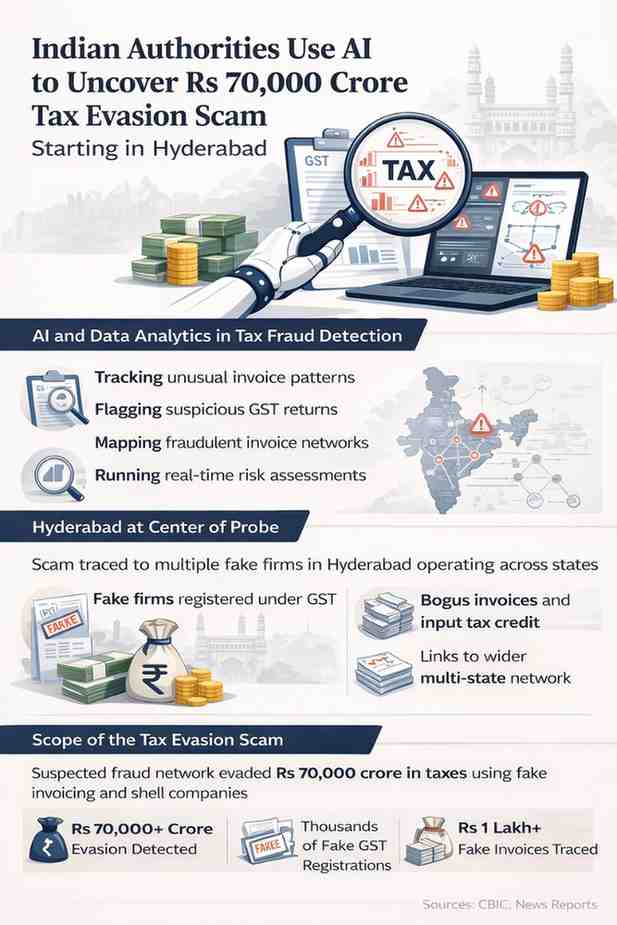
- Data analytics to track unusual invoice patterns
- AI algorithms to flag mismatched GST returns
- Network mapping tools to identify linked shell companies
- Real-time risk assessment systems
These systems scan millions of GST filings and transaction records. They identify red flags such as sudden spikes in turnover, repeated circular trading, or mismatched tax payments.
Officials have publicly stated in past enforcement updates that technology-driven tools have improved detection rates and helped uncover complex fraud chains spread across multiple states.
Hyderabad’s Role in Recent Investigations
Hyderabad has emerged as one of the cities where investigators traced operational links in certain GST fraud cases. Tax authorities have conducted searches and inspections in the city as part of broader national investigations.
According to official enforcement releases in recent years, Hyderabad has seen cases involving:
- Alleged fake firms registered under GST
- Suspected fraudulent input tax credit claims
- Multi-state invoice networks
Authorities have clarified that investigations are ongoing in several cases and that the legal process will determine final liability.
It is important to note that enforcement actions are taken based on evidence gathered during searches and audits. Final conclusions are subject to court proceedings.
Understanding the Scale of GST Fraud in India
GST fraud, especially through fake invoicing, has been one of the biggest challenges since the new tax regime began.
According to official data shared in Parliament over the past few years, authorities have detected GST evasion amounting to thousands of crores annually. The figures vary year to year based on investigations and audits.
Common methods of GST fraud include:
- Creating shell companies with no real business activity
- Issuing fake invoices without actual supply of goods
- Claiming fraudulent input tax credit
- Circular trading to inflate turnover
The use of AI has helped identify these patterns more quickly than manual audits.
Government Push for Technology-Based Tax Monitoring
The Government of India has repeatedly highlighted the use of technology to improve tax compliance.
The GST Network (GSTN), which manages the digital infrastructure for GST filings, works with tax authorities to monitor transactions. Over time, analytics modules have been upgraded to reduce human error and improve early detection.
Officials have said that automation reduces the need for random physical inspections. Instead, enforcement agencies focus on high-risk cases identified through digital systems.
This approach aims to:
- Increase transparency
- Reduce tax leakage
- Protect honest taxpayers
- Improve revenue collection
Legal Process and Safeguards
While enforcement agencies can conduct searches and issue notices, accused entities have the right to respond and present their case.
Under GST law:
- Authorities can issue show-cause notices
- Taxpayers can appeal decisions
- Courts review major disputes
Any confirmed tax demand must go through legal channels.
Legal experts note that technology-based detection improves efficiency but final outcomes depend on due process.
Impact on Businesses in Hyderabad and Beyond
The use of AI in tax enforcement sends a strong message to businesses across India, including those operating in Hyderabad’s growing commercial sector.
Hyderabad is a major business hub, home to IT firms, pharmaceutical companies, startups, and trading enterprises. With rising economic activity, GST compliance volumes have also increased.
Experts say companies must ensure:
- Accurate GST filings
- Proper invoice matching
- Clear vendor verification
- Timely tax payments
Even genuine businesses can face scrutiny if they deal with vendors later found to be non-compliant.
What This Means for Taxpayers
For ordinary taxpayers and businesses, the message is clear: compliance standards are rising.
AI systems can now detect patterns that were earlier difficult to trace. This reduces the space for organised tax fraud networks.
At the same time, authorities have urged businesses to:
- Regularly reconcile GST returns
- Verify supplier GST registrations
- Maintain proper documentation
These steps help reduce the risk of legal trouble.
Technology and the Future of Tax Enforcement in India
India has been investing in digital governance across sectors. From income tax systems to GST filings, automation is becoming central to enforcement.
Tax experts believe that AI-driven audits will become more common in the coming years. Risk profiling and predictive analysis may further improve detection of fraud.
However, experts also caution that strong data protection and transparency measures are necessary to maintain trust.
The government has stated in multiple forums that its focus remains on balancing enforcement with ease of doing business.
Ongoing Investigations and Official Position
Authorities have not disclosed complete details of every case under investigation, as many are still under legal review.
In enforcement updates issued in recent years, officials have confirmed that large GST fraud networks have been dismantled across states, including Telangana.
Where arrests or recoveries have been made, details are shared through official press releases.
As of now, investigations linked to Hyderabad and other cities continue under the supervision of tax authorities.
Why This Story Matters Now
The increased use of AI in tax enforcement is a major shift in how India tackles economic offences.
For businesses, it signals stricter monitoring.
For the government, it strengthens revenue protection.
For citizens, it shows that technology is being used to reduce financial fraud.
With GST collections playing a key role in government revenue, curbing tax evasion remains a top priority.
Conclusion
Indian authorities are increasingly relying on artificial intelligence and data analytics to detect large-scale GST fraud. Investigations have traced operational links to cities such as Hyderabad, among others.
While the exact financial scope varies across cases, enforcement actions in recent years have involved suspected evasion amounting to thousands of crores.
The shift to AI-based monitoring marks a new phase in tax administration. As investigations continue, businesses across India are being reminded of the importance of strict compliance under the GST regime.
Further updates are expected as authorities complete ongoing legal proceedings and share verified findings through official channels.
Disclaimer: The information presented in this article is intended for general informational purposes only. While every effort is made to ensure accuracy, completeness, and timeliness, data such as prices, market figures, government notifications, weather updates, holiday announcements, and public advisories are subject to change and may vary based on location and official revisions. Readers are strongly encouraged to verify details from relevant official sources before making financial, investment, career, travel, or personal decisions. This publication does not provide financial, investment, legal, or professional advice and shall not be held liable for any losses, damages, or actions taken in reliance on the information provided.
Last Updated on: Friday, February 20, 2026 4:03 pm by Outlook News Team | Published by: Outlook News Team on Friday, February 20, 2026 4:03 pm | News Categories: News
About The Author