
Tensions Rise Along Afghanistan–Pakistan Border Following Recent Incidents
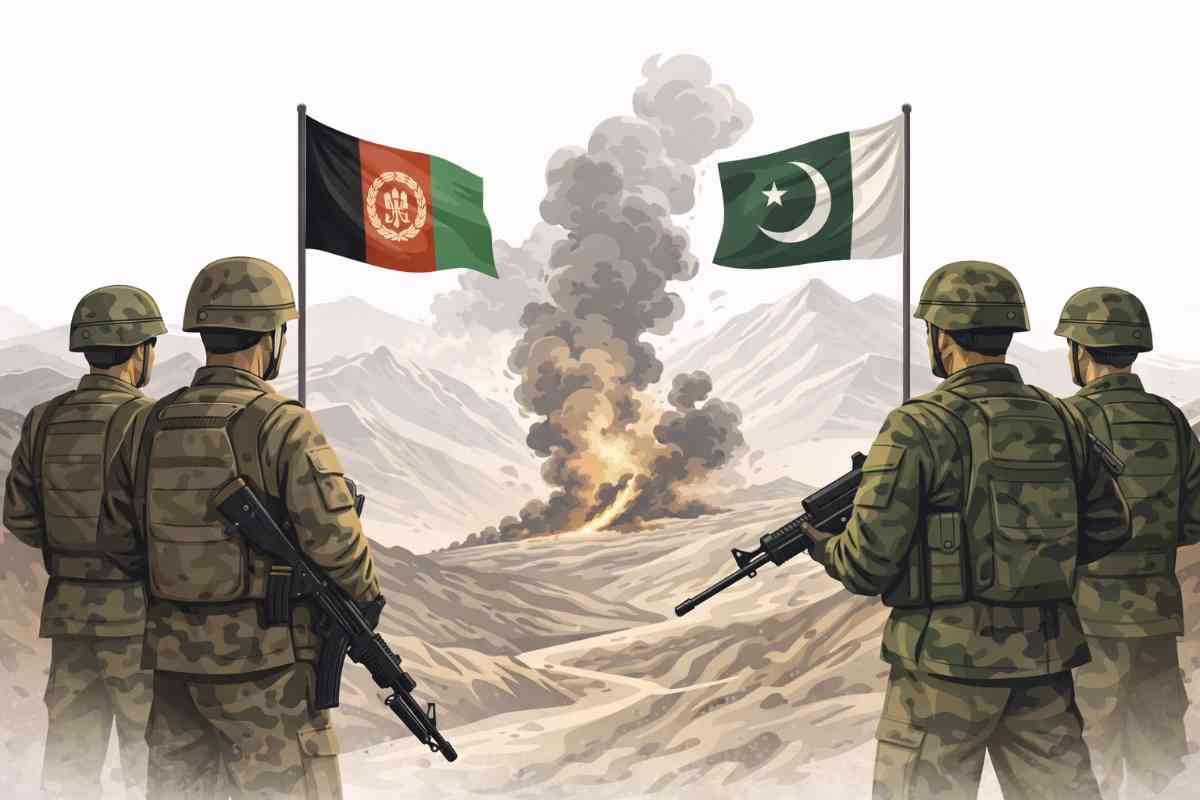
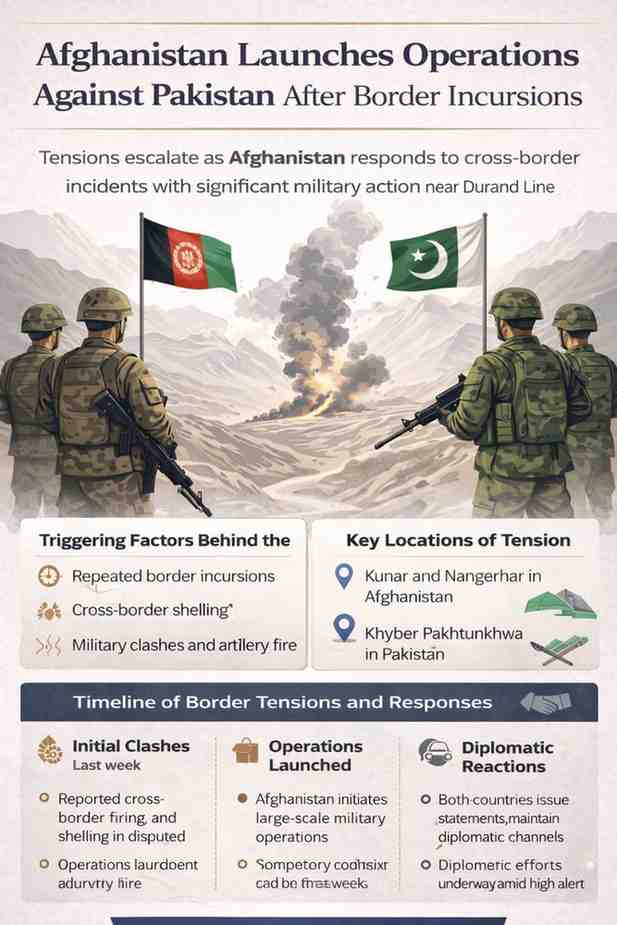
Tensions between Afghanistan and Pakistan have escalated after Afghan authorities confirmed the launch of military operations in response to what they described as repeated border incursions and cross-border shelling.
The latest developments come amid rising instability along the disputed border region, where both sides have accused each other of violating territorial limits. For India and the wider South Asian region, the situation is significant because instability in this corridor has long-term security and geopolitical consequences.
Officials from both countries have issued statements in recent days, reflecting heightened tensions along the Durand Line, the contested border dividing Afghanistan and Pakistan.
The situation remains fluid, with regional observers closely monitoring further escalation.
What Triggered the Latest Operations?
Recent clashes along the Afghanistan–Pakistan border have reportedly involved artillery fire, troop movements, and heightened patrol activity.
Afghan authorities stated that operations were initiated after alleged cross-border firing and security incidents in border provinces. Pakistan, on the other hand, has maintained that its actions were defensive in nature and aimed at countering militant threats.
Border tensions between the two countries are not new. However, the scale and frequency of recent exchanges have raised concerns of broader instability.
Understanding the Durand Line Dispute
The border between Afghanistan and Pakistan, known as the Durand Line, has been a source of tension for decades.
Why the Durand Line Is Sensitive
- It was drawn in 1893 during British colonial rule.
- Afghanistan has historically disputed its legitimacy.
- Pakistan considers it an internationally recognized border.
The border stretches over 2,600 kilometres, cutting across mountainous terrain and tribal regions.
Security challenges in this region include:
- Cross-border militant movement
- Smuggling networks
- Refugee flows
- Military patrol disputes
Each time clashes occur, the risk of wider escalation increases.
Recent Military Activity on Both Sides
In the latest escalation:
- Afghan forces reported targeted operations near border districts.
- Pakistani officials confirmed increased security presence along key crossings.
- Civilian movement in some border areas has reportedly been restricted.
Local residents in border provinces have often been the most affected during such flare-ups.
Both governments have emphasized national security concerns as the primary reason for their actions.
Statements From Kabul and Islamabad
Officials in Kabul said the operations were conducted to protect territorial sovereignty and civilian safety.
Pakistani authorities responded by stating that any military activity was aimed at countering cross-border militant threats and ensuring border stability.
Diplomatic channels remain open, according to officials from both sides. However, the tone of recent exchanges suggests heightened mistrust.
Impact on Regional Stability
The Afghanistan–Pakistan border region has long been sensitive due to security concerns involving militant groups.
Any sustained military escalation could impact:
- Trade routes
- Border crossings
- Regional security cooperation
- Refugee movement
For India, developments along this corridor are strategically important. South Asia remains a region where cross-border tensions can influence broader diplomatic relationships.
Border Crossings and Trade Concerns
One of the key concerns during such escalations is the status of major border crossings.
Key crossings between Afghanistan and Pakistan are critical for:
- Bilateral trade
- Transit goods
- Humanitarian supplies
Temporary closures during past tensions have affected businesses and local economies.
While no official announcement has confirmed a complete shutdown at the time of reporting, border security has reportedly tightened.
Security Context in 2026
The current tensions come amid ongoing security challenges in the region.
Since the Taliban’s return to power in Afghanistan in August 2021, cross-border incidents have periodically surfaced.
Pakistan has repeatedly raised concerns about militant safe havens. Afghan authorities have rejected allegations that they support or shelter anti-Pakistan groups.
Security experts note that mistrust between the two governments remains high.
Humanitarian Implications
Border clashes often create humanitarian concerns.
In previous incidents:
- Civilians were displaced from border villages.
- Schools and markets were temporarily closed.
- Medical services were disrupted.
If operations expand in scale, humanitarian agencies may face challenges in delivering aid.
International organizations typically monitor such situations to assess risks to civilians.
Diplomatic Efforts and Possible De-Escalation
Despite military tensions, diplomatic communication between Kabul and Islamabad continues.
Regional observers suggest that both countries may prefer controlled operations rather than prolonged conflict.
Historically, border escalations have been followed by:
- Flag meetings between military officials
- Diplomatic consultations
- Temporary ceasefire understandings
Whether such measures will emerge in the coming days remains uncertain.
Why This Development Matters for India
India has longstanding security interests in the region.
Stability in Afghanistan and Pakistan affects:
- Counter-terrorism efforts
- Trade connectivity in Central and South Asia
- Broader regional diplomacy
Any prolonged instability could shift geopolitical calculations.
India has maintained diplomatic engagement with regional stakeholders while closely observing security developments.
Military Balance and Escalation Risks
Neither Afghanistan nor Pakistan has indicated intentions for a full-scale conflict.
However, risks remain if:
- Artillery exchanges intensify
- Civilian casualties increase
- Diplomatic talks stall
Military analysts stress that border disputes in mountainous terrain can escalate quickly due to miscommunication.
International Reactions
At the time of reporting, no major international body has issued formal intervention statements.
However, global powers often urge restraint during cross-border tensions in South Asia.
Regional security frameworks emphasize dialogue and confidence-building measures.
Key Facts at a Glance
- Countries involved: Afghanistan and Pakistan
- Border in dispute: Durand Line
- Length of border: Over 2,600 km
- Latest trigger: Reported cross-border firing and incursions
- Current status: Military operations underway, diplomatic channels open
What Happens Next?
The situation remains dynamic.
Possible next steps may include:
- Continued limited operations
- Diplomatic engagement
- Border-level military talks
- International calls for restraint
Much depends on whether fresh incidents occur in the coming days.
Both governments are under domestic pressure to demonstrate strong border control.
Conclusion: A Sensitive Moment for South Asia
The launch of military operations by Afghanistan following reported border incursions marks a serious moment in regional security.
The Afghanistan–Pakistan border has long been volatile. Each escalation carries the risk of wider instability.
For India and the broader South Asian region, the coming days will be critical in determining whether tensions ease or intensify.
Authorities on both sides have expressed commitment to protecting national sovereignty. At the same time, diplomatic solutions remain essential to prevent further escalation.
Developments are ongoing, and verified updates are expected as official statements emerge.
This story will be updated as more confirmed information becomes available.
Disclaimer: The information presented in this article is intended for general informational purposes only. While every effort is made to ensure accuracy, completeness, and timeliness, data such as prices, market figures, government notifications, weather updates, holiday announcements, and public advisories are subject to change and may vary based on location and official revisions. Readers are strongly encouraged to verify details from relevant official sources before making financial, investment, career, travel, or personal decisions. This publication does not provide financial, investment, legal, or professional advice and shall not be held liable for any losses, damages, or actions taken in reliance on the information provided.
Last Updated on: Friday, February 27, 2026 4:34 pm by Outlook News Team | Published by: Outlook News Team on Friday, February 27, 2026 4:34 pm | News Categories: General
About The Author