


Weak global cues, rising crude oil prices, and West Asia tensions weigh on investor sentiment; rupee hits fresh low
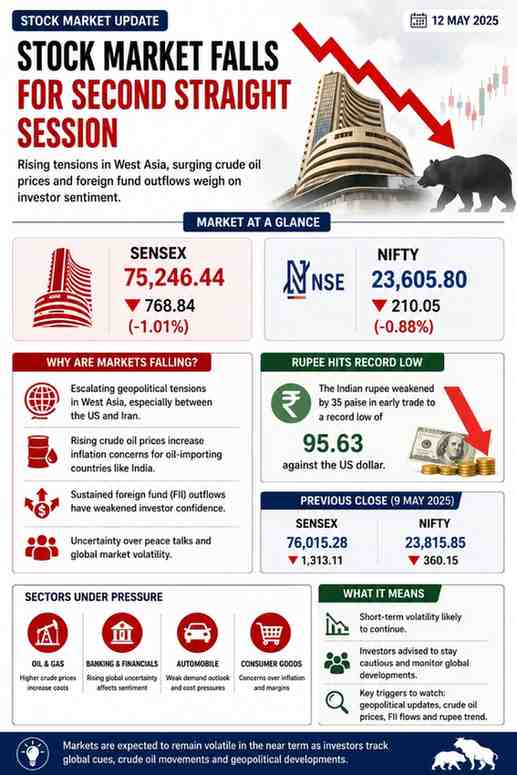
Indian benchmark indices declined sharply in early trade on Tuesday, extending losses for a second consecutive session as rising geopolitical tensions in West Asia and surging crude oil prices triggered broad-based selling across sectors.
The BSE Sensex fell more than 760 points, while the Nifty 50 slipped over 200 points amid concerns over foreign fund outflows and pressure on the rupee.
Key Announcements / Highlights
Sensex dropped 768.84 points in early trading.
Nifty declined more than 210 points.
The Indian rupee weakened to a record low against the US dollar.
Market Performance
The BSE Sensex was trading at 75,246.44, down 1.01 percent during morning trade. Meanwhile, the NSE Nifty stood at 23,605.80, recording a decline of 0.88 percent.
The market weakness followed another negative closing session on Monday, when both benchmark indices ended significantly lower.
Factors Behind the Decline
Market analysts linked the downturn to growing uncertainty surrounding geopolitical developments in West Asia, particularly tensions involving the United States and Iran.
Concerns over stalled diplomatic efforts and the possibility of prolonged instability in the region have pushed global crude oil prices higher, increasing inflationary pressure for oil-importing economies such as India.
Rising crude prices also contributed to weakness in the Indian currency. The rupee reportedly fell by 35 paise in early trade to touch a fresh low against the US dollar.
Impact of Foreign Fund Outflows
Experts noted that continued foreign institutional investor (FII) outflows have added to market pressure in recent sessions.
Higher oil prices, currency weakness, and global uncertainty have reduced investor appetite for riskier emerging-market assets, leading to cautious trading sentiment.
Context / Background
Indian equity markets have remained sensitive to global geopolitical developments and energy-price fluctuations in recent months.
Since India imports a large portion of its crude oil requirements, any sharp rise in international oil prices can affect inflation, fiscal planning, and corporate profitability.
Public Impact
Market declines can impact retail investors, mutual fund portfolios, and overall business sentiment.
A weaker rupee may also increase import costs, potentially affecting fuel prices and sectors dependent on overseas supplies.
Conclusion and Outlook
Analysts expect markets to remain volatile in the near term as investors monitor developments in West Asia, crude oil movements, and global capital flows.
Future market direction is likely to depend on geopolitical stability, currency performance, and signals from international financial markets.
Input & Images : Hindusthan Samachar
Add outlooknews.in as preferred source on google – click here
Also read – RCB Head Coach Andy Flower Fined for Breach of IPL Code of Conduct During Mumbai Indians Match
Last Updated on: Tuesday, May 12, 2026 5:43 pm by Monisha Angara | Published by: Monisha Angara on Tuesday, May 12, 2026 5:43 pm | News Categories: Business
About The Author