
The Centre has announced that nuclear power projects in India will benefit from zero customs duty on key imported equipment and fuel, a move aimed at reducing costs and speeding up project execution.
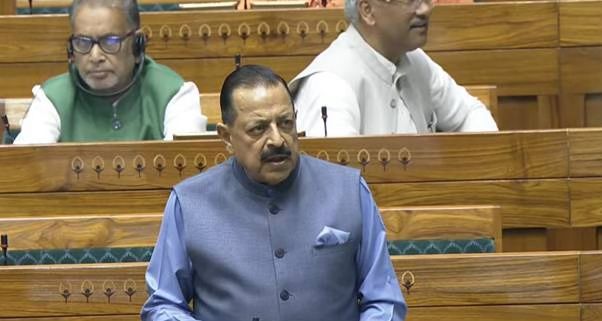
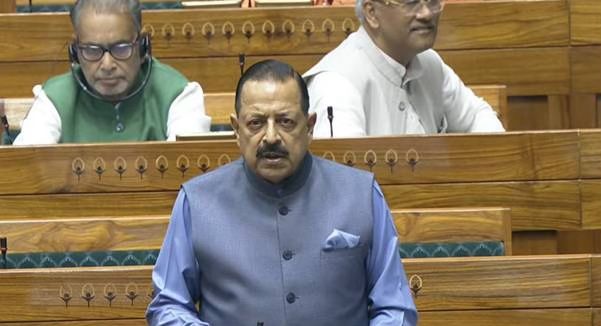
In a written reply to the Lok Sabha, Union Minister Jitendra Singh said the policy is expected to make nuclear energy more affordable and commercially viable, especially in projects involving foreign collaboration.
Key Highlights
- Zero customs duty on nuclear project imports extended till 2035
- Expected to reduce overall project and electricity generation costs
- Likely to speed up execution of nuclear power projects
- Push for domestic manufacturing through vendor expansion and MSME support
- Increased funding for advanced nuclear research and technologies
Duty Exemption to Lower Costs
The government said exempting customs duty on nuclear fuel and reactor components will directly reduce capital investment required for setting up plants.
Lower project costs are expected to translate into reduced electricity tariffs, making nuclear energy more competitive compared to other power sources.
The benefit is particularly significant for projects that rely heavily on imported technology or equipment.
Official Statement
In his reply, the minister stated that the duty waiver will improve the economic feasibility of nuclear power projects and help scale up India’s nuclear energy capacity.
He added that the measure is part of broader efforts to strengthen the sector while ensuring energy security and affordability.
Strengthening Domestic Supply Chain
The government is also focusing on building a stronger domestic ecosystem for nuclear projects.
The Nuclear Power Corporation of India Limited (NPCIL) has taken steps such as placing bulk orders to ensure steady demand, expanding the supplier base, and promoting indigenous manufacturing.
Certain equipment categories are being reserved for top-tier local suppliers, while vendor development programmes are being conducted to encourage participation from MSMEs.
Focus on Indigenous Reactor Projects
The minister highlighted progress on ten newly approved 700 MW Pressurised Heavy Water Reactor (PHWR) units.
These reactors are part of India’s strategy to increase nuclear power capacity using domestically developed technology while reducing dependence on imports over time.
Increased Investment in Nuclear R&D
Funding for research at the Bhabha Atomic Research Centre (BARC) has been enhanced to support next-generation technologies.
Key focus areas include:
- Small Modular Reactors (SMRs)
- Hydrogen production technologies
- Advanced materials and manufacturing
- Isotope production for cancer treatment
- Laser and accelerator-based applications
These efforts are aimed at achieving long-term self-reliance in nuclear technology.
No Link Yet with PM Gati Shakti
The government clarified that there is currently no proposal to integrate nuclear park development with the PM Gati Shakti initiative, which focuses on coordinated infrastructure planning.
Context and Background
India has been expanding its nuclear energy programme as part of its clean energy transition and long-term energy security goals.
Nuclear power is considered a reliable, low-carbon energy source that can complement renewable energy like solar and wind, which are intermittent in nature.
Public Impact
The move could have a direct impact on electricity consumers in the long term.
Lower project costs may help stabilise or reduce power tariffs, while faster project execution can improve energy availability.
For industry, the push for domestic manufacturing and MSME participation could create new business opportunities and jobs.
Conclusion
The government’s decision to waive customs duty on nuclear imports signals a dual approach reducing costs in the short term while building domestic capacity for the future.
With continued investment in technology and infrastructure, nuclear energy is expected to play a larger role in India’s evolving power mix in the coming years.
Source: PIB
Last Updated on: Wednesday, March 18, 2026 3:46 pm by Outlook News Team | Published by: Outlook News Team on Wednesday, March 18, 2026 3:34 pm | News Categories: Delhi
About The Author