

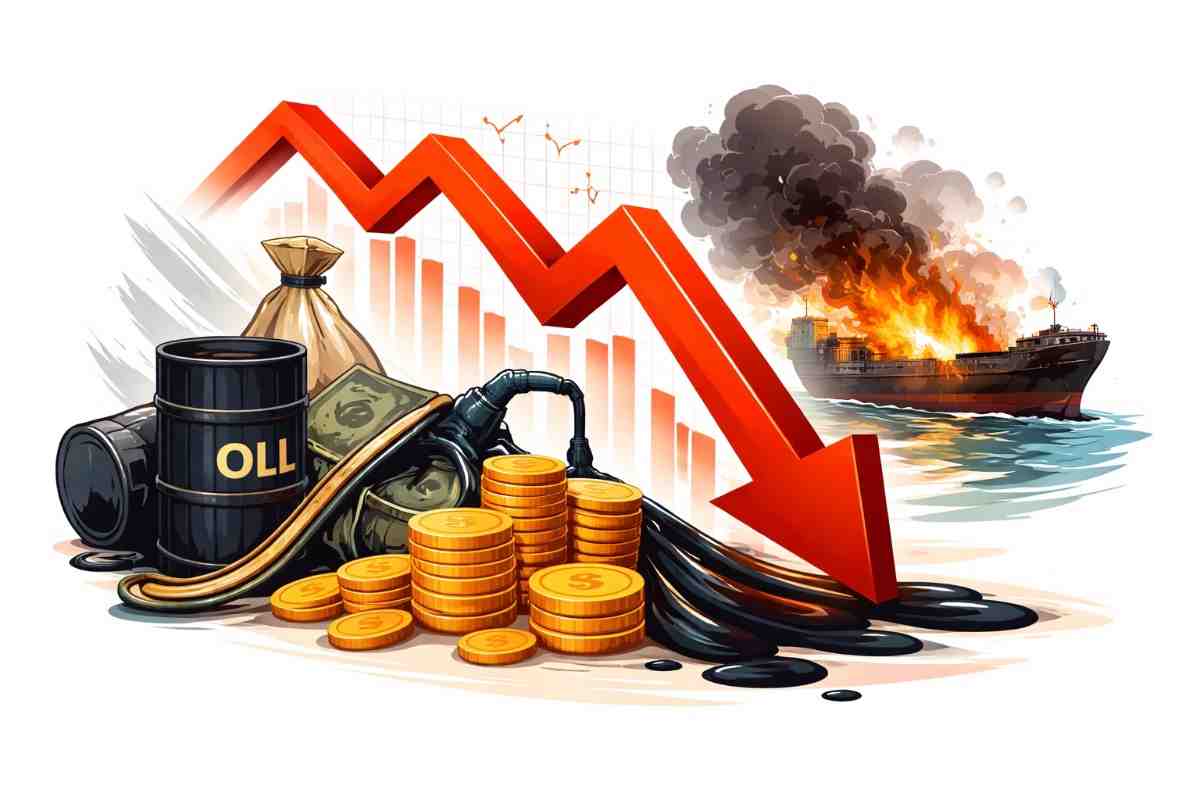
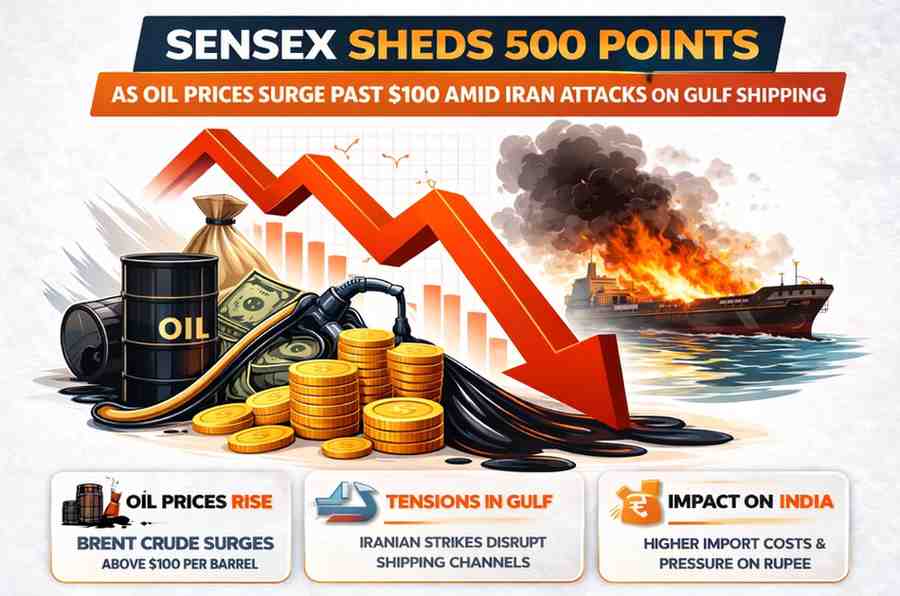
Indian stock markets came under pressure as the benchmark BSE Sensex dropped more than 500 points, reacting to a sharp surge in global oil prices after reports of Iranian strikes targeting shipping routes in the Gulf region.
The decline reflects growing investor concern about rising geopolitical tensions and the potential impact on global energy supply. Brent crude prices moved above $100 per barrel, triggering volatility in global markets and raising fears of higher inflation in oil-importing economies such as India.
For investors and policymakers, the development matters because crude oil prices directly influence India’s inflation outlook, currency stability, and corporate costs. Higher energy prices often affect sectors ranging from aviation to logistics and manufacturing.
The fall in the Sensex highlights how quickly global geopolitical events can affect domestic financial markets.
Sensex Drops Over 500 Points as Investors React to Oil Shock
India’s benchmark equity index, the BSE Sensex, witnessed a sharp fall during trading after global oil prices spiked.
Market data showed the index slipping by over 500 points during the session as investors responded to developments in the Middle East.
The broader market sentiment also weakened, with several sectors experiencing selling pressure.
The fall reflected risk-off sentiment among investors as geopolitical tensions raised concerns about potential disruptions to global energy supplies.
Equity markets often react quickly to such developments because rising oil prices can affect economic growth and corporate earnings.
Oil Prices Surge Past $100 Per Barrel
Global crude oil prices climbed above the $100 per barrel mark after reports of attacks on shipping routes in the Gulf region.
The rise in oil prices was driven by concerns that the situation could disrupt oil transportation through critical maritime routes.
Brent crude is widely used as a global benchmark for oil prices. A surge beyond the $100 level typically signals heightened geopolitical risk or supply concerns.
Energy markets closely monitor developments in the Middle East because the region remains one of the world’s largest oil-producing hubs.
Any disruption to supply routes can quickly push prices higher.
Impact of Iran Strikes on Gulf Shipping
Reports of Iranian strikes targeting shipping in Gulf waters have raised concerns about security in key energy transit routes.
One of the most critical maritime routes is the Strait of Hormuz, which connects the Persian Gulf to global shipping lanes.
A large portion of the world’s oil exports passes through this narrow waterway.
If shipping traffic is disrupted, even temporarily, oil supply chains could face delays or logistical challenges.
This risk often leads traders to push oil prices higher in anticipation of potential supply shortages.
Financial markets tend to react quickly to such geopolitical events.
Why Rising Oil Prices Affect Indian Markets
India is one of the world’s largest importers of crude oil.
Because the country imports a large share of its energy needs, changes in global oil prices can have significant economic effects.
Higher oil prices can increase:
• Fuel import costs
• Inflationary pressure
• Transportation expenses
• Input costs for industries
When oil prices rise sharply, investors often worry about the impact on corporate profitability and economic growth.
This concern can trigger selling pressure in stock markets.
Sectoral Impact on Indian Stocks
The surge in oil prices affects different sectors of the economy in different ways.
Companies that rely heavily on fuel often face higher operating costs.
Sectors that may be affected include:
• Aviation
• Logistics and transport
• Cement and manufacturing
• Paint and chemical industries
Airlines, for example, rely heavily on aviation turbine fuel. Higher crude prices often translate into increased fuel costs for airlines.
Similarly, logistics companies may see their transportation expenses rise.
On the other hand, energy companies involved in oil exploration and production sometimes benefit from higher crude prices.
Currency Pressure as Oil Prices Rise
Rising crude oil prices can also affect the value of the Indian rupee.
When oil prices rise, India’s import bill increases because the country must pay more for crude purchases.
This can lead to higher demand for the US dollar in international markets.
As a result, the rupee sometimes faces depreciation pressure during periods of rising oil prices.
Currency fluctuations can also affect companies that rely heavily on imports.
Global Markets Also React to Oil Price Volatility
The impact of rising oil prices was not limited to India.
Global equity markets also showed signs of volatility following the geopolitical developments.
Investors around the world tend to move towards safer assets during periods of uncertainty.
These assets may include:
• Gold
• Government bonds
• The US dollar
Stock markets often decline when investors adopt a cautious approach.
Energy markets, meanwhile, remain highly sensitive to geopolitical developments in the Middle East.
Investor Sentiment Turns Cautious
Market participants said that geopolitical tensions can increase uncertainty in financial markets.
When uncertainty rises, investors often reduce exposure to riskier assets such as equities.
Instead, they prefer assets that are considered relatively safe.
The sharp fall in the Sensex reflects this cautious sentiment.
Even though domestic economic indicators remain stable, global developments can still influence market behaviour.
This is especially true when events involve oil supply risks.
India’s Economic Exposure to Oil Prices
India imports a significant share of its crude oil requirements.
Because of this, the economy is particularly sensitive to fluctuations in global energy prices.
Higher crude prices can influence:
• Inflation levels
• Government fiscal planning
• Consumer fuel prices
• Industrial costs
Policymakers closely monitor oil prices because sustained increases can affect macroeconomic stability.
The government may sometimes adjust fuel taxes or subsidies to manage the impact on consumers.
What Investors Should Watch Next
Market participants will closely track several factors in the coming days.
These include:
• Developments in the Middle East conflict
• Stability of shipping routes in the Gulf
• Movement of global oil prices
• Reactions from major oil-producing nations
Any escalation of tensions could push oil prices even higher.
On the other hand, diplomatic developments or improved security for shipping routes could help stabilise energy markets.
Investors will also watch how global markets react to the situation.
Role of Global Energy Supply Chains
Energy supply chains play a critical role in the global economy.
Oil is transported through a network of shipping routes, pipelines, and storage facilities.
Any disruption to these systems can lead to sudden price increases.
The Gulf region remains central to global oil supply.
Many of the world’s largest oil exporters ship crude through the Strait of Hormuz.
Because of this, geopolitical tensions in the region often influence global energy prices.
Long-Term Outlook for Markets
Short-term volatility in stock markets is common during geopolitical crises.
However, long-term market performance typically depends on economic fundamentals such as growth, corporate earnings, and policy stability.
For India, domestic economic indicators such as consumption demand and infrastructure investment remain important drivers of market performance.
Even when global shocks occur, strong domestic fundamentals can help markets recover over time.
Conclusion
The fall of more than 500 points in the BSE Sensex reflects the immediate impact of global geopolitical tensions on Indian financial markets.
The surge in crude oil prices above $100 per barrel has raised concerns about supply disruptions and inflation risks.
For India, which depends heavily on imported crude, developments in global energy markets remain a key economic factor.
Investors will now watch closely for updates from the Middle East and movements in oil prices.
Until the situation becomes clearer, financial markets may continue to experience periods of volatility.
Disclaimer: The information presented in this article is intended for general informational purposes only. While every effort is made to ensure accuracy, completeness, and timeliness, data such as prices, market figures, government notifications, weather updates, holiday announcements, and public advisories are subject to change and may vary based on location and official revisions. Readers are strongly encouraged to verify details from relevant official sources before making financial, investment, career, travel, or personal decisions. This publication does not provide financial, investment, legal, or professional advice and shall not be held liable for any losses, damages, or actions taken in reliance on the information provided.
Last Updated on: Thursday, March 12, 2026 2:01 pm by Outlook News Team | Published by: Outlook News Team on Thursday, March 12, 2026 2:01 pm | News Categories: Business
About The Author