
Introduction: Why Sanju Samson’s Availability for the England Semi-Final Matters
India’s preparation for the ICC Men’s T20 World Cup 2026 semi-final against England has been overshadowed by an unexpected question – will Sanju Samson face a ban before the crucial match?
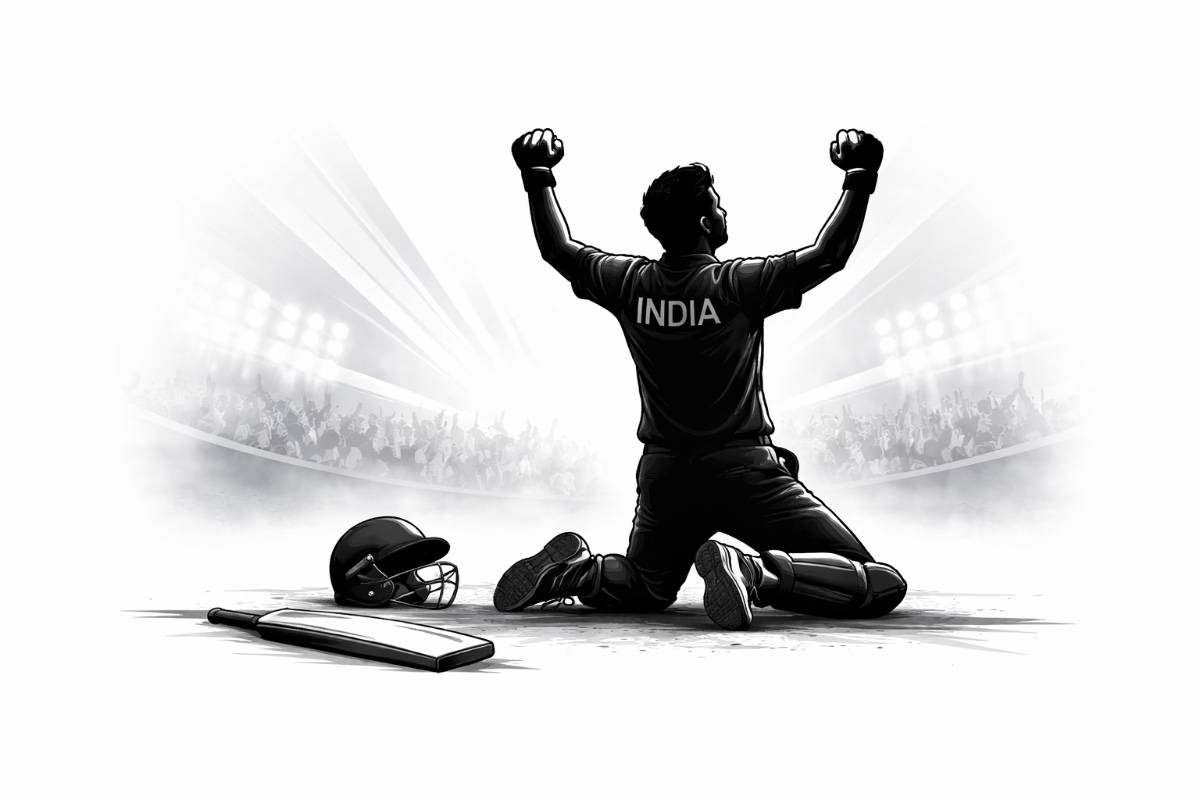
The speculation began after Samson’s emotional celebration following India’s dramatic win over West Indies, where the wicketkeeper-batter removed his helmet and dropped it to the ground after hitting the match-winning boundary. The moment quickly went viral on social media and triggered debate about whether the act violated the ICC Code of Conduct.
However, cricket experts and former officials have clarified that a suspension is highly unlikely, and Samson is expected to remain available for India’s T20 World Cup semi-final against England on 5 March 2026 at Mumbai’s Wankhede Stadium.
For India, the issue matters because Samson has been one of the key players in the tournament. His unbeaten 97-run knock against West Indies helped India secure a semi-final spot in the competition.
What Happened: The Celebration That Sparked the Debate
The controversy began during India’s crucial match against West Indies in the Super Eight stage of the tournament.
Chasing a difficult target of 196 runs, Samson played a match-winning innings of 97 not out, guiding India to victory with just a few balls remaining.
After striking the winning boundary, Samson celebrated emotionally by:
• Removing his helmet
• Dropping it onto the ground
• Going down on his knees in celebration
The moment was widely shared across social media platforms. Soon after, some fans began questioning whether the gesture could fall under “abuse of cricket equipment”, an offence listed under the ICC Code of Conduct.
This led to speculation that Samson might face disciplinary action before India’s semi-final against England.
Umpire’s Take: Why a Ban Is Unlikely
Former international umpire Anil Chaudhary has dismissed the idea that Samson could be banned for the incident.
According to Chaudhary, the action appeared to be a spontaneous celebration rather than an act of anger or dissent.
He explained that the ICC rules mainly target situations where players:
• Throw equipment in frustration
• Show dissent toward umpires
• Deliberately damage cricket gear
In Samson’s case, the act was seen as an emotional reaction to a match-winning moment, which is unlikely to be treated as serious misconduct.
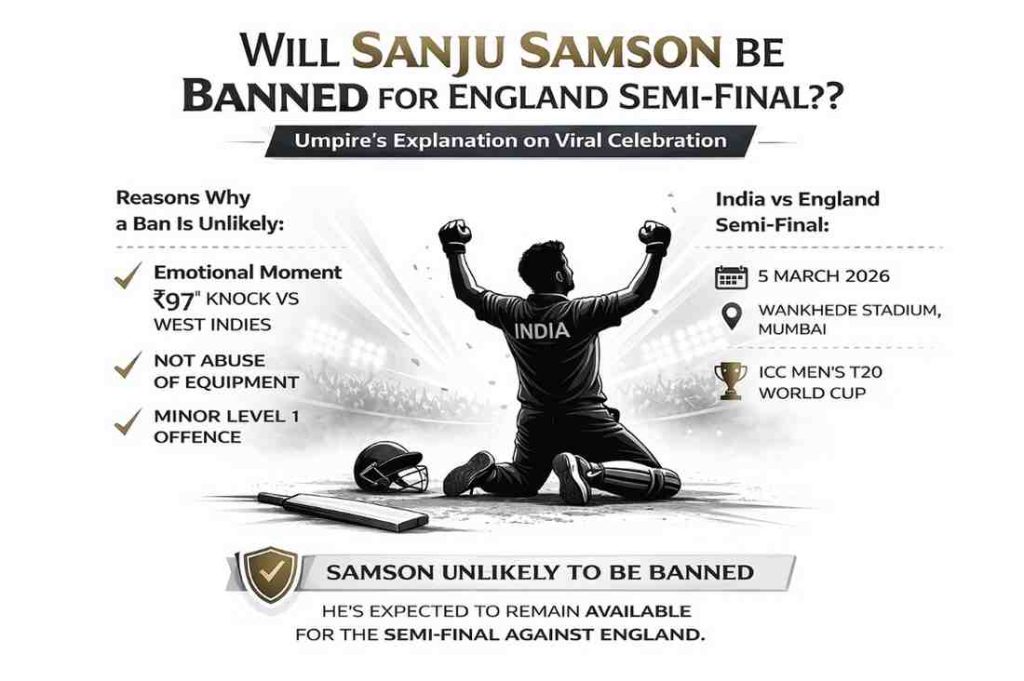
Experts say that if match officials review the incident, it would most likely fall under a minor Level 1 offence, which usually leads to a warning or fine rather than a suspension.
Understanding the ICC Code of Conduct
The debate around Samson’s celebration has drawn attention to Article 2.2 of the ICC Code of Conduct, which deals with the abuse of cricket equipment.
According to the rules, offences can include:
• Throwing or hitting cricket equipment
• Deliberately damaging helmets, bats, or stumps
• Showing anger or frustration through equipment misuse
However, the ICC classifies violations into different levels.
Level 1 Offence
This is the least serious category and usually results in:
• Official reprimand
• Fine of up to 50% of match fee
• One or two demerit points
Match bans rarely occur at this level.
Level 2 or Higher Offences
More serious offences may involve:
• Aggressive behaviour
• Repeated violations
• Dissent toward match officials
In such cases, a one-match or multi-match suspension may be imposed.
Cricket analysts say Samson’s incident does not appear to meet the threshold for a higher-level offence, making a suspension extremely unlikely.
Social Media Rumours vs Official Action
The speculation about a potential ban highlights how quickly rumours can spread during major tournaments.
Soon after the match, posts on social media claimed that Samson might miss the semi-final. However:
• No official disciplinary action has been announced by the ICC
• No match ban has been reported by tournament authorities
Experts note that decisions regarding player conduct are taken by the match referee, who reviews the incident and decides whether it warrants punishment.
In the absence of any official statement suggesting serious misconduct, the rumours about a ban remain unsubstantiated.
Samson’s Crucial Role in India’s T20 World Cup Campaign
The discussion around Samson’s celebration comes at a time when the batter is enjoying one of the most important phases of his international career.
His unbeaten 97 against West Indies was one of the defining performances of India’s campaign in the tournament so far.
That innings helped India complete the highest successful run chase of the tournament and secure a place in the final four.
India head coach Gautam Gambhir also praised Samson’s performance after the match, highlighting how the player delivered when the team needed him most.
India vs England Semi-Final: What’s at Stake
India’s semi-final clash against England is one of the most anticipated matches of the ICC Men’s T20 World Cup 2026.
Key details:
• Match: India vs England semi-final
• Venue: Wankhede Stadium, Mumbai
• Date: 5 March 2026
The match carries high stakes as both teams aim to reach the final of the tournament.
India are the defending champions and have reached the semi-final stage for the third consecutive T20 World Cup, while England remain one of the strongest teams in the format.
Samson’s form at the top of the batting order could be a major factor in the outcome.
The Real Challenge for Samson: England’s Pace Attack
While fans debate the possibility of disciplinary action, cricket analysts say Samson’s bigger challenge may come from England’s bowling attack.
Fast bowler Jofra Archer, in particular, is seen as a key threat.
Recent data suggests Samson has sometimes struggled against high pace and good-length deliveries, which are Archer’s strengths.
If Archer strikes early in the powerplay, India’s top order could face pressure in the high-stakes knockout match.
Why Emotional Celebrations Are Common in Cricket
Cricket history is full of emotional celebrations after match-winning moments.
Players often express relief and joy after intense games, especially in global tournaments.
Examples of common celebrations include:
• Dropping equipment in excitement
• Raising arms or helmets
• Kneeling in celebration
Match officials usually consider the context and intent before deciding whether an action breaches the Code of Conduct.
Experts say celebrations that show joy rather than anger rarely lead to severe penalties.
Conclusion: Samson Expected to Play the Semi-Final
Based on current information and expert opinion, Sanju Samson is not expected to face a ban before the England semi-final.
The helmet-dropping celebration appears to be an emotional reaction to a match-winning moment, rather than a deliberate act of equipment abuse.
Former umpire Anil Chaudhary and other experts have indicated that such actions normally do not lead to suspensions under ICC rules.
For India, the focus now shifts back to cricket.
With the semi-final against England approaching, the team will hope that Sanju Samson continues the form that helped them reach the final four of the T20 World Cup.
If he does, the celebration that sparked controversy may soon be remembered for what it really was a moment of pure joy after a match-winning innings.
Disclaimer: The information presented in this article is intended for general informational purposes only. While every effort is made to ensure accuracy, completeness, and timeliness, data such as prices, market figures, government notifications, weather updates, holiday announcements, and public advisories are subject to change and may vary based on location and official revisions. Readers are strongly encouraged to verify details from relevant official sources before making financial, investment, career, travel, or personal decisions. This publication does not provide financial, investment, legal, or professional advice and shall not be held liable for any losses, damages, or actions taken in reliance on the information provided.
Last Updated on: Thursday, March 5, 2026 1:55 pm by Outlook News Team | Published by: Outlook News Team on Thursday, March 5, 2026 1:55 pm | News Categories: Sports
About The Author