

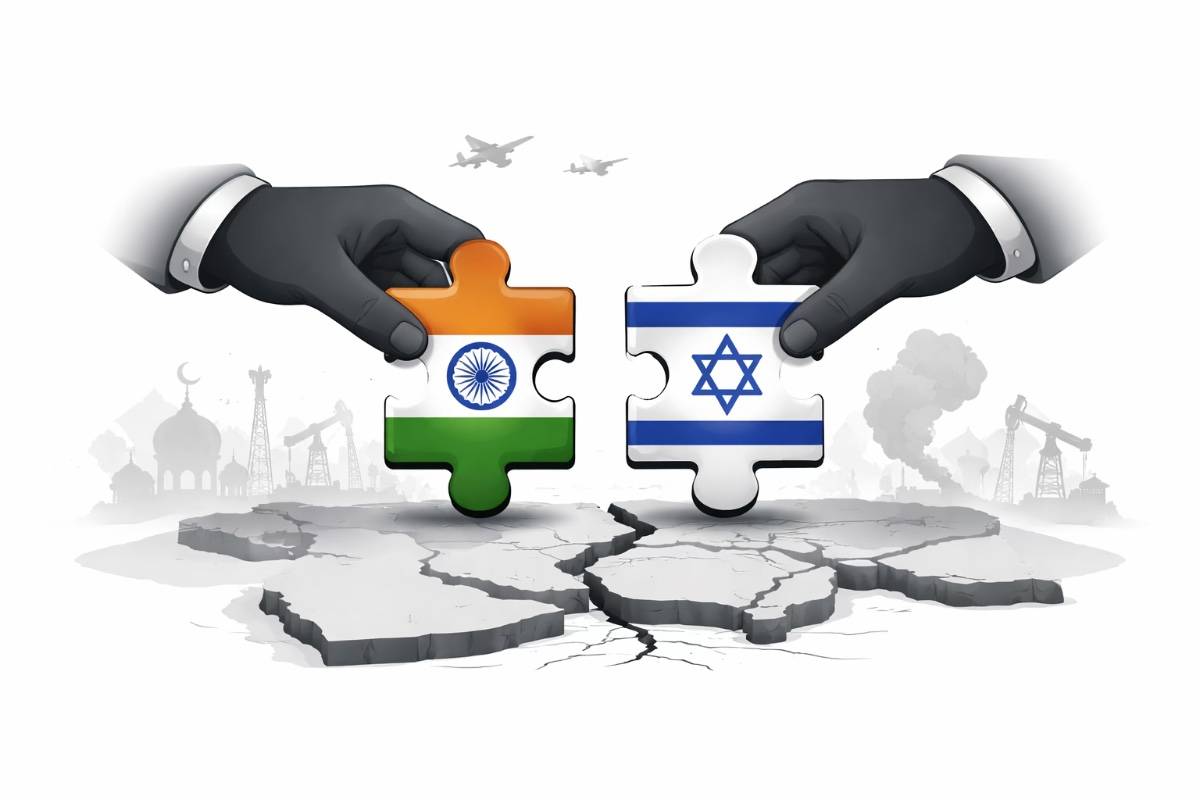
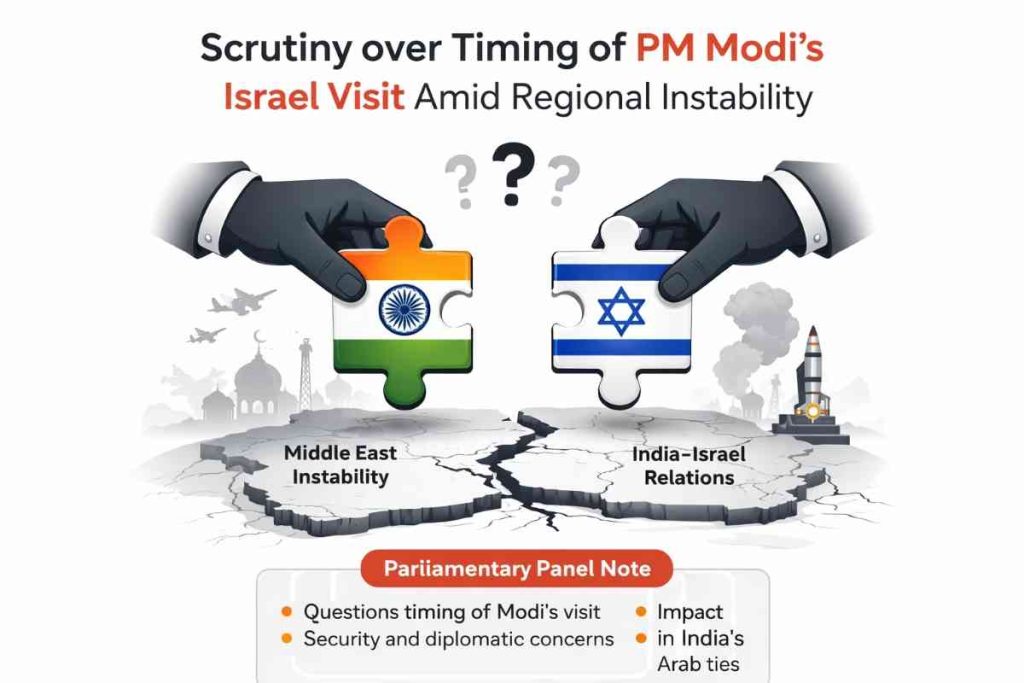
A parliamentary panel has raised questions over the timing of Prime Minister Narendra Modi’s proposed visit to Israel, citing rising instability in West Asia and security concerns in the region.
The issue has drawn attention as tensions continue in parts of the Middle East, affecting diplomatic ties and regional balance. The development matters for India because the country has strong strategic, defence, and economic relations with both Israel and key Arab nations.
The discussion reflects the delicate balance India maintains in its foreign policy, especially during periods of conflict in West Asia.
Why the Timing of the Visit Is Under Scrutiny
India shares close ties with Israel in defence, agriculture, water management, and technology. However, the region has witnessed ongoing conflict and diplomatic strain in recent months.
Members of a parliamentary committee reviewing foreign affairs reportedly raised concerns about whether a high-level visit at this time would send the right diplomatic message.
The concern is not about bilateral ties. Instead, it focuses on:
- Regional security risks
- Diplomatic sensitivity
- India’s relations with Arab countries
- Safety arrangements for a Prime Ministerial visit
The committee is understood to have discussed these aspects as part of its broader review of India’s foreign policy engagements.
India-Israel Relations: A Strategic Partnership
India established full diplomatic relations with Israel in 1992. Since then, ties have expanded across multiple sectors.
Prime Minister Narendra Modi made a historic visit to Israel in 2017, becoming the first Indian Prime Minister to do so.
That visit marked a turning point in India-Israel ties. Cooperation deepened in areas such as:
- Defence procurement
- Counter-terrorism
- Innovation and start-ups
- Agriculture and irrigation
- Cyber security
Israel remains one of India’s major defence partners.
At the same time, India maintains strong ties with countries in the Gulf region, including Saudi Arabia, the UAE, and Qatar. These relationships are vital for energy security and the welfare of millions of Indian expatriates.
Regional Instability in West Asia
West Asia has seen heightened tensions due to ongoing conflicts and geopolitical shifts. The situation has created uncertainty across the region.
Security experts often caution that high-level diplomatic visits during volatile periods require careful assessment.
India has traditionally followed a balanced approach in West Asia. It supports peaceful resolution of conflicts and maintains communication with all key stakeholders.
The parliamentary panel’s questions appear to reflect this cautious approach rather than a shift in India’s policy toward Israel.
Role of Parliamentary Committees in Foreign Policy Oversight
Parliamentary standing committees play an important role in reviewing government policies. They examine matters related to ministries and departments and provide recommendations.
The foreign affairs committee reviews:
- Diplomatic engagements
- International agreements
- Regional security developments
- Budget allocations for overseas missions
While such committees do not decide foreign policy, their observations carry weight. They help ensure transparency and accountability.
In this case, the committee’s discussion focused on timing and broader diplomatic context.
India’s Balancing Act in West Asia
India has managed to build strong partnerships with both Israel and Palestine.
India has consistently supported a two-state solution and peaceful negotiations. At the same time, it has strengthened strategic cooperation with Israel.
This balanced approach allows India to:
- Protect energy interests
- Secure defence partnerships
- Safeguard Indian nationals abroad
- Maintain regional goodwill
A Prime Ministerial visit during a sensitive period could draw attention internationally. The panel’s concern likely reflects awareness of this diplomatic complexity.
Security Considerations for High-Level Visits
Visits by heads of government involve detailed security planning. When regional tensions are high, risk assessments become more complex.
Factors usually considered include:
- Ground security situation
- Risk of escalation
- Diplomatic signals to other nations
- International reactions
India has previously postponed or rescheduled diplomatic visits due to global developments. Such decisions are often taken after consultation between the Prime Minister’s Office and the Ministry of External Affairs.
Official Position So Far
As of now, there has been no public announcement cancelling or postponing any visit. The government has not indicated a change in schedule.
The Ministry of External Affairs typically confirms official visits closer to the date.
Parliamentary discussions do not automatically lead to changes in diplomatic plans. They serve as advisory inputs.
Strategic Importance of Israel for India
Israel plays a key role in India’s defence and technology ecosystem.
Cooperation includes:
- Missile systems
- Drone technology
- Border surveillance systems
- Agricultural innovation projects
India and Israel also collaborate on start-ups and research partnerships.
The relationship has grown steadily over the past decade, with regular high-level exchanges.
India’s Interests in the Gulf Region
India’s engagement with West Asia goes beyond Israel.
The Gulf region is important because:
- It supplies a significant share of India’s crude oil imports
- Millions of Indian citizens work there
- Trade and investment flows are strong
India’s diplomatic efforts aim to maintain stability and strong ties across the region.
Any high-profile visit is evaluated in the context of these broader interests.
Domestic Political Reactions
Foreign policy decisions often attract political debate.
Some lawmakers believe that strong engagement with Israel reflects India’s strategic independence. Others argue that timing must reflect regional realities.
However, no formal resolution or directive has been issued against the proposed visit.
The matter remains under discussion.
What Happens Next
The final decision on the visit will depend on multiple factors:
- Diplomatic consultations
- Security assessments
- Regional developments
- Scheduling considerations
India’s foreign policy has historically adapted to changing global conditions.
If tensions ease, the visit may proceed as planned. If instability continues, the government could review the timing.
India’s Broader West Asia Strategy
India has strengthened its presence in West Asia through economic partnerships and multilateral platforms.
It has engaged in regional initiatives and expanded cooperation in infrastructure, renewable energy, and technology.
India’s approach remains pragmatic. It seeks strategic autonomy while maintaining relations with diverse partners.
The parliamentary panel’s discussion highlights the importance of careful timing in diplomatic engagements.
Conclusion: A Question of Timing, Not Policy Shift
The parliamentary panel’s questions about Prime Minister Narendra Modi’s Israel visit focus on timing amid regional instability.
There is no indication of a change in India-Israel relations.
Instead, the discussion reflects the need for careful diplomatic calibration during periods of conflict.
India continues to maintain a balanced approach in West Asia. It values its strategic partnership with Israel while preserving strong ties with Arab nations.
As regional developments unfold, the government is likely to assess the situation carefully before confirming any high-level visit.
For Indian readers, the key takeaway is clear: the debate is about timing and security, not about altering India’s core foreign policy commitments.
Disclaimer: The information presented in this article is intended for general informational purposes only. While every effort is made to ensure accuracy, completeness, and timeliness, data such as prices, market figures, government notifications, weather updates, holiday announcements, and public advisories are subject to change and may vary based on location and official revisions. Readers are strongly encouraged to verify details from relevant official sources before making financial, investment, career, travel, or personal decisions. This publication does not provide financial, investment, legal, or professional advice and shall not be held liable for any losses, damages, or actions taken in reliance on the information provided.
Last Updated on: Tuesday, February 24, 2026 10:38 am by Outlook News Team | Published by: Outlook News Team on Tuesday, February 24, 2026 10:38 am | News Categories: General
About The Author