

Why Eating More Not Less Could Be the Key to Healthy, Lasting Fat Loss
A growing number of fitness experts are challenging the idea that extreme dieting leads to long-term weight loss. Instead, many trainers now say that eating more in a balanced way can actually help people lose weight sustainably.
The message may sound surprising. For years, crash diets and strict calorie cutting have dominated social media. But trainers and nutrition experts warn that severe restriction often leads to fatigue, muscle loss, and weight regain.
The idea behind the “eat more” approach is simple: fuel your body properly so it can burn fat efficiently, preserve muscle, and maintain energy levels.
Here’s what experts say about this sustainable weight loss strategy — and why it is gaining attention.
Why Extreme Dieting Often Fails
Many people trying to lose weight start by drastically cutting calories. Some skip meals. Others avoid entire food groups.
While this may lead to quick weight loss at first, experts say it rarely works in the long term.
Common problems with extreme calorie restriction include:
- Slower metabolism
- Muscle loss
- Low energy
- Nutrient deficiencies
- Increased cravings
When the body does not get enough food, it adapts by conserving energy. This can slow down fat loss over time.
Once normal eating resumes, weight often returns.
What “Eat More” Actually Means
The phrase “eat more” does not mean overeating junk food.
Instead, trainers explain that it means:
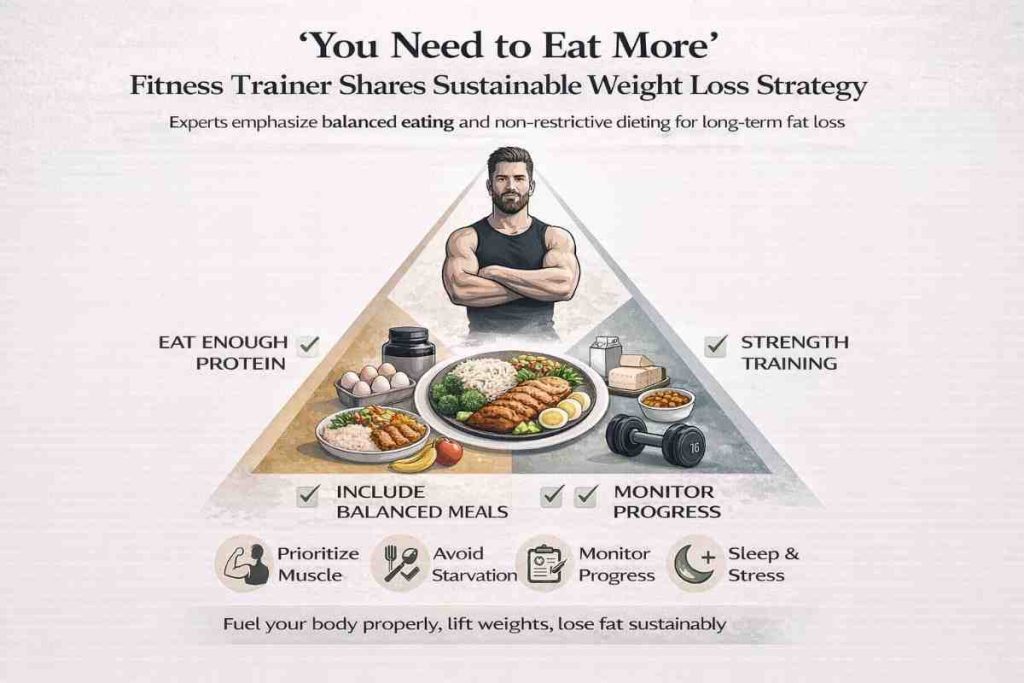
- Eating enough protein
- Including balanced carbohydrates
- Adding healthy fats
- Avoiding severe calorie cuts
- Fueling workouts properly
In simple terms, it means eating smart, not eating less.
Sustainable weight loss depends on a moderate calorie deficit — not starvation.
The Science Behind Sustainable Weight Loss
According to nutrition experts, weight loss happens when the body uses more energy than it consumes. However, the size of the calorie deficit matters.
A small, consistent deficit is often more effective than a large one.
For example:
- Cutting 300–500 calories per day is generally considered moderate
- Cutting 1,000 calories or more can be hard to maintain
When calorie cuts are too extreme, the body may break down muscle for energy. Losing muscle reduces metabolic rate.
Eating enough protein and total calories helps preserve muscle mass. This supports long-term fat loss.
Protein: The Most Important Nutrient in Fat Loss
One key part of the “eat more” strategy is increasing protein intake.
Protein helps:
- Build and maintain muscle
- Control hunger
- Improve recovery after workouts
- Increase calorie burn during digestion
Fitness experts often recommend spreading protein intake across meals instead of eating it all at once.
Common high-protein options include:
- Eggs
- Paneer
- Lentils
- Greek yogurt
- Chicken
- Fish
For vegetarians in India, combining dal, beans, tofu, and dairy products can help meet protein needs.
Carbohydrates Are Not the Enemy
Many crash diets remove carbohydrates completely. But trainers say this can backfire.
Carbohydrates provide energy for:
- Workouts
- Daily movement
- Brain function
Without enough carbs, people may feel weak or tired.
Whole grains, fruits, and vegetables offer fiber and nutrients that support overall health.
The focus should be on quality, not elimination.
Strength Training Supports the “Eat More” Method
Another key part of sustainable fat loss is resistance training.
Lifting weights or doing bodyweight exercises helps:
- Preserve muscle
- Improve metabolism
- Shape the body
- Increase long-term calorie burn
When people eat enough protein and train consistently, they are more likely to lose fat rather than muscle.
Cardio alone is not enough for long-term transformation.
Why Slow Weight Loss Is Better
Experts say healthy weight loss is usually around:
- 0.5 to 1 kilogram per week
Faster results may look appealing, but rapid weight loss often leads to:
- Muscle loss
- Dehydration
- Hormonal imbalance
- Weight regain
Slow progress is more sustainable and safer.
Mental Health and Sustainable Dieting
Strict dieting can increase stress and anxiety around food.
The “eat more” strategy promotes balance.
It encourages:
- Flexible meal planning
- Occasional treats
- Realistic expectations
- Long-term habits
This mindset reduces the risk of binge eating.
It also makes the journey more manageable.
Common Mistakes to Avoid
While eating more can help, it must be done carefully.
Common mistakes include:
- Ignoring portion control
- Underestimating calorie intake
- Skipping protein
- Not tracking progress
- Expecting instant results
Experts advise monitoring body measurements, strength gains, and energy levels not just the number on the scale.
Indian Diet Context: How to Apply This Strategy
For Indian readers, sustainable weight loss can fit into traditional diets.
Balanced meal ideas include:
- Roti with sabzi and dal
- Rice with rajma and curd
- Idli with sambar
- Upma with added protein
- Oats with nuts and milk
The key is portion balance.
Adding protein sources like paneer, sprouts, tofu, or eggs can improve results.
Why This Trend Is Gaining Popularity
Social media is filled with quick transformation videos. However, more trainers are now focusing on realistic results.
People are realising that:
- Crash diets are hard to maintain
- Weight regain is common
- Energy and strength matter
- Health is more than just scale weight
As awareness grows, sustainable methods are becoming more popular.
Expert Advice: Focus on Habits, Not Hacks
Fitness professionals emphasise that long-term fat loss depends on:
- Consistency
- Balanced nutrition
- Strength training
- Sleep
- Stress management
There is no magic shortcut.
The “eat more” idea is not a trick. It is a shift away from extreme dieting.
Who Should Be Careful
People with medical conditions such as diabetes, thyroid disorders, or heart disease should consult a doctor before making major diet changes.
Pregnant women and older adults also need personalised guidance.
A registered dietitian can help create a safe and effective plan.
Conclusion
The idea that “you need to eat more” for weight loss challenges old dieting myths.
Instead of severe restriction, experts recommend:
- Eating enough protein
- Maintaining a moderate calorie deficit
- Lifting weights
- Losing weight slowly
- Building habits for life
Sustainable weight loss is not about eating as little as possible. It is about fueling your body properly while creating a small energy deficit.
For Indian readers looking for long-term results, balance may be more powerful than extreme dieting.
In the end, healthy weight loss is not about quick fixes. It is about smart nutrition, patience, and consistency.
Disclaimer: The information presented in this article is intended for general informational purposes only. While every effort is made to ensure accuracy, completeness, and timeliness, data such as prices, market figures, government notifications, weather updates, holiday announcements, and public advisories are subject to change and may vary based on location and official revisions. Readers are strongly encouraged to verify details from relevant official sources before making financial, investment, career, travel, or personal decisions. This publication does not provide financial, investment, legal, or professional advice and shall not be held liable for any losses, damages, or actions taken in reliance on the information provided.
Last Updated on: Friday, February 20, 2026 5:20 pm by Outlook News Team | Published by: Outlook News Team on Friday, February 20, 2026 5:20 pm | News Categories: Lifestyle
About The Author