

Why Ramadan 2026 Matters for Millions in India
Ramadan 2026 has begun for Muslims across India following the sighting of the crescent moon. The holy month is one of the most important periods in the Islamic calendar. It is observed through fasting, prayer, charity, and reflection.
In India, home to one of the world’s largest Muslim populations, Ramadan holds deep religious and cultural significance. Mosques, markets, and homes witness increased activity during this month.
This guide explains the key dates, fasting rules, daily practices, and major observances related to Ramadan 2026 in India.
When Did Ramadan 2026 Begin in India?
Ramadan follows the Islamic lunar calendar. The month begins after the sighting of the crescent moon.
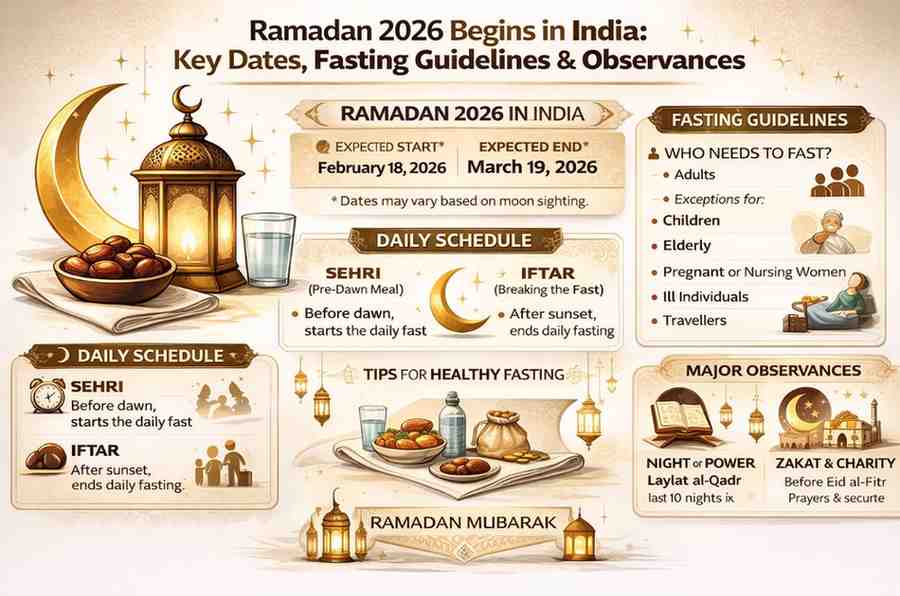
For Ramadan 2026, the holy month began in India after the crescent moon was sighted, marking the first day of fasting. Since the Islamic calendar is based on lunar cycles, the start date may vary by region depending on moon sighting reports.
The month lasts for 29 or 30 days, depending on the next moon sighting.
What Is Ramadan?
Ramadan is the ninth month of the Islamic calendar. It is observed by Muslims worldwide as a month of fasting from dawn to sunset.
Fasting during Ramadan is one of the Five Pillars of Islam. The other pillars include:
- Declaration of faith
- Prayer
- Charity
- Pilgrimage
During Ramadan, adult Muslims fast daily, avoiding food and drink from dawn until sunset.
Daily Fasting: Sehri and Iftar Explained
Each day of Ramadan includes two important meals:
Sehri (Pre-Dawn Meal)
Sehri is eaten before the Fajr prayer, which marks the start of the fast. After Sehri, no food or drink is consumed until sunset.
Iftar (Breaking the Fast)
Iftar takes place at sunset. Many people traditionally break their fast with dates and water, followed by a full meal.
Timings for Sehri and Iftar vary by city. For example:
- In Delhi, Sehri and Iftar times differ slightly from Mumbai or Hyderabad.
- Local mosques and Islamic organisations publish daily timing charts.
Muslims are advised to check city-specific schedules for accurate daily timings.
Who Must Fast During Ramadan?
Fasting during Ramadan is mandatory for healthy adult Muslims. However, certain exemptions apply:
- Children
- Elderly individuals
- Pregnant or nursing women
- People with serious illness
- Travellers
Those unable to fast due to valid reasons may compensate later or offer charity as prescribed in Islamic teachings.
Special Prayers During Ramadan
In addition to the five daily prayers, Muslims perform extra prayers during Ramadan.
Taraweeh Prayers
Taraweeh prayers are offered at night after the Isha prayer. These prayers are usually performed in congregation at mosques.
Many mosques in cities such as Delhi, Lucknow, Hyderabad, and Mumbai see large gatherings during Taraweeh.
Quran Recitation
Ramadan is also the month in which Muslims believe the Quran was revealed. Many believers aim to complete the recitation of the entire Quran during the month.
Laylat al-Qadr (Night of Power)
One of the most significant nights during Ramadan is Laylat al-Qadr, also known as the Night of Power.
It falls during the last ten days of Ramadan, often observed on one of the odd-numbered nights.
Muslims believe this night carries great spiritual rewards. Many spend the night in prayer and reflection.
Zakat and Charity in Ramadan
Charity plays a major role during Ramadan.
Zakat
Zakat is an obligatory form of charity for eligible Muslims. It is calculated based on savings and assets.
Zakat al-Fitr
Before the end of Ramadan, Muslims give Zakat al-Fitr, which ensures that people in need can celebrate Eid al-Fitr.
Charitable organisations across India increase food distribution and aid activities during Ramadan.
Eid al-Fitr: The Festival After Ramadan
Ramadan concludes with the celebration of Eid al-Fitr.
Eid al-Fitr begins after the sighting of the Shawwal moon, marking the end of fasting.
On Eid:
- Special congregational prayers are held.
- Families gather for meals.
- Charity is distributed.
- Greetings and visits take place.
In India, Eid is a public holiday in most states.
Ramadan Observance in Indian Cities
India’s diversity is visible during Ramadan.
Delhi
Old Delhi’s markets such as Jama Masjid and surrounding areas become vibrant during Iftar hours.
Hyderabad
Charminar and nearby markets see late-night food stalls and increased activity.
Mumbai
Areas like Mohammed Ali Road are known for Ramadan food markets.
Lucknow
Traditional Awadhi dishes are popular during Sehri and Iftar.
Mosques across cities hold community Iftar gatherings.
Health and Safety Guidelines During Fasting
Fasting for long hours can affect hydration and energy levels. Health experts recommend:
- Drinking sufficient water during non-fasting hours
- Eating balanced meals during Sehri
- Avoiding excessive fried or sugary foods
- Getting adequate rest
People with medical conditions should consult doctors before fasting.
Work and School During Ramadan
Ramadan is not a nationwide public holiday in India. However, many workplaces and schools make adjustments.
Some institutions allow:
- Flexible working hours
- Shorter office timings
- Prayer breaks
State governments may issue specific advisories depending on local conditions.
Moon Sighting and Official Announcements
Moon sighting announcements are typically made by religious authorities and committees in different states.
Organisations such as state-level moon sighting committees confirm the beginning and end of Ramadan.
Since India follows local moon sightings, dates may differ slightly from Middle Eastern countries.
Economic and Social Impact
Ramadan also influences markets and local economies.
- Increased demand for food items
- Higher footfall in markets after sunset
- Growth in charity activities
Small businesses, especially food vendors, often see higher sales during the month.
Ramadan 2026: Key Points at a Glance
- Month: Ninth month of Islamic calendar
- Duration: 29 or 30 days
- Daily Fast: From dawn to sunset
- Key Night: Laylat al-Qadr (last ten days)
- Conclusion: Eid al-Fitr
Conclusion
Ramadan 2026 has begun in India with prayers, fasting, and reflection.
For millions of Muslims across the country, this month is a time of spiritual growth, charity, and community bonding.
From early morning Sehri to evening Iftar gatherings, Ramadan shapes daily life in homes, mosques, and markets.
As the month progresses, believers focus on discipline, prayer, and compassion.
Eid al-Fitr will mark the end of this sacred period, bringing celebration after a month of devotion.
Readers are advised to check local mosque announcements for daily fasting timings and Eid moon sighting updates.
Ramadan Mubarak to all observing the holy month.
Disclaimer: The information presented in this article is intended for general informational purposes only. While every effort is made to ensure accuracy, completeness, and timeliness, data such as prices, market figures, government notifications, weather updates, holiday announcements, and public advisories are subject to change and may vary based on location and official revisions. Readers are strongly encouraged to verify details from relevant official sources before making financial, investment, career, travel, or personal decisions. This publication does not provide financial, investment, legal, or professional advice and shall not be held liable for any losses, damages, or actions taken in reliance on the information provided.
Last Updated on: Thursday, February 19, 2026 11:08 am by Outlook News Team | Published by: Outlook News Team on Thursday, February 19, 2026 11:08 am | News Categories: Lifestyle
About The Author