

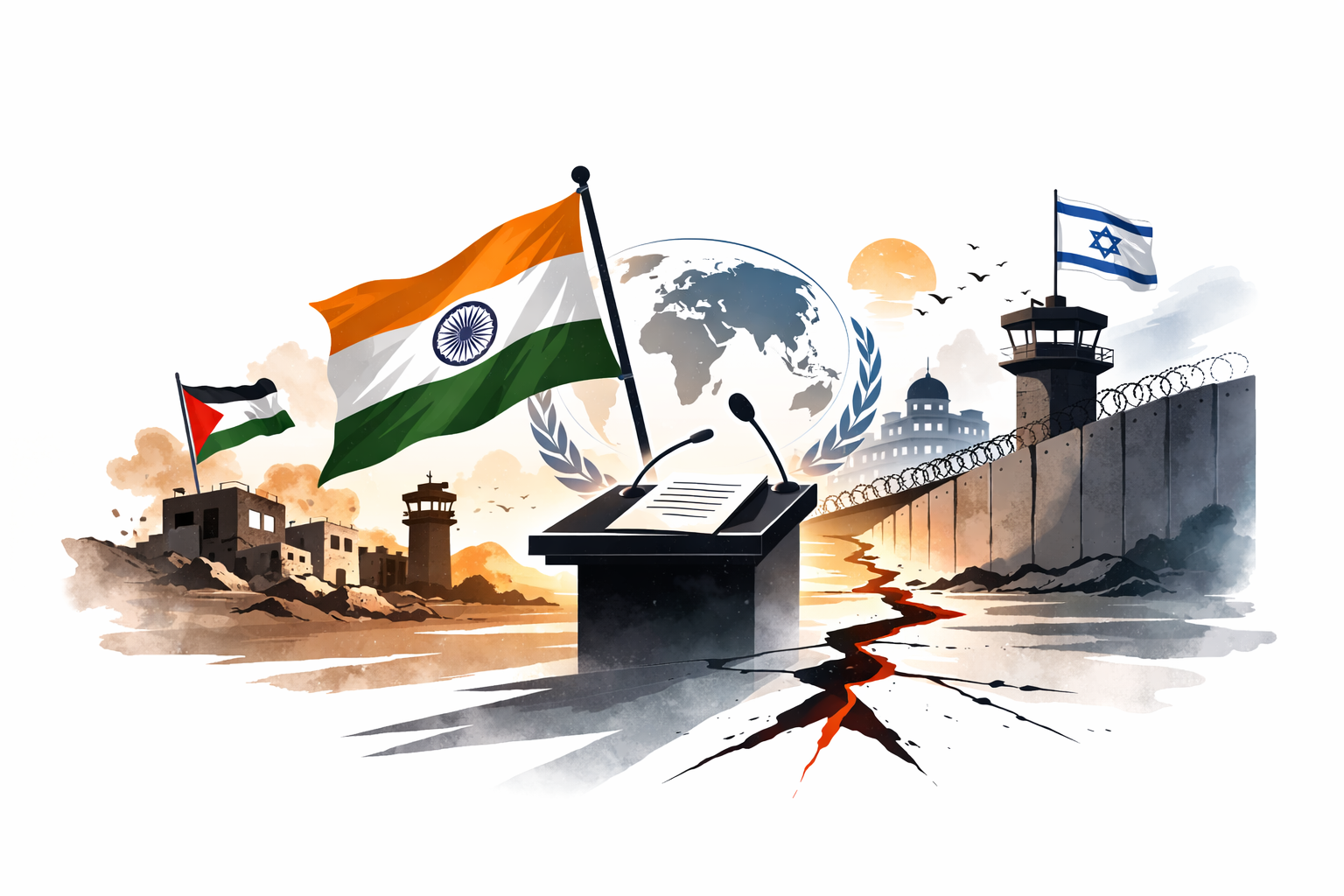
Why This Development Matters Now
India has added its voice to growing international concern over recent measures taken by Israel in the West Bank. The issue has drawn global attention as tensions in the region continue to affect diplomatic ties, regional stability, and humanitarian conditions.
India’s position is important because it maintains diplomatic relations with both Israel and Palestine. Any public statement from New Delhi is closely watched in West Asia and by global powers.
The development comes amid wider international debate over settlements, security operations, and humanitarian access in the occupied West Bank.
What Is Happening in the West Bank?
The West Bank is a territory located east of Israel and west of the Jordan River. It has been at the centre of the Israeli-Palestinian conflict for decades.
Israel has maintained military control over large parts of the West Bank since 1967. Over the years, Israeli settlements have been built in the territory. These settlements are considered illegal under international law by many countries and the United Nations, though Israel disputes this interpretation.
Recent measures taken by Israel in the West Bank have triggered criticism from several governments and international organisations. These include concerns about settlement expansion, restrictions on movement, and security operations.
India’s Official Position
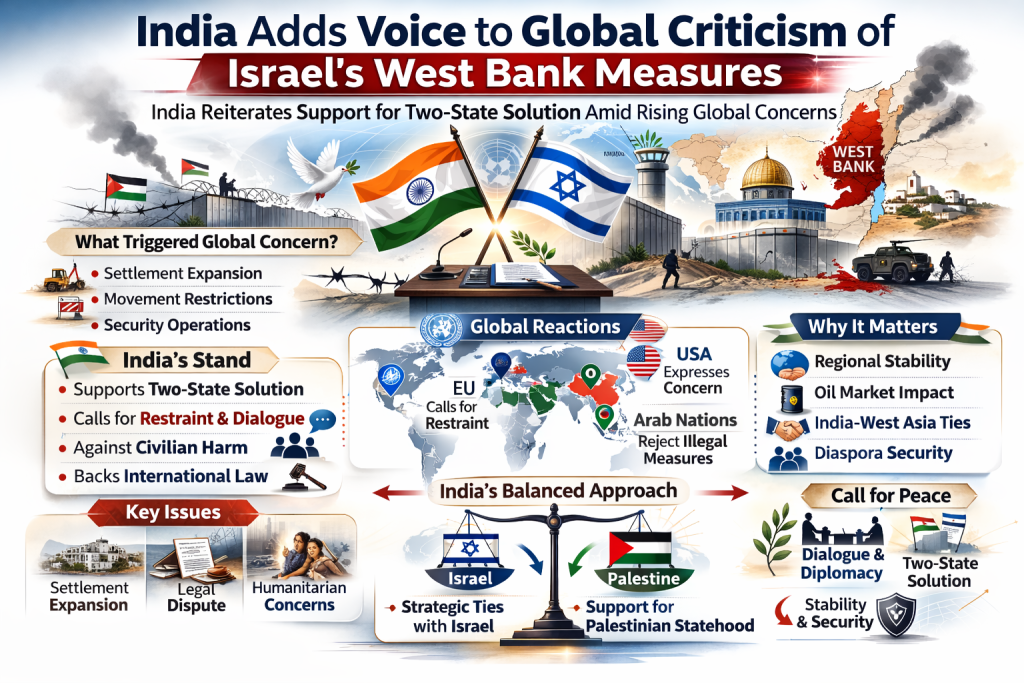
India has traditionally supported a two-state solution. This position calls for Israel and Palestine to live side by side as sovereign states within secure and recognised borders.
In recent diplomatic communications and multilateral forums, India has reiterated its call for:
- Restraint by all sides
- Avoidance of actions that change the status quo
- Respect for international law
- Protection of civilian lives
India’s Ministry of External Affairs has often emphasised the need for dialogue and diplomacy as the only path to lasting peace.
Balancing Relations: India, Israel and Palestine
India shares strong strategic ties with Israel. These ties include cooperation in:
- Defence
- Agriculture
- Technology
- Water management
At the same time, India has long-standing political support for the Palestinian cause. India recognised Palestine in 1988 and has consistently backed its aspirations for statehood.
This balanced approach allows India to maintain relations with both sides while advocating peace and stability.
Global Reaction to West Bank Developments
Several countries and international organisations have criticised recent Israeli actions in the West Bank.
The United Nations has repeatedly expressed concern over settlement expansion. The UN considers settlements in occupied territories to be in violation of international law.
The European Union has also called for restraint and respect for international humanitarian law.
The United States has at times voiced concern about settlement activity, although it maintains close ties with Israel.
India’s statement aligns with broader international calls for de-escalation.
Understanding the Two-State Solution
The two-state solution remains the widely supported diplomatic framework for resolving the Israeli-Palestinian conflict.
Under this proposal:
- Israel would remain a secure and recognised state.
- An independent Palestinian state would be established in the West Bank and Gaza.
- Jerusalem’s final status would be negotiated.
Despite decades of negotiations, a final agreement has not been reached.
India continues to publicly support this framework in international forums.
Why the West Bank Matters Globally
The West Bank is not only a regional issue. It has global diplomatic impact.
Escalation in the region can affect:
- Oil markets
- Regional security
- Migration patterns
- International alliances
For India, stability in West Asia is important due to:
- Energy imports
- Indian diaspora living in the region
- Trade partnerships
Any instability can have indirect economic and strategic effects.
Humanitarian Concerns
International organisations have raised concerns about civilian safety and access to basic services in the West Bank.
Humanitarian agencies have called for:
- Protection of civilians
- Unrestricted access to medical services
- Safeguarding of infrastructure
India has consistently supported humanitarian assistance in conflict zones and has contributed to UN relief efforts in the past.
Diplomatic Channels and Multilateral Forums
India often expresses its views on such issues at:
- The United Nations General Assembly
- UN Security Council discussions
- Bilateral diplomatic meetings
As a country that values strategic autonomy, India typically avoids extreme positions and instead calls for dialogue.
New Delhi’s response reflects this consistent diplomatic approach.
India’s Foreign Policy Approach
India’s foreign policy in West Asia has evolved over time.
In recent years, India has strengthened ties with Israel in defence and technology. At the same time, it has maintained support for Palestinian statehood.
India’s approach is based on:
- Strategic partnerships
- Non-interference
- Respect for sovereignty
- Support for peaceful resolution of disputes
This balanced diplomacy allows India to engage with multiple stakeholders.
Security and Strategic Implications
The West Bank situation also has implications for regional security.
Escalation can lead to:
- Increased violence
- Diplomatic tensions
- Wider regional instability
India’s call for restraint signals concern about further escalation.
As a major global economy and rising diplomatic power, India’s voice adds weight to international discussions.
Economic Considerations
India’s trade with Israel includes defence equipment and agricultural technology.
India also imports significant energy from West Asian countries.
Stability in the region supports:
- Smooth trade routes
- Stable oil prices
- Safe working conditions for Indian expatriates
Therefore, India’s diplomatic engagement reflects both political principles and practical interests.
What Happens Next?
Diplomatic developments in the West Bank situation depend on ongoing negotiations and global mediation efforts.
Possible next steps may include:
- Continued UN discussions
- Bilateral talks between Israel and Palestine
- Statements from major global powers
India is expected to continue advocating peaceful dialogue.
Conclusion
India’s addition to global criticism of certain Israeli measures in the West Bank highlights its continued support for a negotiated and peaceful solution.
New Delhi’s position reflects its long-standing backing of the two-state framework and its commitment to regional stability.
As tensions continue, India’s balanced diplomatic approach aims to protect its strategic interests while supporting international law and humanitarian principles.
The situation remains dynamic. Further developments are expected as diplomatic efforts continue in international forums.
For Indian readers, the issue matters because it affects regional stability, global politics, and India’s strategic interests in West Asia.
Disclaimer: The information presented in this article is intended for general informational purposes only. While every effort is made to ensure accuracy, completeness, and timeliness, data such as prices, market figures, government notifications, weather updates, holiday announcements, and public advisories are subject to change and may vary based on location and official revisions. Readers are strongly encouraged to verify details from relevant official sources before making financial, investment, career, travel, or personal decisions. This publication does not provide financial, investment, legal, or professional advice and shall not be held liable for any losses, damages, or actions taken in reliance on the information provided.
Last Updated on: Thursday, February 19, 2026 10:56 am by Outlook News Team | Published by: Outlook News Team on Thursday, February 19, 2026 10:56 am | News Categories: News
About The Author