
Fresh Blow to Cybercrime and Terror Funding Channels in J&K
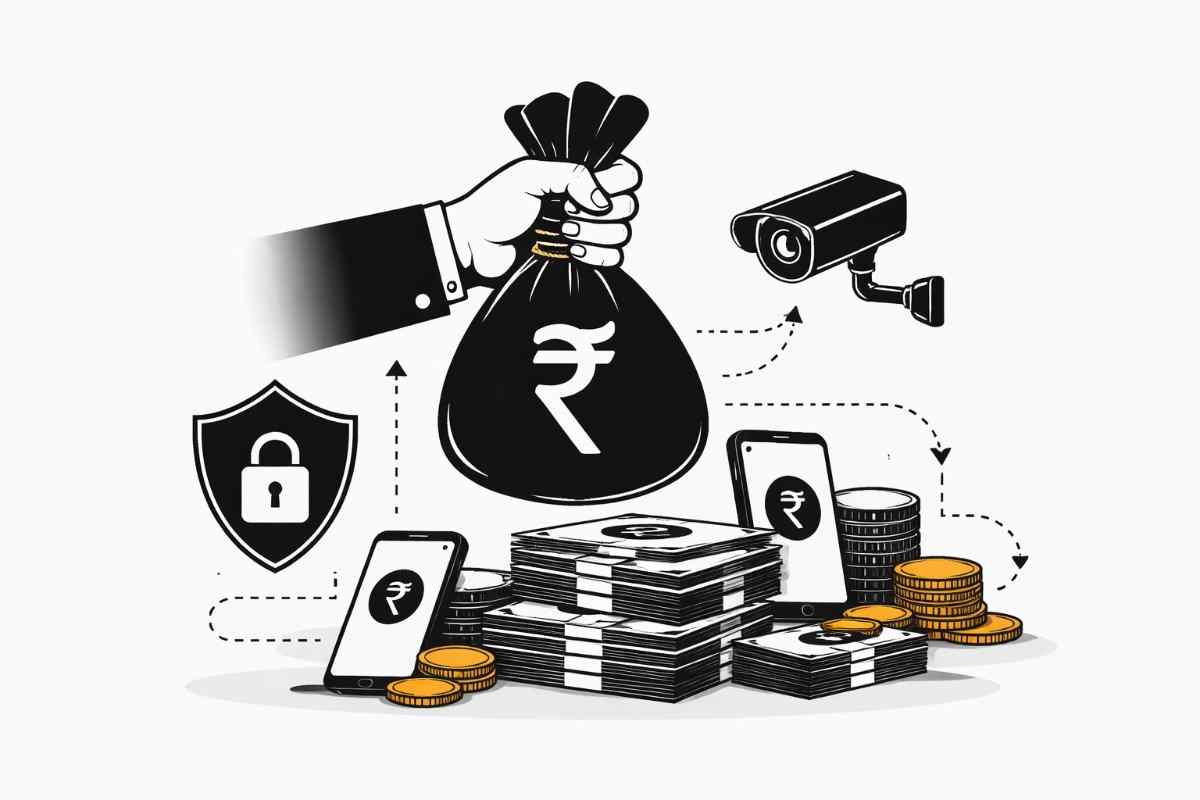
Security forces in Jammu and Kashmir have disrupted a mule account network allegedly being used for illegal financial transactions. The development is significant as mule accounts are often linked to cyber fraud, terror financing, and money laundering.
Officials confirmed that the crackdown is part of a wider push to tighten financial surveillance in the Union Territory. Authorities have not released sensitive operational details, but they said investigations are ongoing.
The action comes at a time when India is witnessing a sharp rise in digital fraud cases. Law enforcement agencies have been increasing monitoring of suspicious banking activities across the country.
What Are Mule Accounts and Why They Matter
A mule account is a bank account used to transfer or hide illegally obtained money. These accounts are often opened in the name of individuals who may not fully understand how their account is being misused.
In many cases, fraudsters recruit people by offering small commissions. The account holders then allow funds to pass through their accounts. This makes it harder for agencies to track the real source of the money.
Security experts warn that mule accounts are frequently used in:
- Online financial scams
- Phishing operations
- Illegal cryptocurrency transfers
- Terror funding networks
By targeting these accounts, authorities aim to break the financial backbone of such operations.
Agencies Involved in the Crackdown
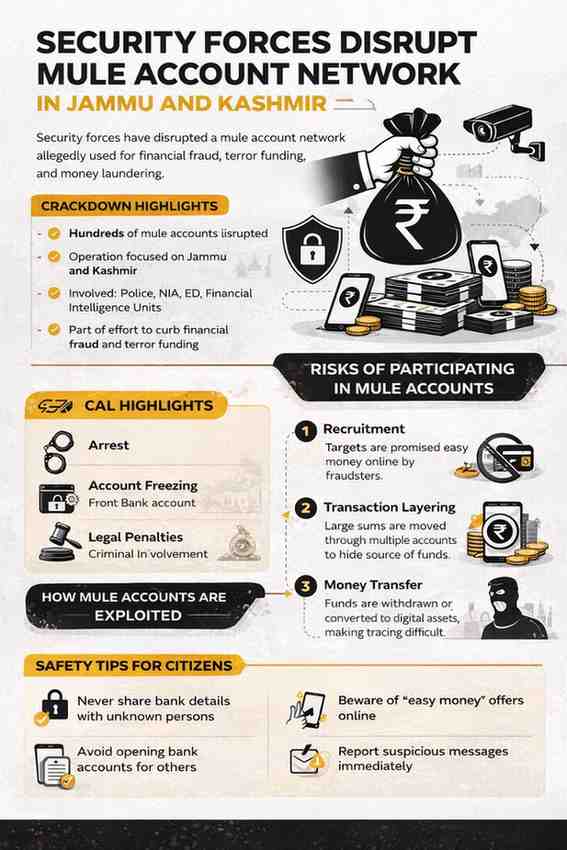
The operation in Jammu and Kashmir was carried out by local police units along with central security agencies. Financial intelligence units were also involved in tracking suspicious transactions.
In recent years, agencies such as the Enforcement Directorate (ED) and the National Investigation Agency (NIA) have increased scrutiny of suspicious banking networks in sensitive regions.
The move aligns with national efforts to curb financial crimes under various laws, including the Prevention of Money Laundering Act (PMLA).
How Mule Account Networks Operate
Investigations into mule account networks usually reveal a structured chain:
Recruitment Stage
Fraudsters contact individuals through social media or messaging apps. They promise easy money for allowing bank accounts to be used.
Transaction Layering
Large amounts of money are divided into smaller sums. These funds move through multiple accounts quickly. This process is known as layering.
Withdrawal or Transfer
The money is withdrawn in cash or transferred to other accounts. Sometimes, it is converted into digital assets to avoid detection.
Authorities believe that breaking even one part of this chain can disrupt the entire network.
Why Jammu and Kashmir Is a Sensitive Region
Jammu and Kashmir has long been under close security monitoring due to its strategic location. Financial channels in the region are often examined to ensure they are not misused for unlawful activities.
Over the years, agencies have flagged cases where suspicious transactions were linked to larger networks operating outside the Union Territory.
Security experts say financial tracking has become as important as ground-level operations in tackling threats.
Digital Fraud Cases Rising Across India
According to data shared by the Ministry of Home Affairs, India has seen a steady rise in cyber fraud complaints in recent years. The launch of the Indian Cyber Crime Coordination Centre (I4C) has strengthened response systems.
Citizens can report cybercrime cases through the national helpline 1930 or the official cybercrime reporting portal.
Mule accounts often form a key link in online fraud schemes, including:
- Fake investment apps
- Loan scams
- OTP fraud
- Social media impersonation scams
Experts say awareness is critical to prevent people from unknowingly becoming part of such networks.
Banking Sector on High Alert
Banks in India have also tightened compliance rules. The Reserve Bank of India (RBI) has repeatedly asked financial institutions to improve Know Your Customer (KYC) norms.
Suspicious transactions are now flagged through automated systems. Banks are required to report unusual activity to financial intelligence units.
The recent action in Jammu and Kashmir shows how coordinated efforts between banks and law enforcement can identify and block illegal fund flows.
Legal Consequences for Account Holders
Authorities have warned that even if a person claims ignorance, allowing a bank account to be used for illegal activity can lead to serious legal trouble.
Under Indian law, individuals involved in money laundering or terror funding networks can face:
- Arrest
- Freezing of bank accounts
- Financial penalties
- Criminal prosecution
Security officials have urged citizens not to share bank details, debit cards, or OTPs with unknown persons.
Government’s Larger Strategy Against Financial Crime
The central government has stepped up efforts to curb financial crimes in recent years. Digital payments have increased sharply after initiatives like UPI.
While digital growth has improved convenience, it has also created new risks.
Authorities are focusing on:
- Stronger digital monitoring
- Inter-agency coordination
- Public awareness campaigns
- Faster freezing of suspicious accounts
The disruption of mule accounts in Jammu and Kashmir is seen as part of this broader strategy.
What Citizens Should Do
Officials have advised people to stay alert and avoid easy-money offers online.
Key safety steps include:
- Never share bank credentials
- Avoid opening accounts for others
- Report suspicious messages immediately
- Verify investment offers carefully
Cyber experts stress that public cooperation is essential. Financial crime networks rely heavily on ordinary individuals being unaware of the risks.
Ongoing Investigation
Authorities have confirmed that investigations are continuing. Officials are examining transaction trails and digital communication records.
Further arrests or account freezes may follow if more links are uncovered.
Security agencies have not disclosed the scale of the disrupted network. However, they described the action as a “preventive and strategic intervention” aimed at protecting financial systems.
Why This Development Is Important
The disruption of mule account networks is not just about financial fraud. It also strengthens national security.
Money trails often reveal hidden networks. By cutting off illegal funding routes, agencies reduce the operational strength of criminal and extremist groups.
As digital transactions continue to grow in India, stricter financial monitoring will remain a priority.
The recent crackdown in Jammu and Kashmir sends a clear message: misuse of banking channels will face swift action.
For citizens, the lesson is simple – stay informed, stay cautious, and report suspicious financial activity without delay.
Disclaimer: The information presented in this article is intended for general informational purposes only. While every effort is made to ensure accuracy, completeness, and timeliness, data such as prices, market figures, government notifications, weather updates, holiday announcements, and public advisories are subject to change and may vary based on location and official revisions. Readers are strongly encouraged to verify details from relevant official sources before making financial, investment, career, travel, or personal decisions. This publication does not provide financial, investment, legal, or professional advice and shall not be held liable for any losses, damages, or actions taken in reliance on the information provided.
Last Updated on: Tuesday, February 17, 2026 10:10 am by Outlook News Team | Published by: Outlook News Team on Tuesday, February 17, 2026 10:10 am | News Categories: India
About The Author