

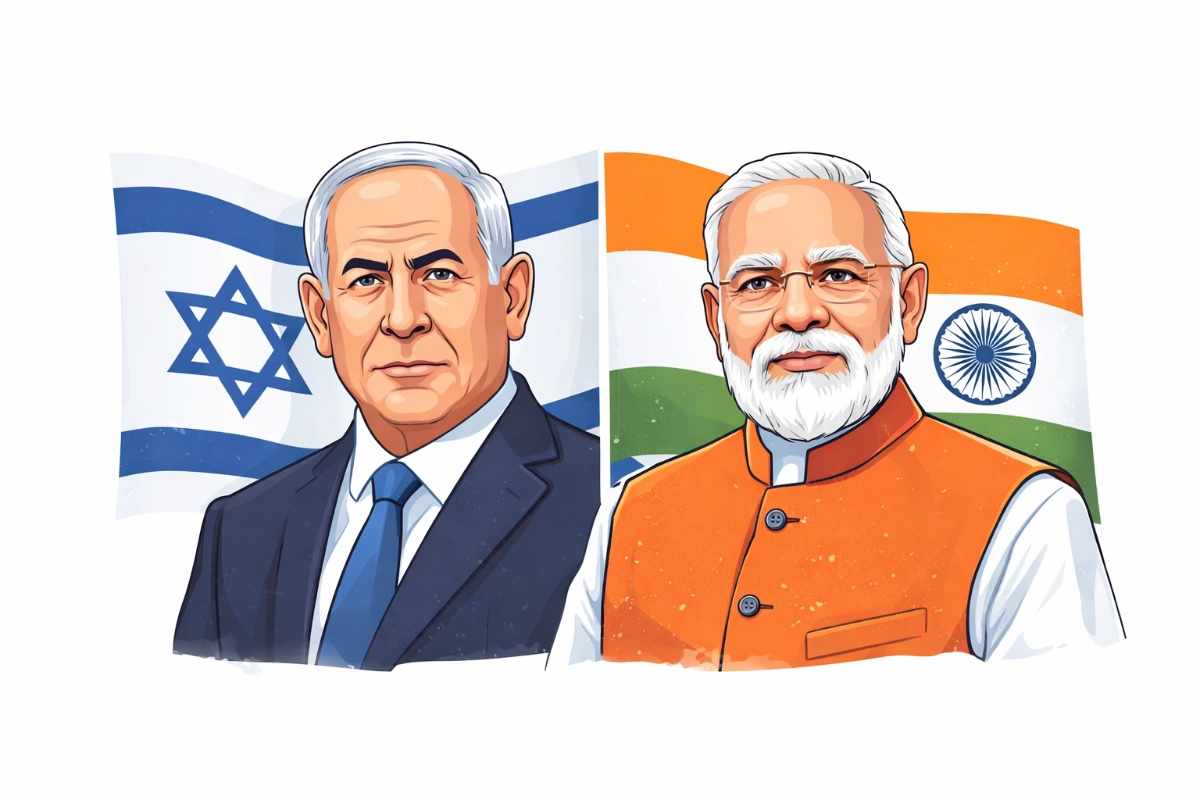
Strong Diplomatic Signals as India-Israel Partnership Enters a New Phase
Israeli Prime Minister Benjamin Netanyahu has praised the growing relationship between India and Israel ahead of the expected visit of Indian Prime Minister Narendra Modi.
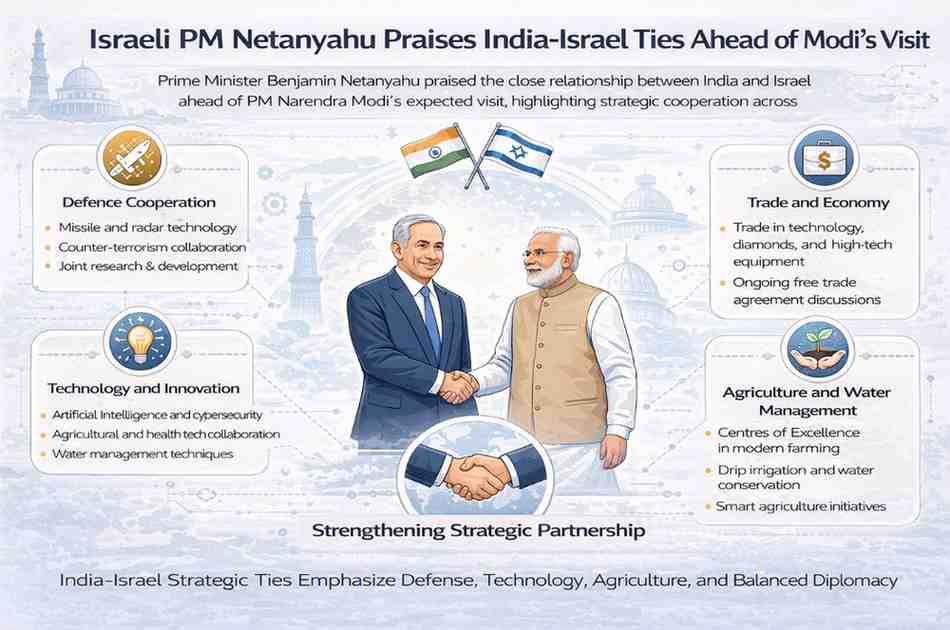
Netanyahu highlighted the strength of bilateral cooperation across defence, technology, agriculture, and innovation. His remarks come at a time when both nations are looking to deepen strategic and economic engagement.
The upcoming high-level interaction is being closely watched in diplomatic circles, as India-Israel ties have expanded significantly over the past decade.
Why the India-Israel Relationship Matters
India and Israel established full diplomatic relations in 1992. Since then, cooperation has steadily grown in multiple sectors.
In recent years, ties have strengthened further, especially after Prime Minister Modi’s historic visit to Israel in July 2017— the first by an Indian Prime Minister.
The relationship today covers:
- Defence and security cooperation
- Agriculture and water management
- Cybersecurity and technology
- Innovation and startups
- Trade and investment
Netanyahu’s recent praise signals continuity and stability in this strategic partnership.
Netanyahu Highlights Strategic Partnership
Benjamin Netanyahu has previously described India as a “major global power” and an important partner for Israel.
India and Israel upgraded their relationship to a strategic partnership in 2017 during Modi’s visit.
Since then, leaders of both countries have maintained regular engagement through bilateral meetings and international forums.
Ahead of Modi’s expected visit, Israeli officials have indicated interest in expanding collaboration in emerging sectors such as artificial intelligence, defence technology, and renewable energy.
Defence Cooperation Remains a Key Pillar
Defence is one of the strongest pillars of India-Israel relations.
Israel is among India’s key defence suppliers. Cooperation includes:
- Missile systems
- Radar technology
- Surveillance systems
- Joint research and development
Indian and Israeli defence industries have worked together on several projects over the years.
Both countries also share intelligence cooperation in counter-terrorism efforts.
Trade and Economic Ties
Bilateral trade between India and Israel has grown steadily since diplomatic ties were formalized.
Trade spans:
- Diamonds
- Chemicals
- Agricultural products
- High-tech equipment
- Electronics
In recent years, both countries have explored expanding trade in technology, defence manufacturing, and clean energy.
Discussions around a potential free trade agreement have also taken place in the past, though formal negotiations have moved gradually.
Technology and Innovation Collaboration
Israel is widely known as the “Startup Nation” due to its strong innovation ecosystem.
India’s expanding startup sector has created opportunities for collaboration in:
- Artificial intelligence
- Cybersecurity
- Agri-tech
- Health technology
- Water conservation
Joint innovation funds and academic exchanges have supported partnerships between Indian and Israeli institutions.
Several Israeli companies have invested in India’s technology sector, while Indian firms have expanded operations in Israel.
Agriculture and Water Management Cooperation
Agricultural cooperation is one of the most visible success stories of India-Israel ties.
Under bilateral programs, India and Israel have established Centres of Excellence across various Indian states.
These centres focus on:
- Drip irrigation
- Water efficiency
- Crop productivity
- Modern farming techniques
Israeli water management technology has also supported projects in water-scarce regions of India.
This cooperation directly benefits farmers and rural communities.
Political and Diplomatic Engagement
High-level visits have strengthened trust between the two nations.
Prime Minister Modi visited Israel in 2017, and Netanyahu visited India in 2018.
These visits marked a new era of visible diplomatic warmth.
India has maintained a balanced foreign policy approach in West Asia, engaging both Israel and Palestine while focusing on national interests.
Observers note that India’s ties with Israel have deepened without disrupting its broader regional relationships.
Regional and Global Context
The Middle East continues to face geopolitical challenges.
India has strong interests in the region, including:
- Energy security
- Trade routes
- Diaspora welfare
- Counter-terrorism cooperation
Israel’s technological strength and strategic location make it a key partner for India.
Netanyahu’s praise of bilateral ties ahead of Modi’s visit is seen as a reaffirmation of long-term strategic alignment.
Focus Areas for the Upcoming Visit
While official details of the visit are awaited, analysts expect discussions to include:
- Defence collaboration upgrades
- Technology and innovation partnerships
- Renewable energy projects
- Investment flows
- Regional security developments
Any new agreements or memorandums of understanding will be closely tracked by industry and policy experts.
Public and Strategic Significance
India-Israel ties have evolved from a low-profile relationship in the early 1990s to a robust strategic partnership.
Public perception in both countries has also shifted, with greater awareness of cooperation in areas such as:
- Agriculture
- Defence technology
- Innovation
- Water conservation
The visible engagement between Netanyahu and Modi reflects strong political leadership commitment to the partnership.
Balanced Foreign Policy Approach
India continues to maintain diplomatic ties with multiple countries in West Asia.
Its relationship with Israel operates within a broader foreign policy framework that balances strategic autonomy and national interest.
India has also supported peace efforts in the region and consistently called for dialogue and stability.
Netanyahu’s public praise highlights the strength of bilateral ties, but India’s diplomatic approach remains multi-dimensional.
Economic and Strategic Outlook
As global geopolitics evolves, India and Israel may expand cooperation in emerging sectors.
Future collaboration could include:
- Semiconductor research
- Artificial intelligence
- Defence manufacturing in India
- Renewable energy technology
- Space research
Both nations emphasize innovation-led growth and strategic independence.
This alignment creates strong long-term potential.
Conclusion
Israeli Prime Minister Benjamin Netanyahu’s praise of India-Israel ties ahead of Prime Minister Narendra Modi’s expected visit underlines the steady growth of a strategic partnership built over three decades.
Since establishing diplomatic relations in 1992, both countries have expanded cooperation across defence, technology, agriculture, and trade.
With strong political leadership and shared strategic interests. India and Israel appear set to deepen engagement further.
As the visit approaches, attention will focus on new initiatives that could shape the next phase of India-Israel cooperation in a rapidly changing global environment.
Disclaimer: The information presented in this article is intended for general informational purposes only. While every effort is made to ensure accuracy, completeness, and timeliness, data such as prices, market figures, government notifications, weather updates, holiday announcements, and public advisories are subject to change and may vary based on location and official revisions. Readers are strongly encouraged to verify details from relevant official sources before making financial, investment, career, travel, or personal decisions. This publication does not provide financial, investment, legal, or professional advice and shall not be held liable for any losses, damages, or actions taken in reliance on the information provided.
Last Updated on: Monday, February 16, 2026 3:47 pm by Outlook News Team | Published by: Outlook News Team on Monday, February 16, 2026 3:47 pm | News Categories: News
About The Author