

Interest in Xiaomi HyperOS 4.0 based on Android 17 is rising among Indian smartphone users as Xiaomi continues to refine its new operating system strategy. With HyperOS replacing MIUI across devices, users are closely tracking what the next major version could bring.
However, it is important to clarify that as of now, Xiaomi has not officially announced HyperOS 4.0 or a confirmed rollout schedule linked to Android 17. The company’s current publicly released software is based on earlier Android versions.
Here is a verified and balanced look at what is known so far, what can be expected based on Xiaomi’s update patterns, and what Indian users should watch for.
What Is HyperOS?
Xiaomi introduced HyperOS in 2023 as a replacement for its long-running MIUI interface.
HyperOS was designed to:
- Unify Xiaomi’s ecosystem across smartphones, tablets, wearables, and smart devices
- Improve performance and system efficiency
- Offer better device integration
The system is built on top of Google’s Android platform while also integrating Xiaomi’s in-house architecture components.
Has Xiaomi Announced HyperOS 4.0?
As of the latest official updates:
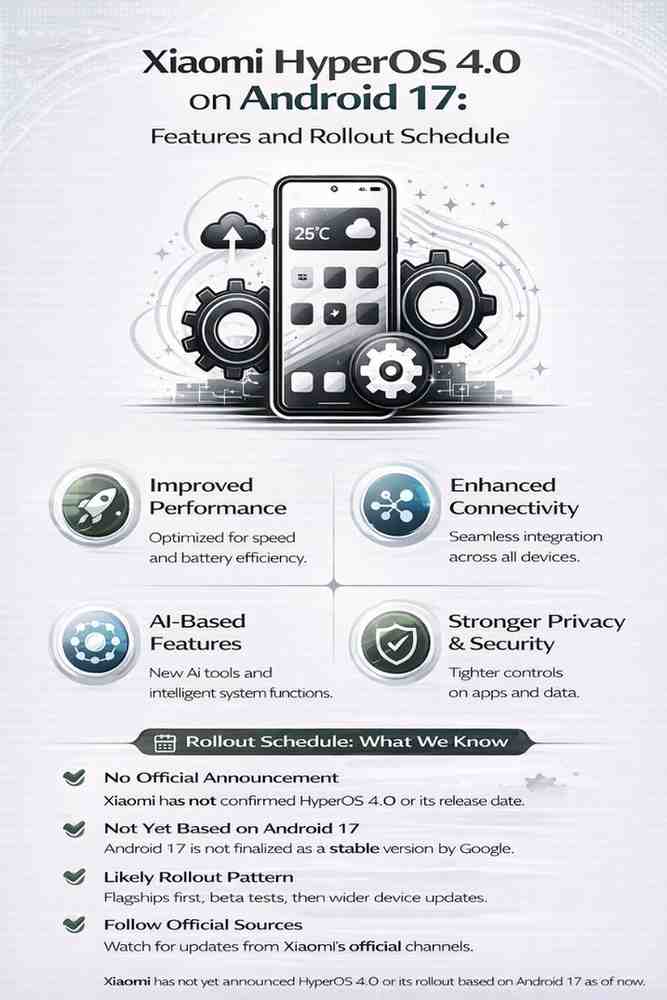
- Xiaomi has not confirmed HyperOS 4.0.
- There is no official announcement linking it specifically to Android 17.
- No official beta program has been announced for this version.
Search interest has grown due to speculation online, but there is no confirmed release date.
Android 17 Status Update
Android releases major updates annually.
At present:
- Android 17 is not officially released as a stable public version.
- Google typically introduces developer previews first, followed by beta versions.
- Stable releases usually arrive later in the year.
Any Xiaomi software based on Android 17 would only follow after Google officially finalises the OS.
Expected Features in Future HyperOS Versions
While HyperOS 4.0 is not officially detailed, based on Xiaomi’s software direction and Android’s development roadmap, future versions may focus on:
1. Improved System Performance
HyperOS has already aimed at reducing background app load and improving system fluidity. Future updates may further optimise memory usage and battery management.
2. Stronger Cross-Device Integration
Xiaomi has promoted ecosystem connectivity between:
- Smartphones
- Tablets
- Smart TVs
- Smart home products
Future HyperOS updates may improve seamless file sharing and device continuity.
3. AI-Based Features
Artificial intelligence tools are becoming common across Android ecosystems.
Future HyperOS builds could include:
- Smarter system suggestions
- AI photo enhancements
- Improved voice assistant integration
However, Xiaomi has not confirmed specific AI features for HyperOS 4.0.
4. Privacy and Security Enhancements
Each Android generation typically strengthens:
- App permission control
- Data privacy dashboards
- Background activity limits
If based on Android 17, HyperOS 4.0 would likely integrate updated security patches and privacy controls.
Eligible Xiaomi Devices (Expected Pattern)
While Xiaomi has not published a HyperOS 4.0 device list, based on past rollout patterns:
Flagship Devices First
Premium models such as:
- Xiaomi flagship series
- High-end Redmi devices
- Select POCO devices
usually receive major updates first.
Mid-Range and Budget Devices Later
Rollouts typically expand gradually to mid-range models.
Older devices may not receive major Android upgrades depending on support policy.
Users should check Xiaomi’s official support page for confirmed eligibility once announcements are made.
How Xiaomi Rolls Out Updates in India
In India, Xiaomi usually follows a phased rollout strategy:
- Closed beta testing
- Public beta release
- Stable rollout to limited users
- Wider release in stages
This approach helps detect bugs before mass deployment.
Even after official release, not all devices receive updates on the same day.
HyperOS vs MIUI: What Changed
HyperOS marked a shift from MIUI’s design.
Key improvements included:
- Cleaner interface
- Reduced system apps
- Improved animation smoothness
- Better system stability
HyperOS also introduced deeper system-level architecture changes.
Future versions are expected to continue refining this experience.
India’s Importance in Xiaomi’s Update Strategy
India remains one of Xiaomi’s largest markets.
Software updates in India are influenced by:
- Device popularity
- Market demand
- Carrier testing requirements
- Regional software compliance
Major flagship devices in India often receive updates within months of global rollout.
Security Patch Updates
Even before HyperOS 4.0 or Android 17, Xiaomi regularly pushes:
- Monthly security patches
- Stability improvements
- Minor UI enhancements
Users should not confuse these updates with major OS upgrades.
How to Check for Updates
To check for official updates:
- Open Settings
- Tap About Phone
- Select System Update
Only download updates from official OTA (Over The Air) channels.
Avoid unofficial firmware downloads from unverified websites.
Common Questions from Users
Is HyperOS 4.0 officially confirmed?
No official announcement has been made.
Is Android 17 available on Xiaomi phones?
Android 17 is not yet widely released in stable form.
When will Xiaomi announce the next major update?
Major announcements typically align with flagship launches or annual software events.
Will older Xiaomi phones receive Android 17?
Eligibility depends on Xiaomi’s official update policy for each model.
What Users Should Watch Next
Indian users should monitor:
- Xiaomi global launch events
- Official Xiaomi India announcements
- Google’s Android roadmap updates
Major OS updates are usually accompanied by public event presentations or press releases.
Why This Update Matters
Operating system updates impact:
- Device security
- App compatibility
- Battery performance
- Overall user experience
For users planning to buy a new Xiaomi device, update policy is an important factor.
Software longevity often determines long-term value.
Key Takeaways
- HyperOS 4.0 is not officially announced yet.
- Android 17 has not been released as a stable public version.
- Xiaomi typically rolls out updates in phases.
- Flagship devices receive updates first.
- Always rely on official Xiaomi announcements.
Conclusion
Search interest around Xiaomi HyperOS 4.0 on Android 17 reflects strong user curiosity about upcoming software upgrades. However, as of now, there is no official confirmation of release dates, features, or rollout schedules.
Indian Xiaomi users are advised to follow official company updates and avoid relying on unverified social media leaks.
When Xiaomi officially announces the next major HyperOS version, confirmed features and eligible devices will be shared through its official channels.
Until then, users can continue receiving security updates and incremental improvements under the current HyperOS versions available on their devices.
Disclaimer: The information presented in this article is intended for general informational purposes only. While every effort is made to ensure accuracy, completeness, and timeliness, data such as prices, market figures, government notifications, weather updates, holiday announcements, and public advisories are subject to change and may vary based on location and official revisions. Readers are strongly encouraged to verify details from relevant official sources before making financial, investment, career, travel, or personal decisions. This publication does not provide financial, investment, legal, or professional advice and shall not be held liable for any losses, damages, or actions taken in reliance on the information provided.
Last Updated on: Wednesday, February 18, 2026 4:52 pm by Outlook News Team | Published by: Outlook News Team on Wednesday, February 18, 2026 4:52 pm | News Categories: Tech
About The Author