
Why Xiaomi’s Local Manufacturing Milestone Matters Today
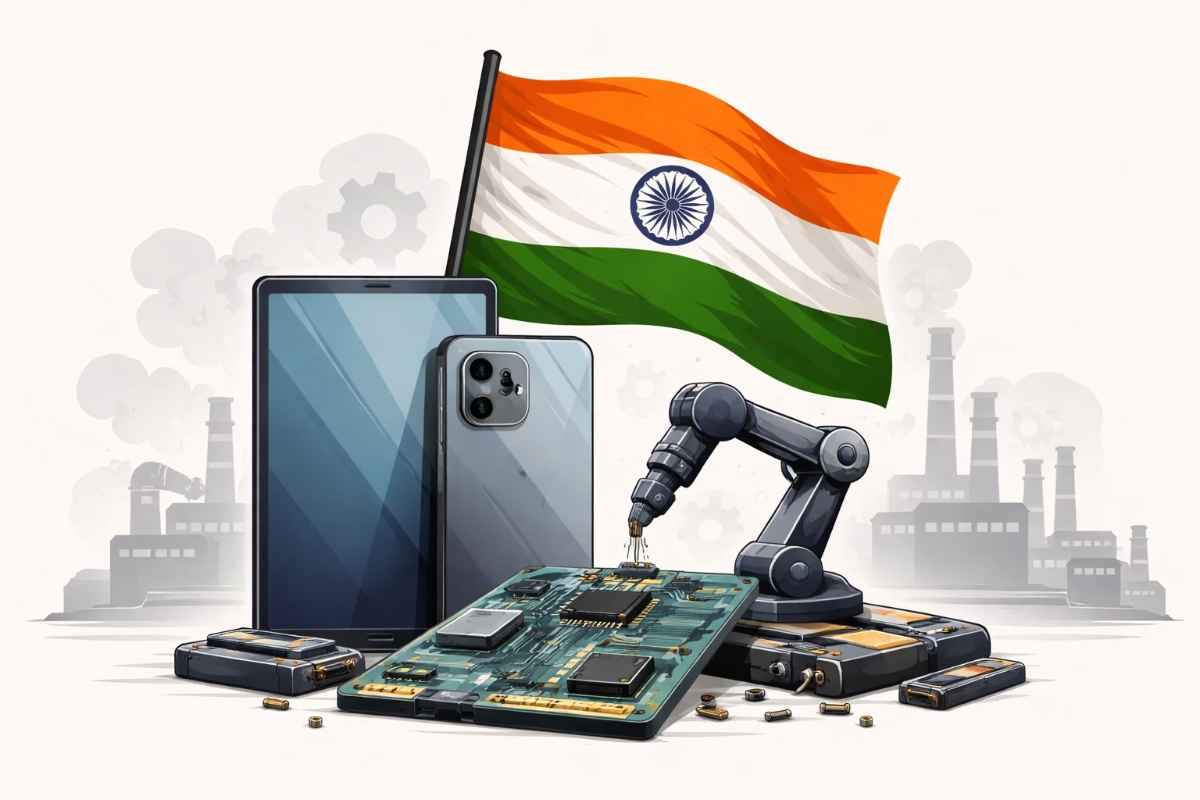
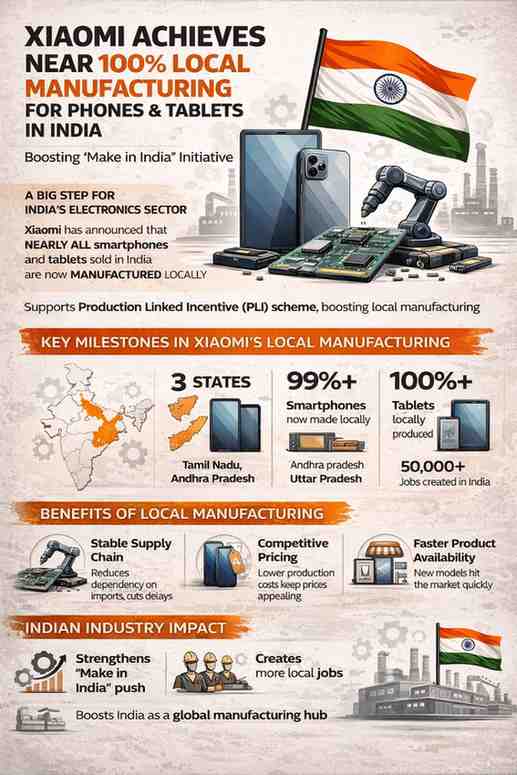
In a major development for India’s electronics industry, Xiaomi has announced that nearly 100% of its smartphones and tablets sold in India are now manufactured locally.
The move strengthens India’s position as a global manufacturing hub and aligns with the government’s ‘Make in India’and Production Linked Incentive (PLI) schemes.
For consumers, this could mean better supply stability. For the industry, it signals growing confidence in India’s manufacturing ecosystem.
Here is what Xiaomi’s local manufacturing achievement means for India, the smartphone market, and buyers.
What Xiaomi Has Achieved
Xiaomi has confirmed that almost all smartphones and tablets it sells in India are now assembled within the country.
This marks a significant shift from earlier years, when many devices were imported or partially assembled.
India is one of Xiaomi’s largest markets globally. The company sells devices under brands such as:
- Xiaomi
- Redmi
- POCO
By increasing local production, Xiaomi aims to reduce dependency on imports and improve operational efficiency.
How Xiaomi Manufactures in India
Xiaomi partners with contract manufacturers operating in different Indian states. Over the years, the company has expanded its production footprint across:
- Tamil Nadu
- Andhra Pradesh
- Uttar Pradesh
These facilities assemble smartphones and tablets for the domestic market.
In addition to device assembly, Xiaomi has also focused on:
- Local sourcing of components
- Packaging within India
- Expanding supplier networks
However, it is important to note that while assembly is local, certain high-value components such as chipsets and display panels are still imported, as India does not yet manufacture them at scale.
Boost to ‘Make in India’ and PLI Scheme
Xiaomi’s announcement supports the Indian government’s push to turn the country into a global electronics manufacturing hub.
The Production Linked Incentive (PLI) scheme has encouraged companies to manufacture more devices locally by offering financial incentives based on output.
India has already become one of the world’s largest smartphone manufacturing hubs in recent years.
According to industry data released in recent years:
- India manufactures hundreds of millions of smartphones annually
- Several global brands now assemble devices locally
- Exports of made-in-India smartphones have grown steadily
Xiaomi’s near 100% local production strengthens this trend.
Impact on Indian Consumers
For Indian buyers, increased local manufacturing can have several benefits.
1. Stable Supply During Global Disruptions
Global supply chain issues during the pandemic showed how dependent many companies were on imports.
Local manufacturing helps reduce delays and shortages.
2. Competitive Pricing
When companies assemble devices locally, they can reduce certain import costs.
This can help brands keep prices competitive in India’s price-sensitive smartphone market.
3. Faster Product Availability
New models can reach stores more quickly when production happens within the country.
India’s Growing Role in Global Smartphone Manufacturing
India is no longer just a large consumer market. It is becoming a key manufacturing base.
Over the past few years:
- Several global brands have increased local production
- Smartphone exports from India have grown
- The electronics sector has become a major employment generator
Government initiatives have played a key role in encouraging investment.
The aim is clear: reduce import dependence and increase domestic value addition.
What ‘Near 100%’ Means in Practical Terms
While Xiaomi says nearly all devices sold in India are made locally, it does not mean every component is produced in India.
Smartphone manufacturing typically involves:
- Printed circuit board assembly (PCBA)
- Final device assembly
- Testing and quality checks
Many advanced components such as processors and memory chips are still imported because India does not yet have large-scale semiconductor fabrication plants.
So, the “near 100%” refers primarily to final assembly and local production of certain parts, not complete component manufacturing.
Competition in the Indian Smartphone Market
India is one of the world’s most competitive smartphone markets.
Brands compete heavily in price segments such as:
- Below ₹10,000
- ₹10,000–₹20,000
- ₹20,000–₹30,000
Local manufacturing gives companies better control over costs and inventory.
Other major brands have also increased local production in India in recent years, making manufacturing a key competitive factor.
Economic and Employment Impact
Electronics manufacturing creates jobs in multiple areas:
- Factory operations
- Supply chain management
- Logistics
- Quality testing
As production increases, indirect employment also rises.
India’s electronics sector has become one of the fastest-growing manufacturing segments in the country.
Increased localization by major brands like Xiaomi can strengthen this momentum.
Challenges Still Ahead
Despite strong progress, India still faces challenges in achieving full electronics self-reliance.
Key gaps include:
- Semiconductor manufacturing
- Advanced display production
- High-end chip design and fabrication
Most core smartphone components are still sourced from global suppliers.
The next phase of growth will depend on:
- Attracting semiconductor investments
- Improving infrastructure
- Expanding skilled workforce
The government has already announced semiconductor incentive programs, but full-scale domestic chip production is still in early stages.
What This Means for Xiaomi’s India Strategy
India remains one of Xiaomi’s most important markets.
By localizing manufacturing:
- Xiaomi reduces geopolitical risks
- The company strengthens compliance with Indian regulations
- It builds stronger ties with local suppliers
The move also helps Xiaomi project itself as a brand committed to India’s manufacturing ecosystem.
Future Outlook for India’s Electronics Industry
India’s ambition is not just to manufacture for domestic demand, but also to become a global export hub.
Smartphones have already become one of India’s top exported goods in recent years.
If more brands increase local value addition, India could move beyond assembly and into higher-end component production.
For now, Xiaomi’s near 100% local manufacturing milestone signals steady progress.
Final Word
Xiaomi achieving near 100% local manufacturing for phones and tablets sold in India is a major step for the country’s electronics sector.
It strengthens the ‘Make in India’ initiative, supports job creation, and boosts India’s position as a global smartphone manufacturing hub.
For consumers, it means stable supply and competitive pricing.
For the industry, it reflects growing confidence in India’s manufacturing capabilities.
As India pushes toward deeper electronics self-reliance, such milestones show that the shift from import-driven supply to local production is gaining momentum.
Disclaimer: The information presented in this article is intended for general informational purposes only. While every effort is made to ensure accuracy, completeness, and timeliness, data such as prices, market figures, government notifications, weather updates, holiday announcements, and public advisories are subject to change and may vary based on location and official revisions. Readers are strongly encouraged to verify details from relevant official sources before making financial, investment, career, travel, or personal decisions. This publication does not provide financial, investment, legal, or professional advice and shall not be held liable for any losses, damages, or actions taken in reliance on the information provided.
Last Updated on: Thursday, February 12, 2026 10:29 am by Outlook News Team | Published by: Outlook News Team on Thursday, February 12, 2026 10:29 am | News Categories: Business
About The Author