
Introduction: Why the US Waiver Matters for India and Global Energy Markets
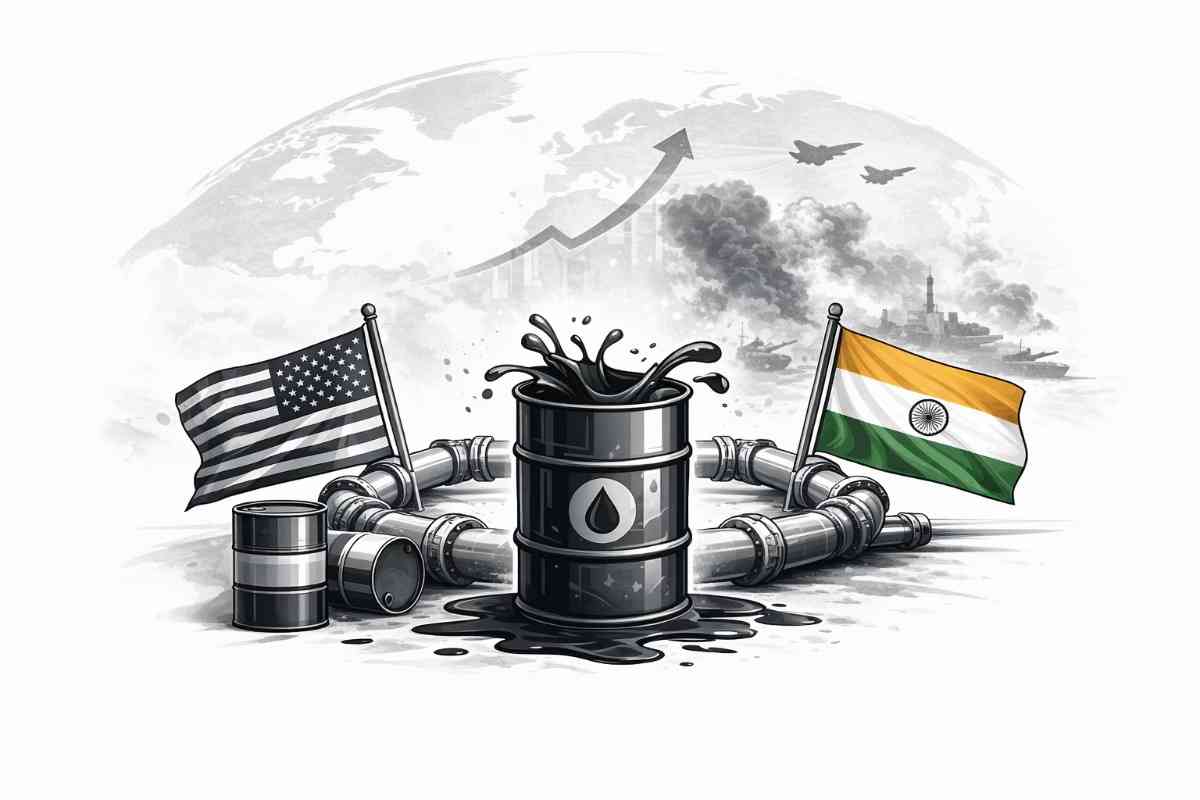
The United States has issued a temporary 30-day waiver allowing Indian refiners to purchase Russian crude oil, a move aimed at stabilising global energy markets during the ongoing West Asia crisis.
The decision comes as tensions in the region have disrupted oil flows and raised concerns about supply shortages. The waiver allows Indian refiners to continue buying Russian crude that is already in transit or stranded at sea, helping maintain global supply during a period of volatility.
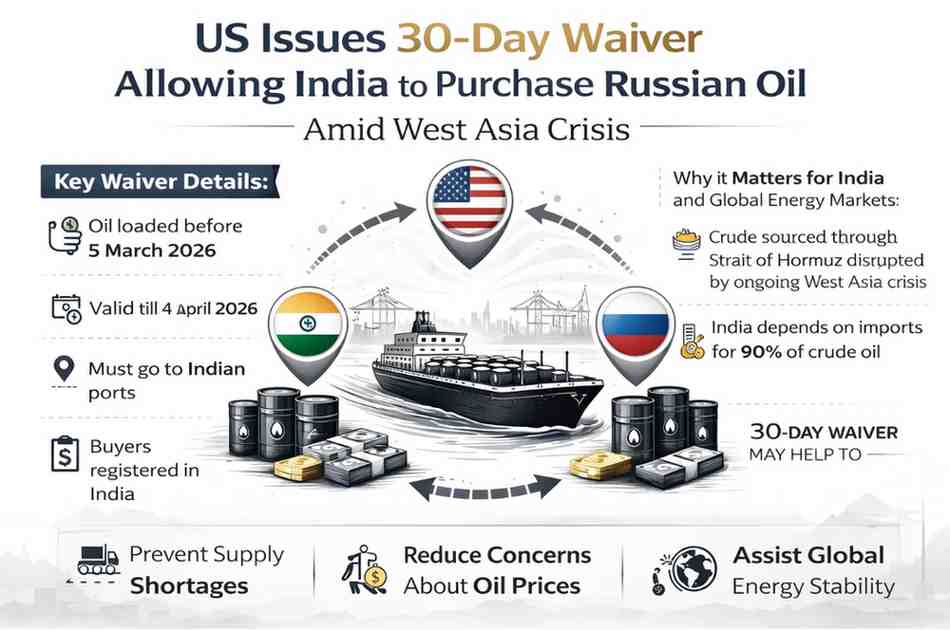
The move is significant for India, which imports nearly 90% of its crude oil needs and relies heavily on overseas suppliers to meet domestic energy demand.
For global markets, the decision reflects a broader effort by Washington to prevent supply disruptions from pushing oil prices sharply higher amid the crisis affecting energy shipments through key routes such as the Strait of Hormuz.
The waiver also highlights the delicate balance between US sanctions on Russian energy exports and the need to keep global oil markets stable.
What the 30-Day Waiver Allows
The temporary waiver issued by the US Treasury permits Indian refiners to purchase certain shipments of Russian crude oil for a limited period of 30 days.
Key details include:
- The waiver applies to Russian crude already loaded on vessels before 5 March 2026
- Transactions are permitted until 4 April 2026
- The oil must be delivered to ports in India
- Buyers must be entities registered in India
Officials described the move as a short-term measure to keep oil flowing into global markets during a period of supply uncertainty.
US Treasury Secretary Scott Bessent said the step was designed to ease pressure on global energy supply chains, while remaining limited enough to avoid providing major financial benefits to Russia’s oil industry.
West Asia Crisis and Global Oil Supply Disruptions
The waiver comes at a time when geopolitical tensions in West Asia have raised fears of disruptions to global oil shipments.
One major concern is the Strait of Hormuz, a key maritime route that handles a large share of the world’s oil trade. Nearly 20% of global crude oil shipments pass through this strategic waterway, making it one of the most important energy transit routes in the world.
Recent attacks on vessels and rising military tensions in the region have created uncertainty for energy markets.
As a result:
- Several oil tankers have faced delays
- Shipping costs have increased
- Global crude prices have become more volatile
The US waiver for India is part of a broader effort to prevent supply disruptions from worsening the global energy situation.
Why India Needs the Waiver
India is among the largest importers of crude oil in the world, making it particularly vulnerable to disruptions in global energy supply.
Several factors explain why the waiver is important for New Delhi.
Heavy Dependence on Imports
India imports about 90% of its crude oil requirements, making energy security a major economic priority.
Exposure to West Asia Supply Routes
A significant portion of India’s oil imports comes from West Asian producers, and many shipments pass through the Strait of Hormuz.
If the route becomes unsafe or blocked, India could face serious supply challenges.
Alternative Supply Options
Russian crude has played an important role in India’s energy strategy since the start of the Russia-Ukraine war in 2022.
At one stage, India became the largest buyer of Russian seaborne crude oil, benefiting from discounted prices offered by Russian exporters.
Indian Refiners Move to Secure Supplies
Following the US announcement, Indian refiners have reportedly moved quickly to secure Russian crude shipments available on the market.
According to industry reports:
- Indian companies have explored buying millions of barrels of Russian crude for immediate delivery
- Some refiners are negotiating with traders for cargoes arriving in March and early April
- Several shipments already at sea are expected to dock at Indian ports soon.
Analysts say these purchases could help India maintain stable fuel supplies if disruptions in West Asia continue.
Impact on Global Oil Prices
Energy markets reacted quickly to the news of the waiver.
Oil prices eased slightly after the announcement, as traders saw the decision as a temporary solution to supply concerns.
Recent market indicators showed:
- Brent crude trading around $84 per barrel
- US West Texas Intermediate near $79 per barrel
Both benchmarks had risen sharply in the days before the waiver due to concerns about the West Asia crisis.
By allowing Indian refiners to buy oil already at sea, the US decision helped reduce fears of a sudden supply shortage.
Political Debate in India
The waiver has also triggered political debate within India.
Some opposition leaders have criticised the development, arguing that India should not face external pressure regarding its energy purchases.
Political statements have framed the issue as part of a broader debate about India’s strategic autonomy in foreign policy.
However, the Indian government has repeatedly maintained that its energy policy is guided by national interest and supply security.
Officials have also stressed the importance of diversifying energy sources to reduce vulnerability to global disruptions.
Balancing Relations With the US and Russia
India’s energy strategy often requires balancing relationships with multiple global powers.
The country maintains strong ties with both:
- Russia, a major oil supplier
- The United States, a key strategic and economic partner
Over the past year, India had reduced purchases of Russian oil amid pressure from Western governments and negotiations over trade agreements with Washington.
The new waiver reflects the complex reality of global energy diplomacy.
While the US continues to impose sanctions on Russian energy exports, it also recognises the need to avoid severe disruptions in global oil markets.
Long-Term Energy Security Challenges
The waiver may offer short-term relief, but analysts say India still faces long-term energy security challenges.
Several structural issues remain:
Dependence on Imported Oil
India’s heavy reliance on imports makes it vulnerable to geopolitical tensions and price shocks.
Limited Strategic Reserves
Although India has strategic petroleum reserves, they can cover only a limited period of supply disruptions.
Global Energy Transition
India is also investing heavily in renewable energy, electric mobility, and hydrogen technologies to reduce dependence on fossil fuels over time.
However, experts say crude oil will continue to play a major role in India’s energy mix for many years.
What Happens After the 30-Day Waiver
The waiver is scheduled to remain in effect until early April 2026, making it a strictly temporary measure.
After the deadline:
- The US government may review the situation again
- Indian refiners may need to adjust their sourcing strategy
- Global oil markets will continue to monitor developments in West Asia
Energy analysts say the situation will depend largely on whether tensions in the region escalate or stabilise.
If supply disruptions worsen, governments may need to consider additional emergency measures.
Conclusion: A Temporary Fix in a Volatile Energy Market
The US decision to grant India a 30-day waiver to purchase Russian oil highlights the fragile balance between geopolitics and global energy security.
For India, the waiver provides short-term flexibility to secure crude supplies during a period of uncertainty in West Asia.
For global markets, the move helps prevent a sudden supply shock that could drive oil prices sharply higher.
However, the situation remains fluid.
As geopolitical tensions continue to shape energy markets, India and other major economies will need to navigate complex diplomatic, economic, and strategic challenges to ensure stable energy supplies in the months ahead.
Disclaimer: The information presented in this article is intended for general informational purposes only. While every effort is made to ensure accuracy, completeness, and timeliness, data such as prices, market figures, government notifications, weather updates, holiday announcements, and public advisories are subject to change and may vary based on location and official revisions. Readers are strongly encouraged to verify details from relevant official sources before making financial, investment, career, travel, or personal decisions. This publication does not provide financial, investment, legal, or professional advice and shall not be held liable for any losses, damages, or actions taken in reliance on the information provided.
Last Updated on: Friday, March 6, 2026 3:25 pm by Outlook News Team | Published by: Outlook News Team on Friday, March 6, 2026 3:24 pm | News Categories: India
About The Author