

Why This Climate Alert Matters Now
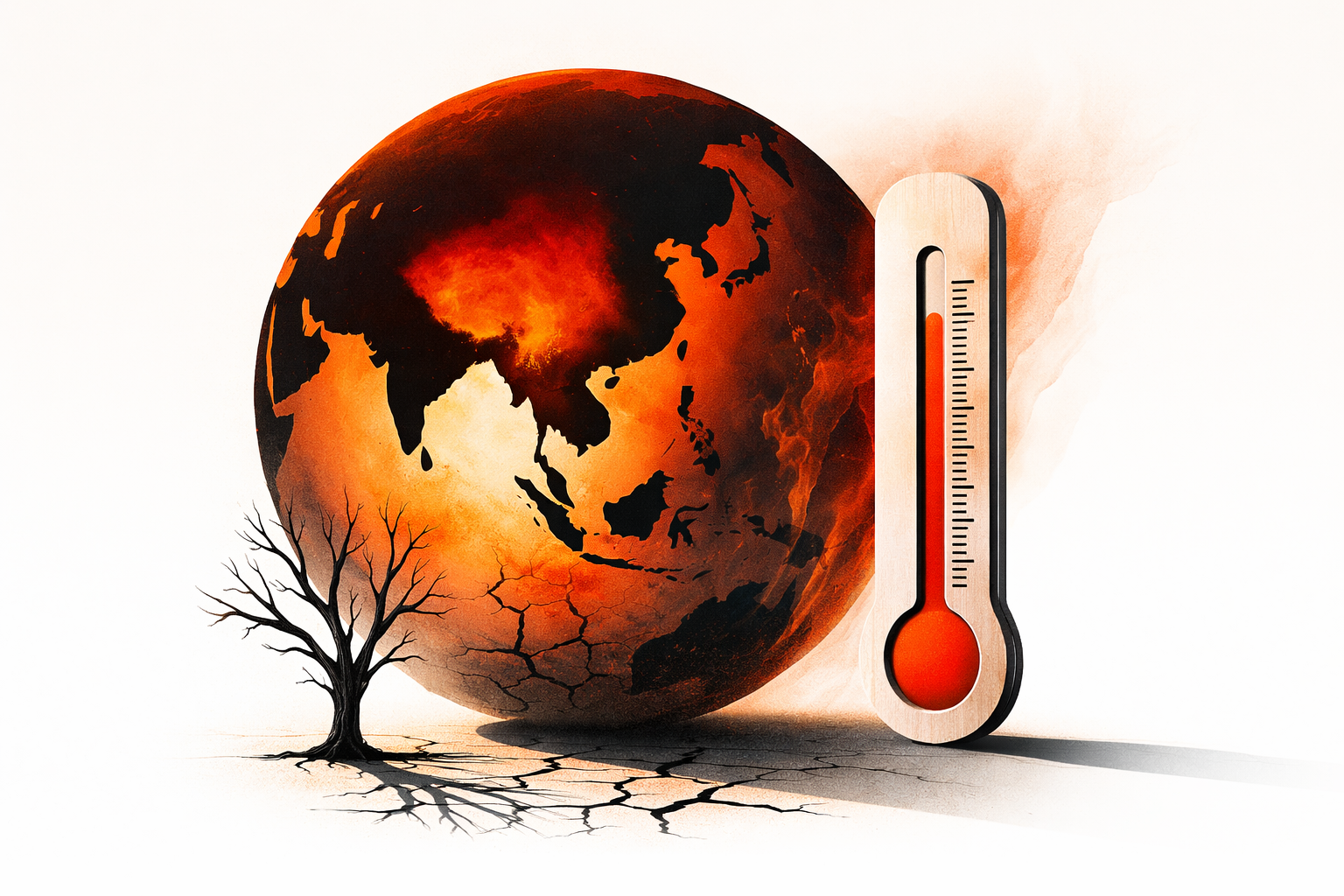
Weather experts around the world are closely monitoring signs of a possible El Niño event developing in 2026, with some climate models suggesting the possibility of a strong or “super” El Niño later this year. This climate pattern begins in the Pacific Ocean but can influence weather conditions across many regions, including India.
For India, the timing is significant. The country is entering the March–May summer season, a period that often brings the year’s highest temperatures. Early forecasts from meteorological agencies suggest that temperatures could remain above normal across many parts of India this summer.
In recent weeks, several regions have already reported temperatures around 4°C to 8°C higher than seasonal averages, raising concerns about early heatwaves, pressure on water resources, and potential health risks.
If El Niño strengthens during the year, it could influence summer temperatures, the strength of the monsoon, and public health conditions across India.
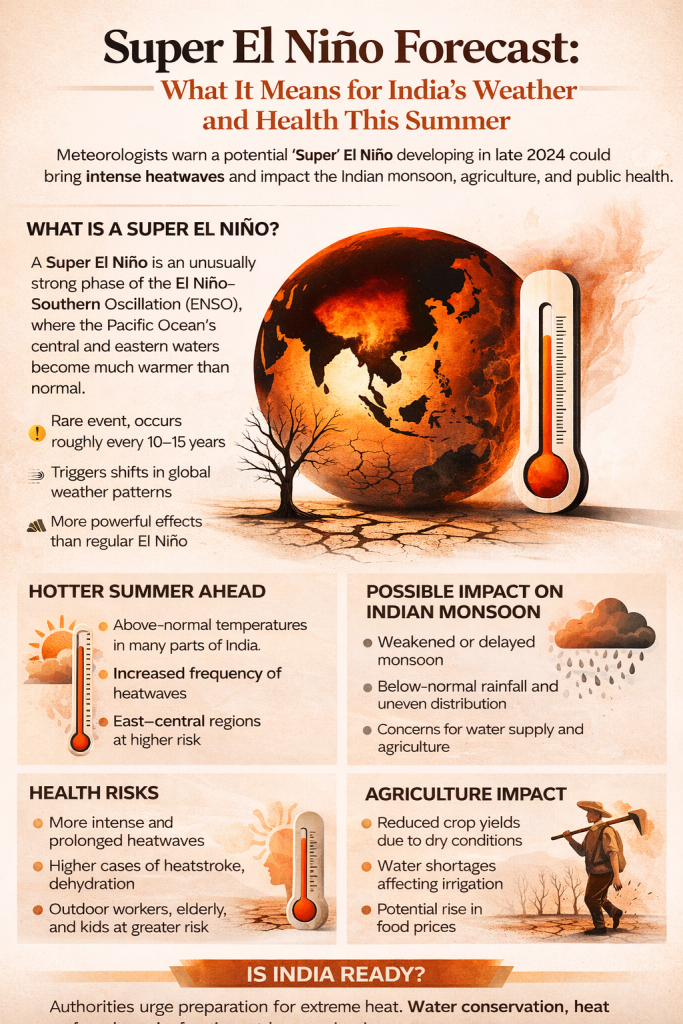
What Is a Super El Niño?
A Super El Niño refers to an unusually strong phase of the El Niño–Southern Oscillation (ENSO) cycle, a natural climate phenomenon that occurs in the Pacific Ocean.
During an El Niño event, sea surface temperatures in the central and eastern Pacific Ocean become warmer than usual. This warming changes atmospheric circulation and wind patterns across the globe.
Because the atmosphere and oceans are connected systems, these changes can affect weather patterns thousands of kilometres away.
A Super El Niño is simply a stronger version of this event. Such episodes are relatively rare and have historically produced more intense weather effects around the world, including droughts in some regions and heavy rainfall in others.
For India, the effects of El Niño can influence several important factors:
- Summer temperatures
- Monsoon rainfall patterns
- Agriculture and water availability
- Public health risks related to heat
Forecasts Suggest Possible El Niño Development
Global climate agencies, including international meteorological organisations, are closely observing ocean temperature trends in the Pacific.
Recent projections indicate that there is a significant chance that El Niño conditions could develop during the second half of 2026. Forecast models suggest that the probability of El Niño formation could increase between mid-2026 and late 2026.
Scientists caution that early-year predictions always carry uncertainty. Climate models face what experts call the “spring predictability barrier,” a period during which forecasts become less reliable.
Despite this uncertainty, the signals are strong enough for governments and climate researchers to monitor the situation carefully.
Hotter Summer Conditions Expected Across India
India has already begun experiencing signs of a warmer-than-usual summer season.
Meteorological forecasts indicate that many parts of the country could experience above-normal temperatures during the March to May period.
Regions in east India and parts of central India are expected to see a higher number of heatwave days compared with the long-term average.
During El Niño years, India often experiences higher temperatures and stronger heatwaves. The warming of Pacific Ocean waters affects atmospheric circulation, which can reduce cloud formation over parts of South Asia. With fewer clouds and less rainfall, land surfaces heat up more quickly.
This can lead to longer and more intense periods of extreme heat.
Possible Impact on the Indian Monsoon
One of the biggest concerns linked to El Niño is its potential effect on the Indian summer monsoon, which normally arrives in early June and provides most of the country’s annual rainfall.
Historically, many El Niño years have been associated with below-average monsoon rainfall in India. Changes in Pacific Ocean temperatures can disrupt wind patterns that help carry moisture toward the Indian subcontinent.
Possible monsoon impacts during El Niño years include:
- Delayed arrival of the monsoon
- Lower overall seasonal rainfall
- Uneven distribution of rain across regions
- Shorter or weaker monsoon periods
A weaker monsoon can create challenges for agriculture, water supply, and energy production.
However, meteorologists also note that El Niño does not automatically lead to a weak monsoon every year. Other climate systems, including the Indian Ocean Dipole, can sometimes offset or reduce El Niño’s impact.
Heatwaves and Public Health Risks
Extreme heat is one of the most immediate concerns during years influenced by El Niño.
Higher temperatures combined with prolonged heatwaves can increase the risk of several health conditions, including:
- Heat exhaustion
- Heatstroke
- Severe dehydration
- Increased hospital admissions during peak heat periods
Heatwaves can be particularly dangerous for certain groups, including:
- Outdoor workers
- Elderly people
- Children
- People with existing medical conditions
Urban areas may experience even greater heat stress because of the urban heat island effect, where buildings and concrete surfaces trap heat and reduce nighttime cooling.
Public health authorities in several Indian cities have already introduced heat action plans, which include public awareness campaigns, early warnings, and emergency response measures.
Agriculture and Food Security Concerns
India’s agriculture sector depends heavily on the monsoon and seasonal rainfall patterns.
If El Niño contributes to reduced or uneven rainfall, it could affect several major crops.
Potential impacts include:
- Lower crop productivity
- Reduced water availability for irrigation
- Higher input costs for farmers
- Pressure on food supply and prices
Crops such as rice, pulses, and oilseeds are especially sensitive to rainfall patterns during key stages of their growth cycles.
Even short periods of rainfall deficit during the monsoon season can affect yields in major farming regions.
Why Authorities Are Preparing Early
Because El Niño can influence multiple sectors at once, governments and local administrations are beginning to take precautionary steps.
Several measures already being strengthened include:
- Water conservation initiatives
- Heatwave preparedness plans
- Improved weather monitoring systems
- Agricultural advisories for farmers
Early planning helps reduce the impact of extreme weather conditions and gives communities time to adapt.
Climate Change Could Intensify Future Events
Scientists are also examining how climate change may influence future El Niño events.
Some research suggests that rising global temperatures could contribute to more intense climate variability, potentially strengthening extreme weather events linked to El Niño.
Recent years have already seen record global temperatures, highlighting how climate systems are becoming increasingly sensitive.
If a strong El Niño develops later in 2026, it could contribute to further global warming trends in the following year.
What Experts Are Watching in the Coming Months
Climate scientists emphasise that the strength and timing of the 2026 El Niño are still uncertain.
Over the coming months, meteorological agencies will closely track:
- Pacific Ocean temperature changes
- Wind patterns across the equatorial Pacific
- Early signals affecting the monsoon system
- Heatwave patterns across India
These indicators will help scientists refine forecasts and better understand the potential impacts.
The Bottom Line
The possibility of a Super El Niño developing in 2026 is attracting global attention because of its potential impact on weather patterns.
For India, the event could influence summer temperatures, monsoon rainfall, agricultural production, and public health risks.
Although forecasts are still evolving, experts say the country should be prepared for a hotter summer and the possibility of climate-related disruptions.
Monitoring weather conditions, strengthening preparedness plans, and improving public awareness will be important steps in reducing the risks associated with extreme heat and changing climate patterns.
Disclaimer: The information presented in this article is intended for general informational purposes only. While every effort is made to ensure accuracy, completeness, and timeliness, data such as prices, market figures, government notifications, weather updates, holiday announcements, and public advisories are subject to change and may vary based on location and official revisions. Readers are strongly encouraged to verify details from relevant official sources before making financial, investment, career, travel, or personal decisions. This publication does not provide financial, investment, legal, or professional advice and shall not be held liable for any losses, damages, or actions taken in reliance on the information provided.
Last Updated on: Friday, March 13, 2026 5:14 pm by Outlook News Team | Published by: Outlook News Team on Friday, March 13, 2026 5:14 pm | News Categories: Lifestyle
About The Author