
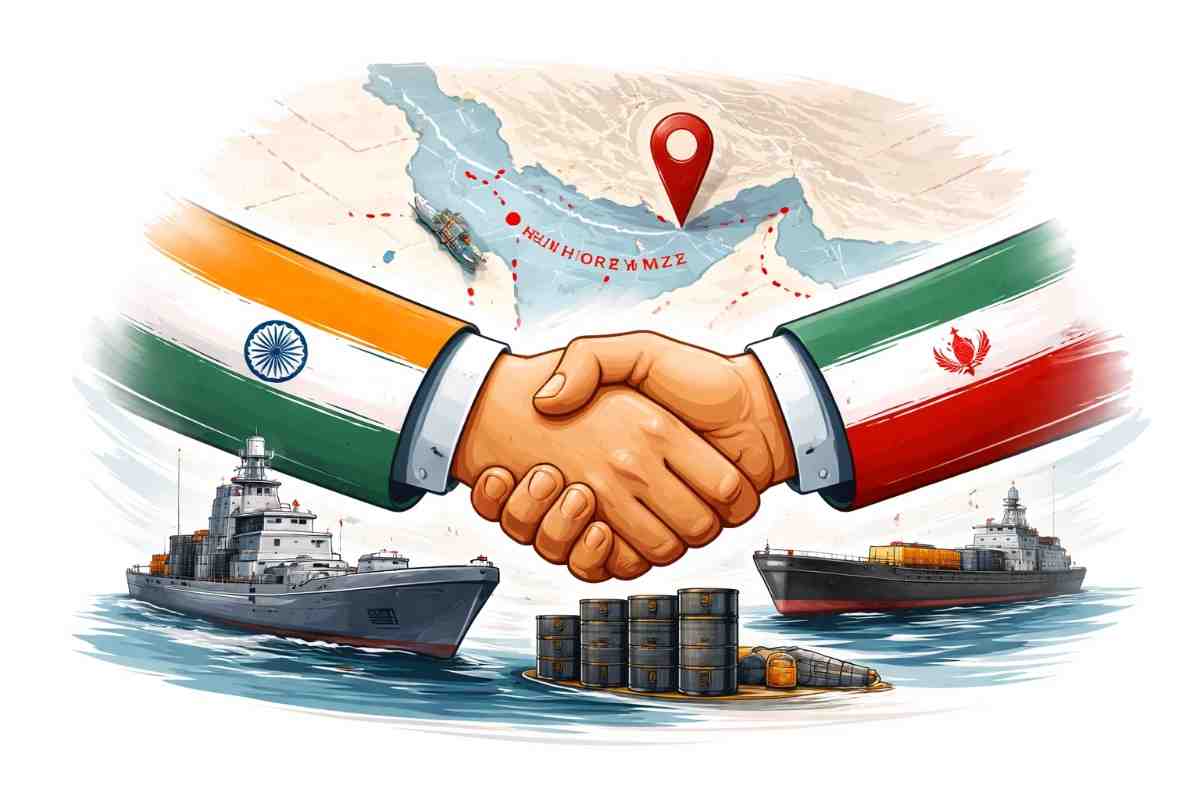
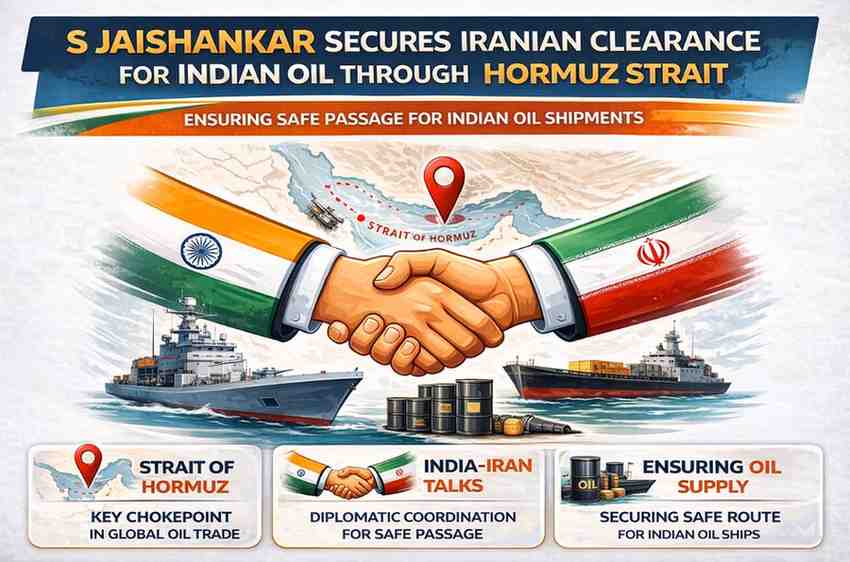
India’s External Affairs Minister Subrahmanyam Jaishankar has secured assurances from Iran regarding the safe passage of Indian oil shipments through the strategically vital Strait of Hormuz, a key maritime route for global energy trade.
The development comes at a time when tensions in the Gulf region have raised concerns about disruptions to shipping routes that carry a large share of the world’s crude oil. For India, which imports a significant portion of its energy requirements from West Asia, maintaining secure oil supply routes is critical for economic stability.
Officials said diplomatic engagement with Iran helped ensure that Indian oil cargoes will continue to move safely through the Strait of Hormuz, despite rising geopolitical risks in the region.
The assurance is important for India’s energy security, global trade flows, and domestic fuel supply chains.
Why the Strait of Hormuz Matters for India’s Energy Security
The Strait of Hormuz is one of the most critical maritime chokepoints in the global energy market.
Located between the Persian Gulf and the Gulf of Oman, the narrow waterway is used by oil tankers transporting crude from major exporters in the Middle East.
Key facts about the Strait of Hormuz include:
• Nearly 20% of global oil supply passes through the route
• It connects major oil exporters such as Saudi Arabia, Iraq, Kuwait, and Iran to global markets
• Tankers carrying crude oil to Asia, including India, depend heavily on this passage
Because of this strategic importance, any disruption to shipping in the region can quickly affect global oil prices and energy supply chains.
India, which imports more than 80% of its crude oil needs, is particularly sensitive to developments affecting the Strait of Hormuz.
Diplomatic Engagement Led by S Jaishankar
External Affairs Minister S Jaishankar has been actively engaged in diplomatic discussions with regional partners amid rising tensions in the Gulf.
According to officials familiar with the situation, India sought assurances from Iran regarding the safe movement of ships carrying oil destined for Indian refineries.
Iran’s cooperation is important because vessels moving through the Strait of Hormuz often pass close to Iranian territorial waters.
Diplomatic communication between New Delhi and Tehran helped ensure that Indian oil shipments will not face disruption while passing through the region.
The engagement reflects India’s approach of maintaining balanced relations with countries across West Asia.
India’s Dependence on Middle East Oil
India remains one of the world’s largest energy importers.
A large share of the country’s crude oil imports comes from Middle Eastern producers.
Major suppliers to India include:
• Saudi Arabia
• Iraq
• United Arab Emirates
• Kuwait
These exporters ship crude oil through the Persian Gulf before tankers pass through the Strait of Hormuz on their way to global markets.
Because of this supply chain structure, any instability in Gulf shipping routes can directly affect India’s energy imports.
Ensuring uninterrupted shipping therefore remains a priority for India’s foreign policy and energy planning.
Rising Tensions in the Gulf Trigger Global Concern
The diplomatic engagement comes amid heightened tensions in the Gulf region.
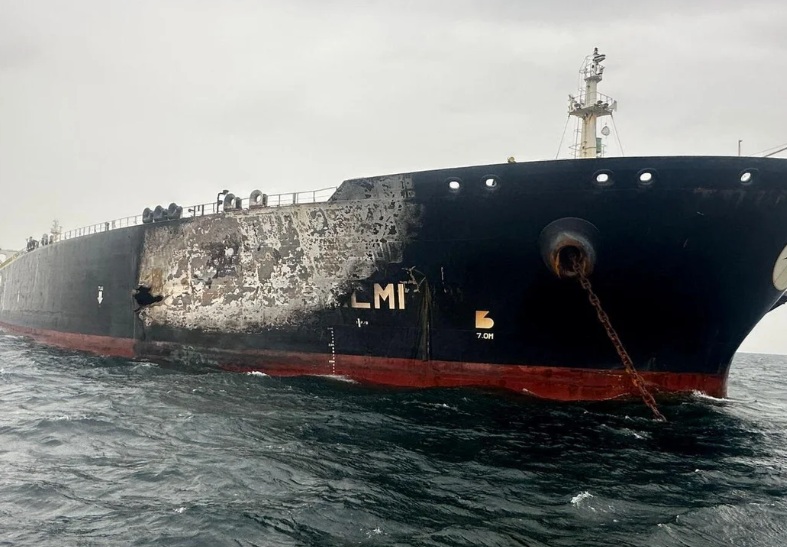
Recent incidents involving shipping security have raised concerns about possible disruptions to oil transport routes.
When security risks increase in the Strait of Hormuz, global markets often react quickly.
Oil traders typically factor geopolitical risk into crude prices, which can lead to sudden spikes in energy costs.
Such volatility can affect economies worldwide, especially countries that rely heavily on imported energy.
India’s diplomatic efforts are aimed at reducing these risks and ensuring the continuity of oil supply chains.
Impact on Global Oil Markets
Security concerns around the Strait of Hormuz often influence global crude oil prices.
If tanker traffic is threatened or delayed, traders anticipate potential supply shortages.
This can push up prices of benchmark crude such as Brent oil, which is widely used in international markets.
Higher oil prices can lead to several economic effects:
• Increased fuel costs
• Higher transportation expenses
• Rising inflation pressure
• Greater import bills for oil-dependent countries
For India, stabilising energy supply routes helps limit the risk of sudden price shocks.
India’s Balanced Diplomacy in West Asia
India maintains strong diplomatic relations with multiple countries across West Asia.
This includes both energy exporters and regional strategic partners.
India’s approach focuses on:
• Maintaining stable energy supply
• Supporting regional stability
• Protecting Indian trade routes
• Safeguarding maritime security
By engaging with countries such as Iran, Saudi Arabia, and the United Arab Emirates, India aims to ensure that geopolitical tensions do not disrupt its economic interests.
Diplomatic outreach by the External Affairs Ministry plays an important role in managing these challenges.
Role of the Indian Navy in Securing Sea Routes
Alongside diplomacy, maritime security also plays a role in protecting global shipping routes.
The Indian Navy regularly conducts patrols and security operations in key sea lanes to ensure safe passage for commercial vessels.
India has previously deployed naval assets in the region during periods of heightened tension to escort merchant ships and monitor maritime activity.
Such efforts are part of India’s broader commitment to safeguarding international shipping routes.
The presence of naval patrols can help reassure shipping companies and energy importers that sea lanes remain secure.
Oil Supply Stability Crucial for India’s Economy
Stable oil imports are essential for India’s economic growth.
Crude oil is used in several sectors, including:
• Transportation
• Manufacturing
• Power generation
• Petrochemicals
Any disruption in supply can increase costs across the economy.
Higher energy prices can lead to inflation and affect industries that rely heavily on fuel.
Ensuring safe maritime routes for oil shipments therefore remains a strategic priority for policymakers.
Shipping Industry Watching Gulf Developments Closely
Global shipping companies and tanker operators are closely monitoring developments in the Gulf region.
Security concerns can affect insurance costs, shipping schedules, and tanker availability.
When risks increase, shipping companies may need to adjust routes or increase security measures.
These changes can raise freight costs and affect delivery timelines.
By securing assurances for Indian oil shipments, diplomatic engagement helps reduce uncertainty for shipping operators and energy companies.
Energy Security Remains Key Policy Focus
India has been working to strengthen its energy security through multiple strategies.
These include:
• Diversifying crude oil import sources
• Increasing strategic petroleum reserves
• Expanding renewable energy capacity
• Strengthening diplomatic ties with energy exporters
While renewable energy is growing rapidly, crude oil remains essential for many sectors of the economy.
Ensuring stable supply chains will therefore remain important for the foreseeable future.
Looking Ahead
The assurance secured through diplomatic engagement offers short-term stability for India’s oil supply routes.
However, the situation in the Gulf remains closely monitored by governments and energy markets.
Future developments in the region could influence global oil prices, shipping patterns, and energy trade.
For India, continued diplomatic outreach and maritime vigilance will remain crucial in protecting energy imports.
Conclusion
External Affairs Minister S Jaishankar’s engagement with Iran to ensure the safe passage of Indian oil shipments through the Strait of Hormuz highlights the importance of diplomacy in safeguarding energy security.
The Strait of Hormuz remains one of the most important routes for global oil trade, and any disruption can have wide economic consequences.
By securing assurances for Indian cargoes, India has taken a proactive step to protect its energy supply lines amid rising regional tensions.
For a country heavily dependent on imported oil, ensuring uninterrupted access to global energy routes remains a vital national priority.
Disclaimer: The information presented in this article is intended for general informational purposes only. While every effort is made to ensure accuracy, completeness, and timeliness, data such as prices, market figures, government notifications, weather updates, holiday announcements, and public advisories are subject to change and may vary based on location and official revisions. Readers are strongly encouraged to verify details from relevant official sources before making financial, investment, career, travel, or personal decisions. This publication does not provide financial, investment, legal, or professional advice and shall not be held liable for any losses, damages, or actions taken in reliance on the information provided.
Last Updated on: Thursday, March 12, 2026 2:05 pm by Outlook News Team | Published by: Outlook News Team on Thursday, March 12, 2026 2:05 pm | News Categories: News
About The Author