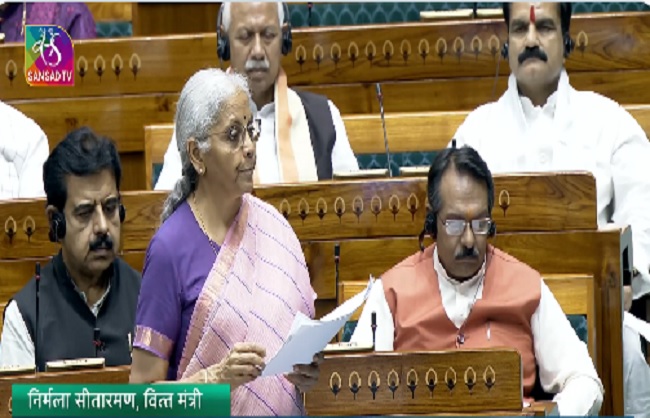


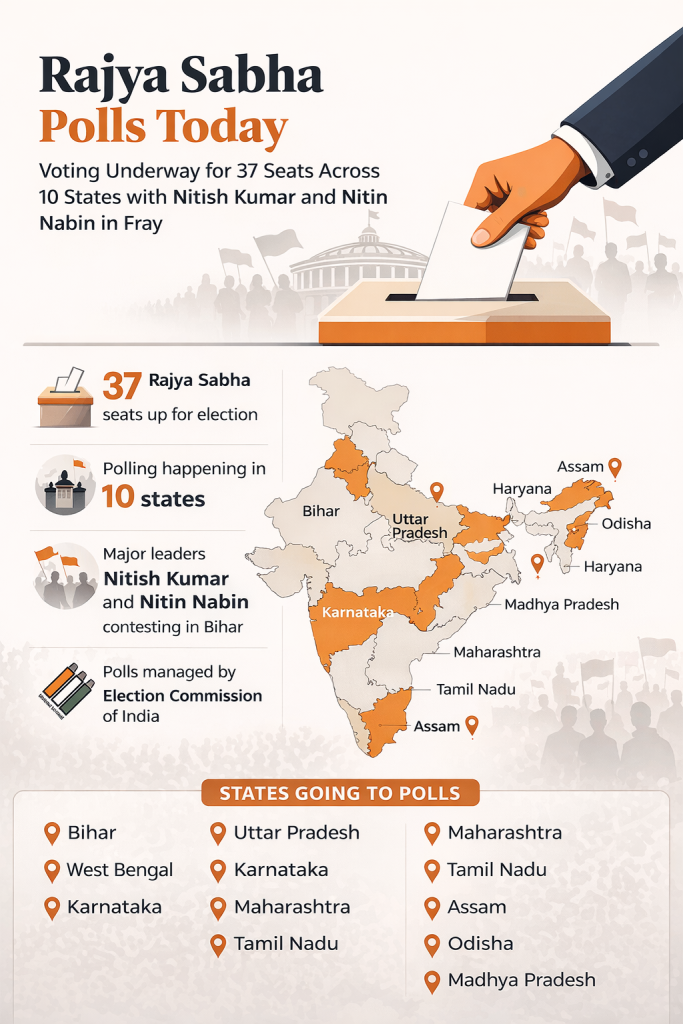
Voting is underway today for 37 Rajya Sabha seats across 10 states, marking an important political exercise that will shape the balance of power in Parliament’s upper house. The elections have drawn attention due to intense political activity in several states, including Bihar, where leaders such as Nitish Kumar and Nitin Nabin are closely involved in the political contest.
The polling, conducted under the supervision of the Election Commission of India, is taking place in state legislative assemblies where elected MLAs vote to choose representatives to the Rajya Sabha.
These elections are significant because they determine how strongly different political parties are represented in the Rajya Sabha, which plays a key role in passing legislation, reviewing bills, and shaping national policy.
Why Today’s Rajya Sabha Elections Matter
The Rajya Sabha, also known as the Council of States, is an important pillar of India’s parliamentary system. While members of the Lok Sabha are directly elected by the public, Rajya Sabha members are chosen by state legislators through an indirect election process.
Today’s polls are crucial for several reasons:
- 37 seats are being filled across 10 states
- Several seats involve competitive contests between major political alliances
- The outcome could shift political strength in the upper house
- Regional parties may gain leverage in national decision-making
Because the Rajya Sabha can delay or review legislation passed by the Lok Sabha, every seat matters for the ruling alliance and the opposition.
How Rajya Sabha Elections Work
Rajya Sabha elections follow a proportional representation system using a single transferable vote. This method allows parties with different strengths in state assemblies to win seats based on their number of MLAs.
Key features of the process include:
- Voting is conducted inside state legislative assemblies
- Only MLAs vote in these elections
- The voting uses a preferential ballot system
- Members are elected for six-year terms
- Elections take place whenever members retire or seats become vacant
Unlike general elections, Rajya Sabha polls often involve strategic political alliances and cross-party negotiations.
States Voting Today for Rajya Sabha Seats
The polling today is being held across 10 states, with multiple seats being filled due to scheduled retirements of sitting members.
While many seats are expected to follow the numerical strength of parties in state assemblies, some states have witnessed political maneuvering and close contests.
States involved in the polling include:
- Bihar
- Uttar Pradesh
- West Bengal
- Karnataka
- Maharashtra
- Tamil Nadu
- Assam
- Haryana
- Odisha
- Madhya Pradesh
The final outcomes will depend on party numbers in the state assemblies and voting discipline among MLAs.
Bihar Contest Draws Special Attention
Among all states voting today, Bihar has attracted significant political attention.
The political dynamics in the state have been closely watched due to the involvement of major leaders and alliances. Chief Minister Nitish Kumar, who leads the Janata Dal (United), has been central to the political discussions around candidate selection and alliance strategies.
Meanwhile, the Bharatiya Janata Party has also been active in the contest, with leaders including Nitin Nabin playing a visible role in the political developments around the polls.
Bihar’s vote is seen as a test of alliance discipline and party strength in the state assembly.
Political Stakes for Major Parties
Rajya Sabha elections are often less visible to the public compared to general elections, but they carry high political value for national parties.
For the BJP and its allies
The ruling alliance aims to maintain or strengthen its numbers in the Rajya Sabha, which helps in passing key legislation more smoothly.
Even though the government may have a majority in the Lok Sabha, the Rajya Sabha’s numbers determine how easily bills can move through Parliament.
For opposition parties
Opposition groups aim to retain their representation and ensure they have enough members to challenge or scrutinize government policies.
Regional parties also play a crucial role because they often hold decisive votes in the upper house.
Possibility of Cross-Voting
One factor that often shapes Rajya Sabha elections is cross-voting, where MLAs vote against their party line.
Because voting is done through open ballot under party supervision, political parties usually issue strict instructions to their MLAs.
Still, in tightly contested states, even a few unexpected votes can change the result.
Political analysts say the elections will be closely watched for signs of:
- Alliance unity
- MLA loyalty
- Shifts in regional political equations
Counting of Votes and Result Timeline
Voting for the Rajya Sabha elections usually takes place during the day inside the state assemblies. After the voting concludes:
- Ballot papers are verified
- Votes are counted according to the preferential voting system
- Winners are declared once they reach the required vote quota
The counting process typically begins soon after polling closes, and results are expected later today.
Because the voting uses a mathematical quota system, the counting process can take longer than standard elections.
Role of Rajya Sabha in Indian Democracy
The Rajya Sabha plays a crucial role in the Indian legislative process.
Its responsibilities include:
- Reviewing bills passed by the Lok Sabha
- Debating national policies
- Representing states in Parliament
- Ensuring checks and balances in lawmaking
Members of the Rajya Sabha often include senior politicians, policy experts, and leaders from different states, making it an important forum for national debate.
Unlike the Lok Sabha, the Rajya Sabha cannot be dissolved and remains a permanent body, with one-third of its members retiring every two years.
What to Watch After the Results
Once the results are declared, political observers will focus on several key questions:
- Which parties gained or lost seats in the upper house
- Whether alliances held firm during voting
- If any unexpected cross-voting occurred
- How the results impact future legislative battles in Parliament
The results could also influence political messaging and alliance strategies ahead of upcoming elections in several states.
Conclusion
The Rajya Sabha elections for 37 seats across 10 states are more than just a routine parliamentary exercise. They represent an important moment in India’s political calendar, testing party discipline, alliance strength, and legislative influence.
With voting underway and results expected soon, the focus will remain on how political parties perform in these closely watched contests. The outcome will help determine the balance of power in the Rajya Sabha and the ease with which future legislation moves through Parliament.
For national and regional parties alike, today’s polling is a significant step in shaping India’s parliamentary landscape in the months ahead.
Disclaimer: The information presented in this article is intended for general informational purposes only. While every effort is made to ensure accuracy, completeness, and timeliness, data such as prices, market figures, government notifications, weather updates, holiday announcements, and public advisories are subject to change and may vary based on location and official revisions. Readers are strongly encouraged to verify details from relevant official sources before making financial, investment, career, travel, or personal decisions. This publication does not provide financial, investment, legal, or professional advice and shall not be held liable for any losses, damages, or actions taken in reliance on the information provided.
Last Updated on: Monday, March 16, 2026 4:49 pm by Outlook News Team | Published by: Outlook News Team on Monday, March 16, 2026 4:32 pm | News Categories: India
About The Author