

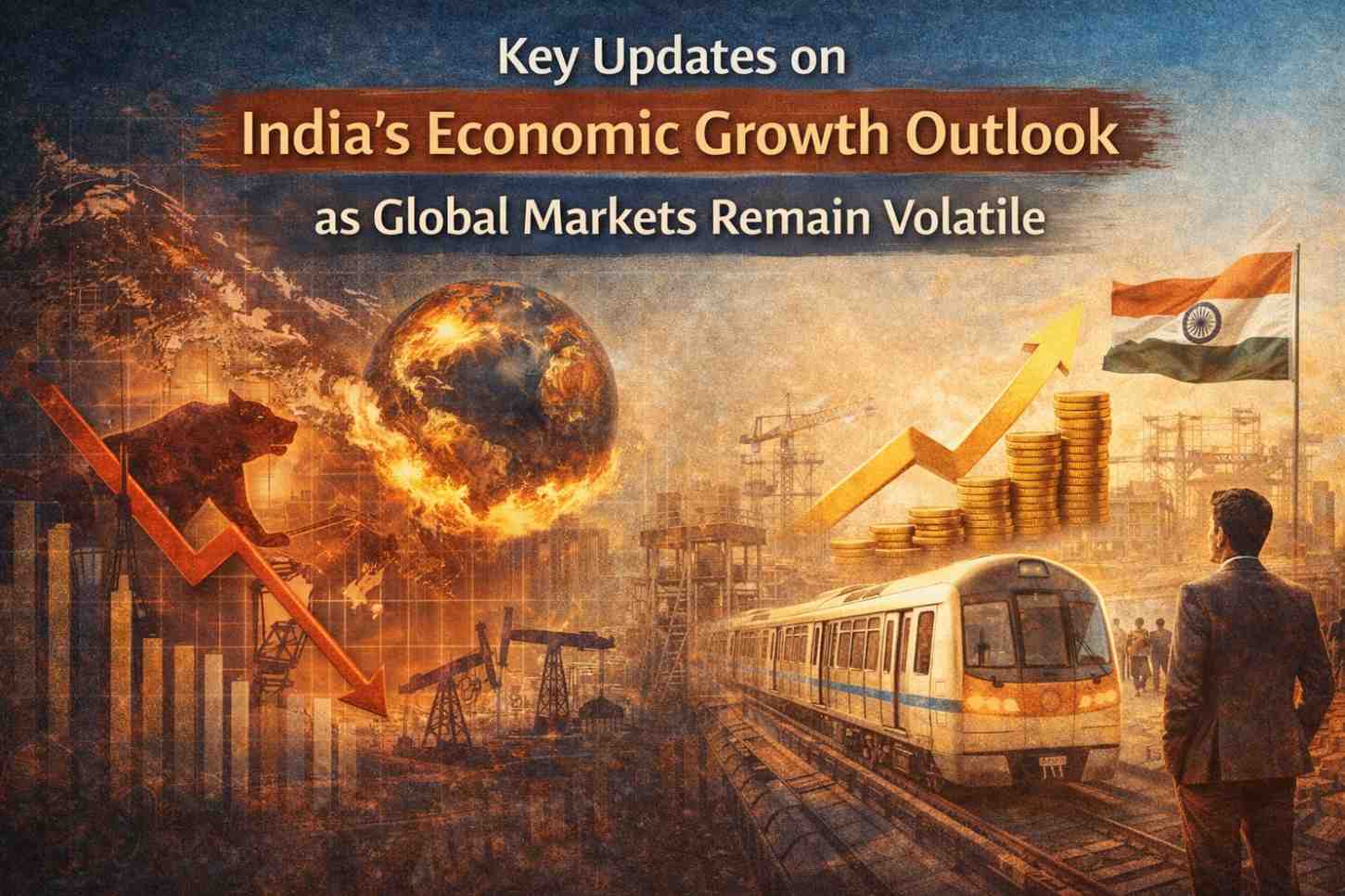
India’s economic growth outlook is being closely watched as global markets navigate a phase of uncertainty driven by geopolitical tensions, fluctuating commodity prices, tighter financial conditions, and uneven recovery across major economies. Despite these headwinds, India continues to be seen as one of the more resilient large economies, supported by domestic demand, public investment, and structural reforms. The latest assessments from policymakers, multilateral institutions, and market participants suggest cautious optimism, tempered by risks emerging from the global environment.
Global Volatility and Its Impact on Emerging Economies
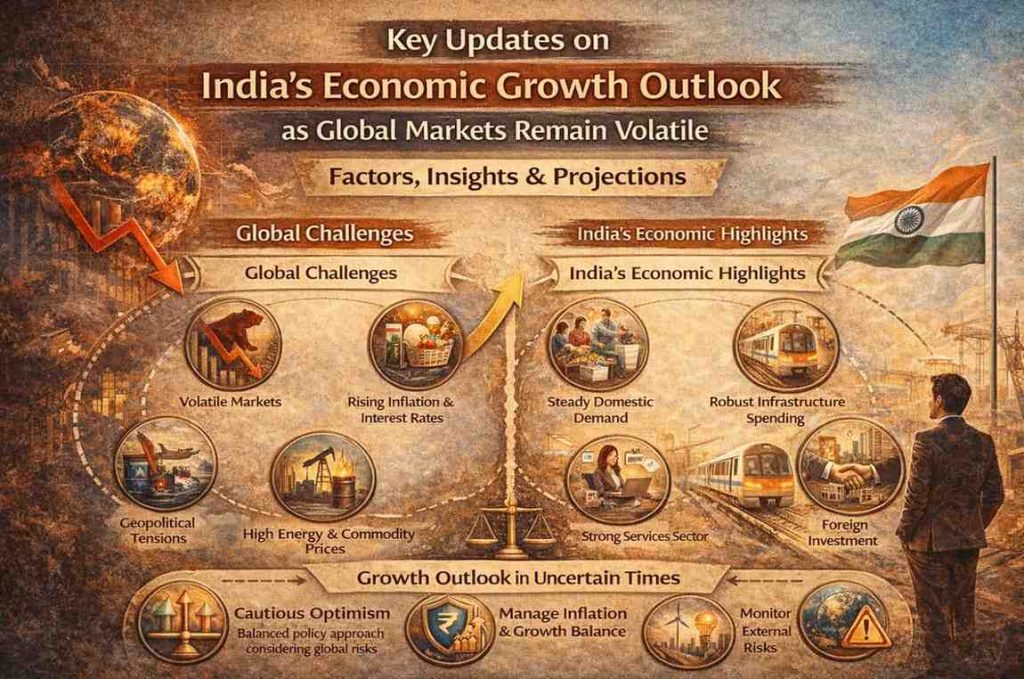
Volatility in global markets has become a defining feature of the current economic landscape. Persistent inflationary pressures in advanced economies, changing interest rate trajectories, and disruptions in global supply chains have led to uncertainty in capital flows and trade. For emerging markets like India, these factors influence export demand, currency stability, and investment sentiment.
Rising borrowing costs globally have also tightened financial conditions, making access to capital more selective. However, India’s relatively strong macroeconomic fundamentals have helped cushion some of these external shocks compared to other emerging economies.
Domestic Growth Drivers Remain Intact
India’s growth story continues to be anchored in domestic demand. Consumption has shown resilience, supported by improving employment conditions, steady rural recovery, and government welfare measures. Urban demand, particularly in services such as travel, hospitality, and retail, has remained robust.
Public investment has emerged as a key growth engine. Government spending on infrastructure, including roads, railways, ports, and digital connectivity, has not only boosted economic activity but also crowded in private investment. This focus on capital expenditure is seen as critical for sustaining medium-term growth and enhancing productivity.
Industrial and Manufacturing Outlook
The manufacturing sector has experienced mixed trends amid global uncertainty. While export-oriented segments face pressure due to weaker global demand, domestic manufacturing linked to infrastructure, defence, electronics, and renewable energy has shown steady momentum.
Policy initiatives aimed at strengthening domestic manufacturing and reducing import dependence continue to support the sector. Over time, these measures are expected to improve India’s position in global value chains, although short-term challenges linked to global demand persist.
Services Sector Continues to Support Growth
The services sector remains a stabilising force for India’s economy. Information technology, financial services, telecommunications, and professional services continue to contribute significantly to output and exports. Even as global clients adopt cautious spending, India’s services exports have benefited from diversification and cost competitiveness.
Tourism, aviation, and hospitality have also provided a boost, reflecting strong domestic travel demand. Together, these trends help offset some of the slowdown pressures seen in goods exports.
Inflation, Monetary Policy, and Growth Balance
Managing inflation while supporting growth remains a key challenge. Food and energy prices, influenced by global developments and weather-related factors, continue to pose risks. At the same time, monetary authorities have focused on maintaining price stability to protect purchasing power and financial stability.
The policy stance of the Reserve Bank of India has aimed to strike a balance between controlling inflation and ensuring adequate liquidity for growth. Stable inflation expectations and prudent fiscal management are seen as essential for sustaining investor confidence during periods of global volatility.
External Sector and Trade Dynamics
India’s external sector faces both challenges and opportunities. Slower growth in key export markets has affected merchandise exports, while services exports have offered partial relief. The trade deficit remains sensitive to global crude oil prices, which directly impact import bills.
At the same time, efforts to diversify export markets and deepen trade partnerships are gaining importance. Policymakers are focusing on enhancing competitiveness, improving logistics, and supporting exporters to navigate uncertain global demand conditions.
Investment Climate and Capital Flows
Foreign investment flows have shown periods of volatility in line with global risk sentiment. However, India continues to attract long-term investors due to its growth potential, large consumer base, and ongoing reforms. Domestic investment sentiment has also improved, supported by better corporate balance sheets and higher capacity utilisation.
Stable policy signals and continued focus on ease of doing business are expected to play a crucial role in sustaining investment momentum, even as global financial conditions remain tight.
Outlook from Multilateral Institutions
Global institutions continue to project India as one of the fastest-growing major economies, even as they revise global growth forecasts downward. According to assessments by the International Monetary Fund, India’s growth is supported by structural strengths, although downside risks from external shocks remain.
These projections underscore the importance of maintaining reform momentum and macroeconomic stability to navigate an uncertain global environment.
Risks and Uncertainties Ahead
Despite its relative resilience, India is not immune to global risks. Prolonged geopolitical tensions, sharper-than-expected slowdowns in major economies, or renewed spikes in commodity prices could impact growth prospects. Climate-related disruptions and uneven recovery in rural demand also remain areas to watch.
Domestically, sustaining consumption growth and ensuring inclusive recovery across regions and income groups will be key to maintaining overall economic momentum.
The Road Ahead
India’s economic growth outlook remains cautiously positive amid global market volatility. Strong domestic demand, public investment, and a resilient services sector provide important buffers against external shocks. At the same time, policymakers face the ongoing task of managing inflation, supporting investment, and adapting to a changing global economic order.
As global markets remain uncertain, India’s ability to balance short-term stability with long-term structural reforms will shape its growth trajectory in the months ahead.
Also read – https://outlooknews.in/retail-investors-drive-successful-closure-of-sundrex-oil-sme-ipo/
Add outlooknews.in as preferred source on google – click here
Last Updated on: Thursday, January 22, 2026 11:27 am by Outlook News Team | Published by: Outlook News Team on Thursday, January 22, 2026 11:27 am | News Categories: News
About The Author