

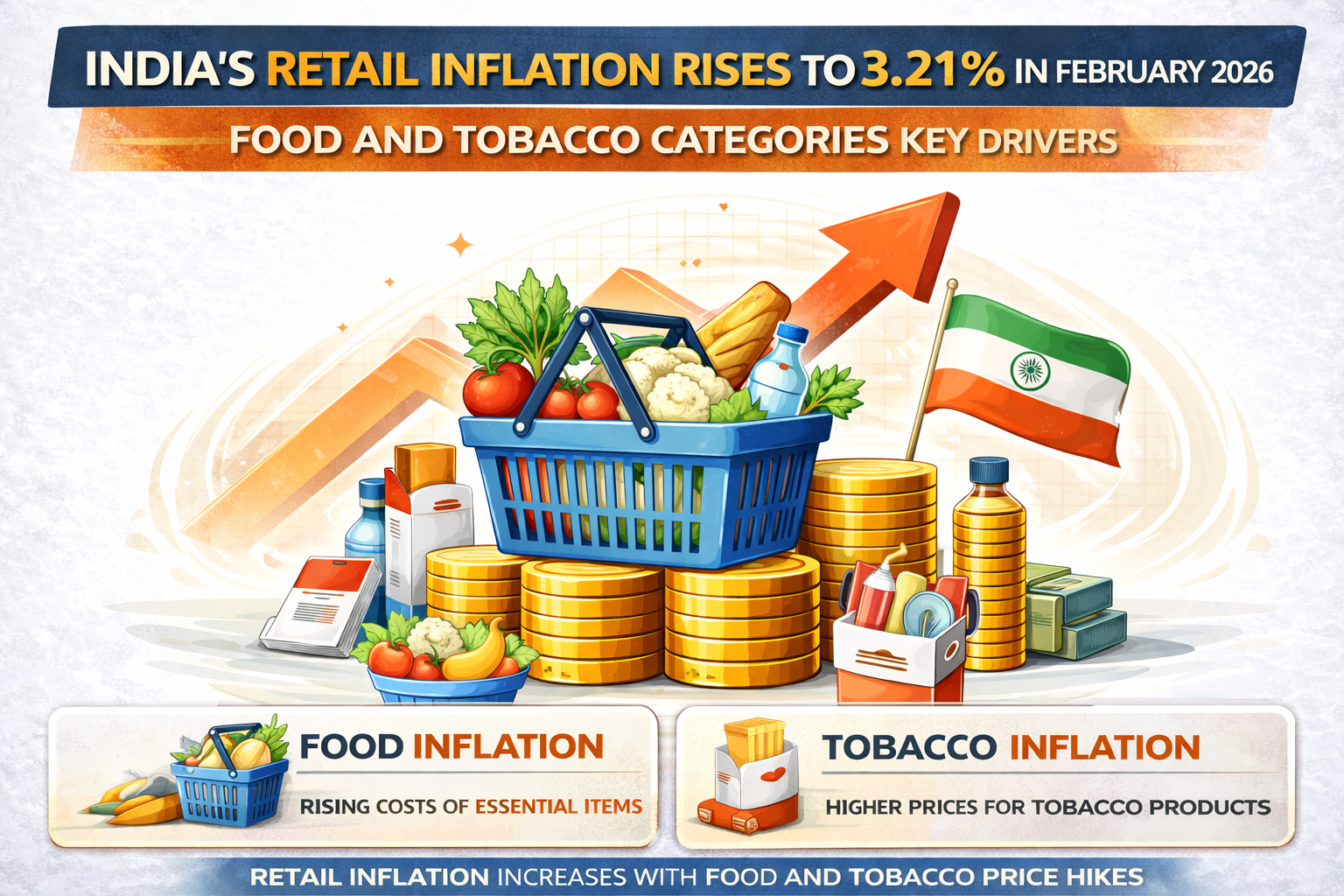
India’s retail inflation rose to 3.21% in February 2026, according to official data released by the Ministry of Statistics and Programme Implementation, with higher prices in food and tobacco categories contributing to the increase.
The inflation figure, measured through the Consumer Price Index (CPI), reflects a slight rise compared with the previous month. However, the rate remains well within the target range set by the Reserve Bank of India (RBI).
Retail inflation plays a critical role in shaping monetary policy decisions, household purchasing power, and economic expectations. Even small changes in CPI are closely watched by policymakers, investors, and consumers across India.
The February inflation data suggests that while overall price pressures remain moderate, certain essential categories continue to influence consumer spending patterns.
Retail Inflation at 3.21%: What the Latest CPI Data Shows
India’s retail inflation for February 2026 stood at 3.21%, according to official government statistics.
The Consumer Price Index measures changes in the prices of goods and services that households purchase regularly.
These include:
• Food items
• Housing costs
• Clothing and footwear
• Fuel and light
• Health and education expenses
The CPI is widely used as the primary indicator of inflation affecting consumers.
A reading of 3.21% indicates moderate inflation, remaining comfortably within the RBI’s inflation tolerance band of 2% to 6%.
This suggests that overall price stability remains under control despite increases in certain sectors.
Food Prices Remain a Major Contributor to Inflation
Food prices continued to play a key role in shaping India’s retail inflation.
Food items represent one of the largest components of the CPI basket, meaning price changes in this category can significantly affect the overall inflation rate.
Several food segments recorded noticeable price movements during the month.
These may include:
• Vegetables
• Cereals and grains
• Fruits
• Dairy products
Seasonal changes, supply conditions, and transportation costs often influence food prices.
Because food forms a large share of household spending, even moderate price increases can affect consumers.
Tobacco Prices Also Contribute to CPI Rise
Alongside food, the tobacco category also contributed to the increase in inflation during February.
Tobacco products form part of the CPI basket used to measure consumer price changes.
Price movements in this segment can occur due to several factors, including taxation policies and supply costs.
While the overall impact of tobacco inflation is smaller compared with food, it still contributes to the overall CPI figure.
Government tax structures and regulatory policies often influence price trends in this category.
Understanding the Consumer Price Index (CPI)
The Consumer Price Index is the most widely used measure of inflation in India.
The index tracks the price changes of hundreds of goods and services consumed by households.
The CPI basket is divided into several major groups:
• Food and beverages
• Housing
• Clothing and footwear
• Fuel and light
• Miscellaneous services
Each category carries a specific weight based on its importance in household spending.
Food and beverages typically account for the largest share of the CPI basket.
Because of this, fluctuations in food prices often have a strong impact on overall inflation.
Why Retail Inflation Matters for the Economy
Retail inflation affects several aspects of the economy.
For consumers, rising inflation means higher costs for everyday goods and services.
For policymakers, inflation levels help determine monetary policy decisions.
The Reserve Bank of India uses CPI inflation as a key indicator when deciding whether to:
• Raise interest rates
• Cut interest rates
• Maintain current monetary policy
Stable inflation supports economic growth because it helps maintain purchasing power and investment confidence.
If inflation rises too quickly, it can reduce consumer spending and increase economic uncertainty.
RBI’s Inflation Target Framework
India follows an inflation targeting framework managed by the Reserve Bank of India.
The central bank aims to maintain inflation at 4%, with a tolerance band of 2% to 6%.
As long as inflation remains within this range, policymakers generally consider price stability to be under control.
The February inflation figure of 3.21% remains below the central target of 4%.
This suggests that inflation pressures are currently moderate compared with historical levels.
However, policymakers continue to monitor trends closely, especially in food prices.
Food Inflation and Its Impact on Households
Food inflation is particularly important for Indian households because a large portion of income is spent on food items.
Rural households often allocate a significant share of their budget to groceries and daily essentials.
Even small increases in food prices can therefore affect household spending patterns.
Urban consumers also experience the impact through higher grocery bills and restaurant costs.
The government often monitors food supply conditions and may intervene through measures such as buffer stock releases or import policies if necessary.
Fuel and Transport Costs Also Influence Inflation
While food prices remain the largest driver of CPI movements, fuel costs also influence inflation trends.
Fuel prices affect the economy in two ways:
• Directly through petrol and diesel costs
• Indirectly through transportation and logistics expenses
When fuel costs rise, the cost of transporting goods increases, which can lead to higher prices for consumer products.
Energy prices are therefore closely watched by policymakers when assessing inflation risks.
Inflation Trends in Recent Months
India’s inflation has remained relatively stable in recent months compared with previous years.
Several factors have helped moderate price pressures:
• Improved agricultural output
• Stable supply chains
• Government monitoring of essential commodity prices
However, inflation trends can change depending on factors such as weather conditions, global commodity prices, and domestic demand.
Economic analysts often study month-to-month CPI changes to identify emerging patterns.
What Economists Are Watching Next
Economists and market analysts closely monitor several indicators when evaluating inflation trends.
These include:
• Food price movements
• Global oil prices
• Agricultural production levels
• Currency fluctuations
Changes in any of these factors can influence future inflation readings.
For example, higher oil prices can increase transportation costs, while poor harvests may push food prices upward.
Monitoring these indicators helps policymakers anticipate inflation risks.
Implications for Interest Rates and Monetary Policy
Inflation data plays a major role in shaping the Reserve Bank of India’s monetary policy decisions.
If inflation remains moderate, the central bank may have more flexibility to support economic growth.
However, if inflation rises sharply, policymakers may consider tightening monetary policy to control price increases.
Interest rate decisions affect borrowing costs for households and businesses.
Stable inflation often supports balanced economic growth and investment activity.
What This Means for Consumers
For Indian consumers, the February inflation data suggests that overall price pressures remain relatively moderate.
However, rising prices in food categories may still affect household budgets.
Consumers may notice price changes in everyday grocery items and packaged products.
Inflation trends are also influenced by seasonal factors such as crop cycles and weather conditions.
Households typically adjust spending patterns when prices rise in key categories.
Conclusion
India’s retail inflation rose to 3.21% in February 2026, according to data released by the Ministry of Statistics and Programme Implementation.
The increase was driven mainly by higher prices in food and tobacco categories, although overall inflation remains within the Reserve Bank of India’s target range.
For policymakers, the data signals that price pressures are currently manageable but still require careful monitoring.
Food prices will likely remain a key factor influencing inflation in the months ahead.
As economic conditions evolve, both consumers and policymakers will continue to watch inflation data closely to understand its impact on India’s economy.
Disclaimer: The information presented in this article is intended for general informational purposes only. While every effort is made to ensure accuracy, completeness, and timeliness, data such as prices, market figures, government notifications, weather updates, holiday announcements, and public advisories are subject to change and may vary based on location and official revisions. Readers are strongly encouraged to verify details from relevant official sources before making financial, investment, career, travel, or personal decisions. This publication does not provide financial, investment, legal, or professional advice and shall not be held liable for any losses, damages, or actions taken in reliance on the information provided.
Last Updated on: Friday, March 13, 2026 4:52 pm by Outlook News Team | Published by: Outlook News Team on Friday, March 13, 2026 4:52 pm | News Categories: News
About The Author