
Rising Global Tensions and Economic Risks Push Investors Towards Gold
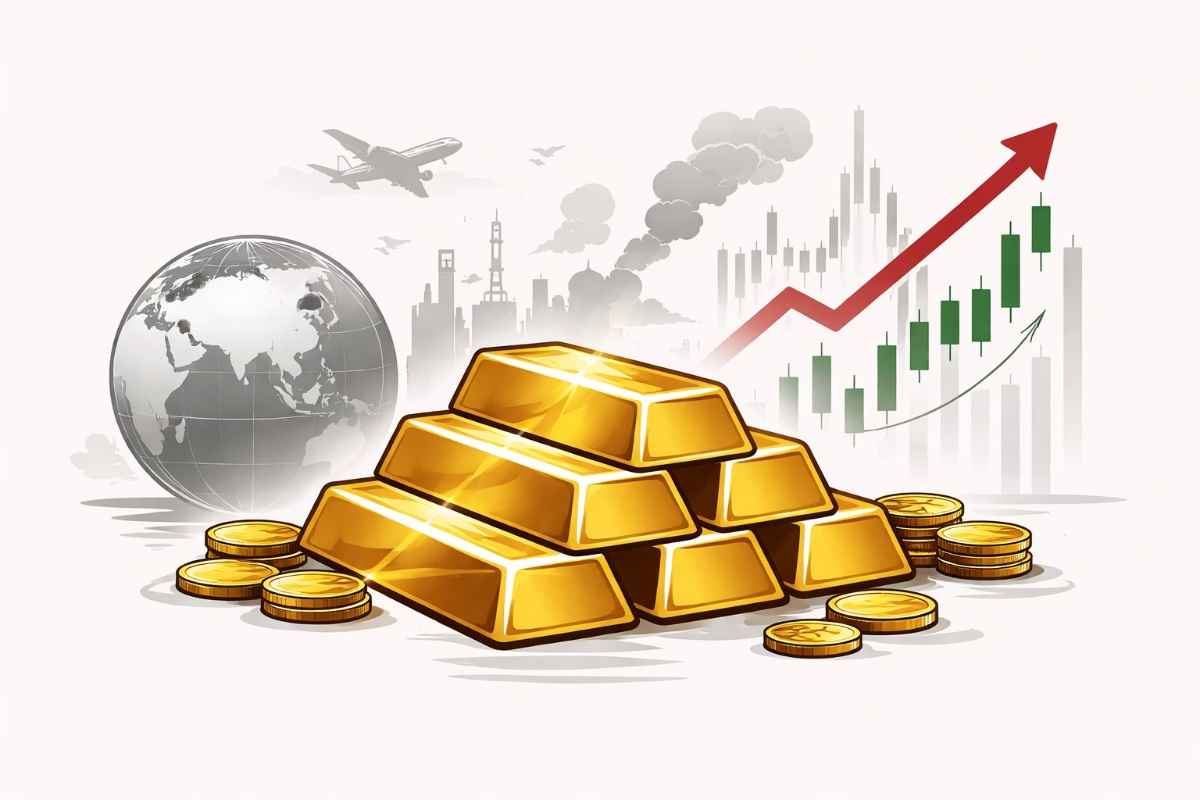
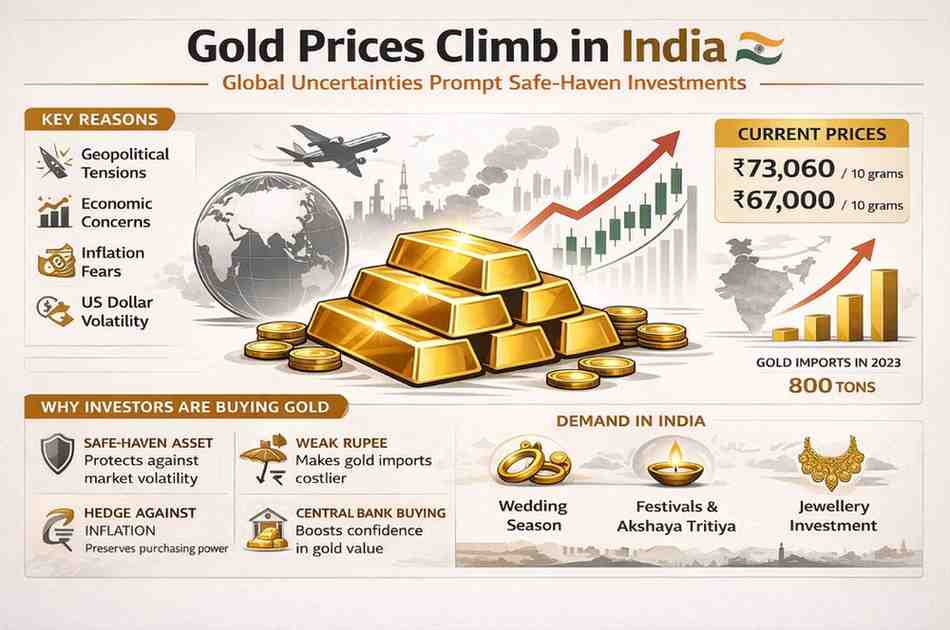
Gold prices in India have moved higher as global uncertainties increase demand for safe-haven assets. Investors across the world are turning to gold amid concerns over geopolitical tensions, inflation pressures, and fluctuations in the US dollar.
The rise in gold rates matters for Indian households, jewellers, and investors. India is one of the largest consumers of gold globally. Any sharp movement in international bullion prices directly impacts domestic rates.
With wedding season demand and ongoing global risks, gold prices are once again in focus.
Why Gold Prices Are Rising Now
Gold is traditionally seen as a safe investment during uncertain times. When markets face volatility, investors often move funds from riskier assets like equities to safer options such as gold.
Several global factors are influencing prices:
- Ongoing geopolitical tensions in parts of the world
- Uncertainty around global economic growth
- Expectations around US Federal Reserve interest rate decisions
- Fluctuations in the US dollar
- Central bank gold purchases
When interest rate cuts are expected, gold tends to benefit. Lower interest rates reduce the opportunity cost of holding gold, which does not pay interest.
At the same time, any weakness in the US dollar makes gold cheaper for buyers using other currencies, including the Indian rupee.
Gold Prices in India: What Consumers Should Know
In India, gold prices are influenced by:
- International bullion rates
- Import duties
- GST
- Rupee-dollar exchange rate
India imports most of its gold. A weaker rupee increases the cost of imports, pushing domestic prices higher.
Gold rates vary slightly across cities due to local taxes and transport costs. However, overall trends follow global market movements.
Consumers planning to buy gold jewellery should also factor in:
- Making charges
- Hallmark certification
- Purity levels such as 22K and 24K
Investors looking at digital gold, gold ETFs, or sovereign gold bonds should track market timing carefully.
Gold as a Safe-Haven Investment
Why Investors Trust Gold During Crises
Gold has historically performed well during times of:
- Economic slowdown
- Stock market volatility
- Inflation spikes
- Political instability
Unlike equities, gold is not directly linked to corporate earnings. It also does not depend on government policies in the same way as bonds.
This makes it a preferred asset when uncertainty rises.
Central banks around the world have also increased gold reserves in recent years to diversify holdings away from foreign currencies.
Impact on Indian Households
India has a deep cultural connection with gold. It is seen both as an investment and a symbol of wealth.
Rising gold prices affect:
- Wedding purchases
- Festive season buying
- Rural savings patterns
- Jewellery retail demand
When prices rise sharply, some buyers delay purchases. Others shift to lighter designs or lower purity options.
Jewellers often see demand shift between investment coins and jewellery depending on price trends.
Effect on Gold Imports and Trade
India is among the top gold-importing nations. Higher prices can impact import volumes.
If prices stay elevated for a long period:
- Gold imports may moderate
- Trade deficit could be affected
- Demand may shift to recycled gold
Government policies such as import duty changes also play a role in shaping demand.
Stock Market vs Gold: Where Are Investors Moving?
During periods of stock market volatility, some investors rebalance portfolios by increasing gold exposure.
However, financial planners advise diversification instead of putting all funds into one asset class.
Gold can act as a hedge, but long-term wealth creation often depends on balanced investments.
Exchange-traded funds (ETFs) linked to gold prices have seen steady interest during volatile phases.
What Experts Usually Recommend
Financial advisors often suggest allocating a small portion of a portfolio to gold. This helps manage risk during uncertain times.
Common ways to invest in gold include:
- Physical gold
- Gold ETFs
- Gold mutual funds
- Sovereign Gold Bonds
Each option has different liquidity, taxation, and storage considerations.
Investors should assess their goals before making decisions.
Rupee Movement and Its Role
The Indian rupee plays an important role in domestic gold pricing.
If the rupee weakens against the US dollar:
- Import costs rise
- Domestic gold rates increase
Even if international gold prices remain stable, currency movement alone can change retail rates in India.
Wedding and Festive Demand Ahead
India’s gold demand typically rises during:
- Wedding season
- Dhanteras
- Diwali
- Akshaya Tritiya
If global uncertainties continue, prices may remain firm during upcoming festive demand cycles.
Consumers may plan purchases in advance to manage costs.
Inflation and Gold
Gold is often considered a hedge against inflation.
When inflation remains high:
- Purchasing power declines
- Investors seek assets that hold value
Gold’s limited supply and global acceptance support its appeal during inflationary periods.
However, gold prices can also correct sharply if global conditions improve.
Is This a Long-Term Trend?
Gold prices move in cycles. They rise during uncertainty and often correct when stability returns.
Key global developments to watch include:
- US Federal Reserve policy decisions
- Inflation data in major economies
- Geopolitical developments
- Central bank buying patterns
These factors will shape price direction in the coming months.
What Should Buyers Do Now?
Consumers should avoid panic buying.
Instead:
- Track price trends
- Compare rates across trusted jewellers
- Check purity certification
- Consider staggered purchases
Investors should avoid making decisions based solely on short-term price spikes.
Long-term financial planning remains important.
Conclusion
Gold prices in India have climbed as global uncertainties increase demand for safe-haven investments.
With geopolitical risks, currency movements, and economic concerns influencing markets, gold continues to attract attention.
For Indian households, gold remains both an emotional and financial asset. For investors, it serves as a hedge during volatile times.
However, price movements depend on global trends and domestic factors.
As markets react to fresh developments, gold will remain in focus for consumers, traders, and policymakers alike.
Disclaimer: The information presented in this article is intended for general informational purposes only. While every effort is made to ensure accuracy, completeness, and timeliness, data such as prices, market figures, government notifications, weather updates, holiday announcements, and public advisories are subject to change and may vary based on location and official revisions. Readers are strongly encouraged to verify details from relevant official sources before making financial, investment, career, travel, or personal decisions. This publication does not provide financial, investment, legal, or professional advice and shall not be held liable for any losses, damages, or actions taken in reliance on the information provided.
Financial Disclaimer: Markets and investment-related products are subject to risks and fluctuations. Readers should conduct their own research and consider consulting a qualified financial advisor before making any investment decisions.
Last Updated on: Monday, March 2, 2026 10:29 am by Outlook News Team | Published by: Outlook News Team on Monday, March 2, 2026 10:29 am | News Categories: Business
About The Author