

Brent Crude and WTI Jump as Middle East Tensions Shake Energy Markets
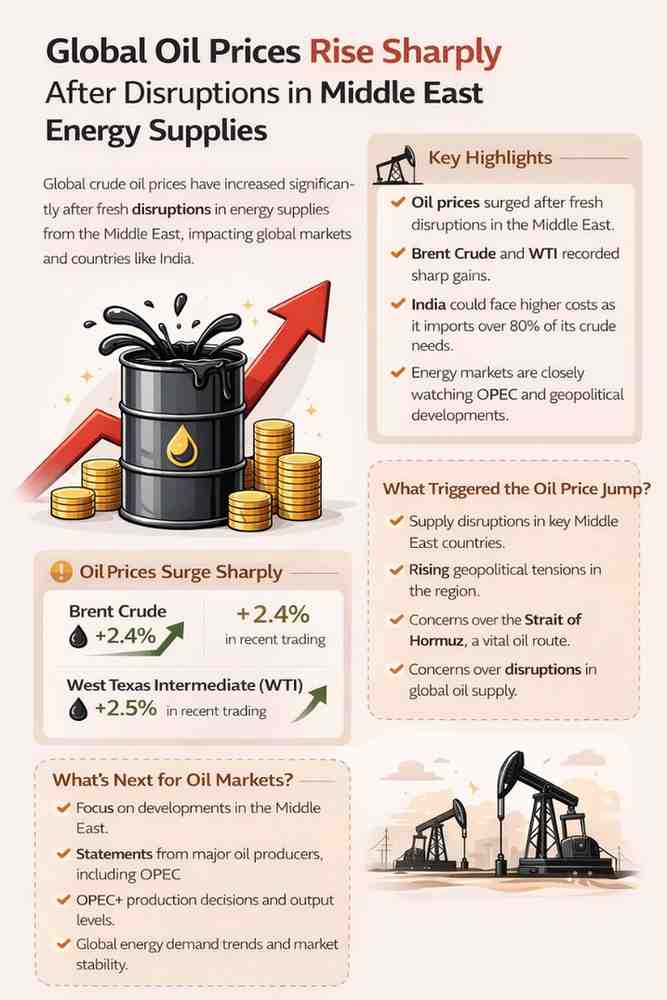
Global oil prices have surged sharply following fresh disruptions to energy supplies in the Middle East, raising concerns over fuel costs and inflation across major economies, including India.
Benchmark crude prices moved higher after reports of supply interruptions and rising geopolitical tensions in key oil-producing regions. The sudden spike has once again put global energy markets on alert.
For India, which imports more than 80% of its crude oil needs, the rise in global oil prices matters immediately. Higher crude prices can impact petrol and diesel rates, transport costs, and overall inflation.
What Triggered the Latest Oil Price Surge?
Oil markets reacted strongly after disruptions affected supply flows from parts of the Middle East, a region that accounts for a significant share of global crude production and exports.
Key global benchmarks responded quickly:
- Brent Crude rose sharply in international trading.
- West Texas Intermediate (WTI) also recorded strong gains.
Traders often respond immediately to any threat to supply in the Middle East because even short-term disruptions can tighten global inventories.
The region includes major oil producers such as:
- Saudi Arabia
- Iraq
- Iran
- United Arab Emirates
Any instability in these countries can influence global crude supply.
Why the Middle East Matters to Global Oil Markets
The Middle East plays a central role in the global energy supply chain.
It controls key export routes such as the Strait of Hormuz, through which a large portion of the world’s oil shipments pass daily.
Even the risk of disruptions in such strategic routes can push prices higher. Traders factor in possible supply shortages, which increases volatility in oil futures markets.
Energy markets are highly sensitive to:
- Production outages
- Pipeline damage
- Shipping risks
- Sanctions or export restrictions
Any of these factors can tighten supply and drive prices upward.
How High Did Oil Prices Climb?
During recent trading sessions, global crude benchmarks recorded noticeable gains compared to previous levels.
Oil prices tend to react quickly to geopolitical headlines. While price movements vary day by day, sudden spikes reflect market concerns about reduced supply or shipping risks.
Investors closely monitor data from:
- The Organization of the Petroleum Exporting Countries (OPEC)
- The International Energy Agency (IEA)
- Major oil-producing countries
Official updates from these bodies often shape market expectations.
Impact on India: Why It Matters
India is one of the world’s largest oil importers. Any rise in global crude prices can directly affect:
- Petrol and diesel prices
- LPG cylinder rates
- Aviation turbine fuel costs
- Freight and logistics expenses
If global crude remains elevated for a sustained period, it can increase India’s import bill.
Higher fuel prices can also add pressure on retail inflation. Transport costs impact food prices, consumer goods, and services.
The Indian government and oil marketing companies regularly monitor global crude trends before adjusting retail fuel prices.
Will Petrol and Diesel Prices Rise in India?
Retail fuel prices in India depend on multiple factors, including:
- Global crude oil prices
- Rupee-dollar exchange rate
- Refining margins
- Government taxes
If crude prices remain high for an extended period, oil marketing companies may face pressure on margins.
However, price adjustments depend on policy decisions and broader economic conditions.
Consumers typically see changes in fuel prices after sustained global movements rather than short-term spikes.
Global Inflation Concerns Resurface
Oil prices are closely linked to inflation worldwide.
When crude becomes expensive:
- Transport costs rise
- Manufacturing costs increase
- Power generation expenses go up
This can slow economic growth if high prices persist.
Central banks, including the Reserve Bank of India (RBI) and the Federal Reserve, closely track energy prices because they influence inflation trends.
A prolonged oil rally could complicate efforts to maintain price stability.
How Global Markets Reacted
Energy stocks often rise when crude prices climb. However, sectors dependent on fuel, such as airlines and logistics, may face pressure.
Stock markets globally reacted with caution as investors assessed the impact of higher energy costs.
Commodity markets tend to see increased volatility during geopolitical tensions, and oil futures contracts often experience higher trading volumes during such periods.
Role of OPEC and Production Policy
OPEC and its allies, often referred to as OPEC+, play a major role in balancing global oil supply.
Production decisions by these countries can influence whether price spikes are temporary or sustained.
If supply disruptions continue, producing nations may adjust output levels to stabilize markets. However, such decisions depend on broader geopolitical and economic considerations.
Strategic Oil Reserves and Supply Buffers
Many countries maintain strategic petroleum reserves to manage short-term supply shocks.
India also maintains emergency crude reserves to reduce vulnerability during global disruptions.
Strategic reserves act as a buffer. However, they are usually used only during severe supply crises.
Shipping and Insurance Risks
Beyond production, shipping risks can also affect oil prices.
If tensions increase around key waterways, shipping insurance costs can rise. This adds to the overall cost of transporting crude oil.
Higher freight and insurance costs often get reflected in global oil prices.
What Happens Next?
Oil markets will continue to watch:
- Developments in the Middle East
- Statements from major producers
- OPEC production updates
- Global demand trends
Short-term volatility is likely if uncertainty continues.
However, sustained price increases depend on whether supply disruptions remain temporary or become prolonged.
Key Highlights
- Global oil prices have surged following Middle East supply disruptions.
- Brent Crude and WTI recorded sharp gains in international markets.
- India, which imports over 80% of its crude needs, could face higher costs if prices remain elevated.
- Rising oil prices may impact fuel rates, inflation, and economic growth.
- Markets are closely watching OPEC, shipping routes, and geopolitical developments.
Why This Matters Today
Energy prices affect almost every part of daily life, from fuel at the pump to grocery bills.
For Indian consumers, sustained high crude prices can influence petrol, diesel, and LPG costs. For businesses, it affects logistics and production expenses.
Global oil markets remain sensitive to geopolitical risks. As the Middle East continues to play a central role in energy supply, any disruption can quickly influence prices worldwide.
The coming weeks will be critical in determining whether this surge is temporary or marks the beginning of a longer period of elevated oil prices.
Investors, policymakers, and consumers will be watching closely.
Disclaimer: The information presented in this article is intended for general informational purposes only. While every effort is made to ensure accuracy, completeness, and timeliness, data such as prices, market figures, government notifications, weather updates, holiday announcements, and public advisories are subject to change and may vary based on location and official revisions. Readers are strongly encouraged to verify details from relevant official sources before making financial, investment, career, travel, or personal decisions. This publication does not provide financial, investment, legal, or professional advice and shall not be held liable for any losses, damages, or actions taken in reliance on the information provided.
Last Updated on: Monday, March 2, 2026 10:49 am by Outlook News Team | Published by: Outlook News Team on Monday, March 2, 2026 10:48 am | News Categories: News
About The Author