
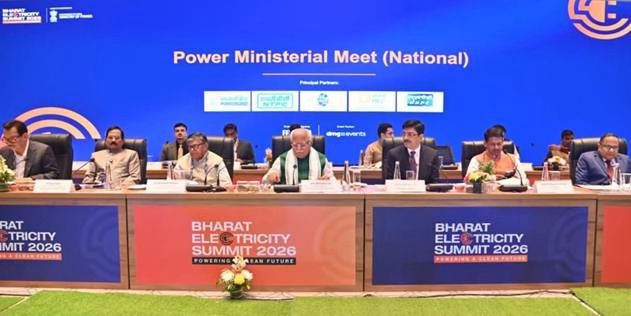
A national-level meeting of power ministers from states and Union Territories was held during the Bharat Electricity Summit 2026, focusing on energy security, sector reforms, and improving power distribution.
The meeting was chaired by Union Power Minister Manohar Lal Khattar and attended by senior officials from central ministries and state governments.
Key Highlights
- Centre assures support to states for power sector reforms
- Focus on energy security and transition to non-fossil fuel sources
- DISCOM performance reports for FY 2024–25 released
- Improved service ratings and reduced low-performing utilities
- Emphasis on technology, smart metering, and AI in power sector
Focus on Energy Security and Growth
Addressing the meeting, the Union Power Minister said reliable electricity is essential for economic development and infrastructure growth.
He highlighted India’s installed power capacity of over 520 GW and improvements in distribution companies (DISCOMs), along with reduced power shortages in recent years.
The minister stressed the need for coordinated efforts between the Centre and states to ensure affordable and efficient power supply.
Official Statement
The minister said the Centre will extend full support to states in implementing necessary reforms, including administrative and legal measures.
He also pointed to the importance of strengthening energy security amid global uncertainties and increasing per capita electricity consumption.
Push for Clean Energy and Technology
Minister of State for Power Shripad Naik highlighted the growing share of non-fossil fuel sources in India’s energy mix.
He said nearly half of the country’s installed capacity now comes from clean energy sources and emphasised the role of smart technologies, including artificial intelligence and smart meters, in modernising the sector.
Officials also discussed the role of nuclear energy as part of the clean energy transition.
DISCOM Performance Reports Released
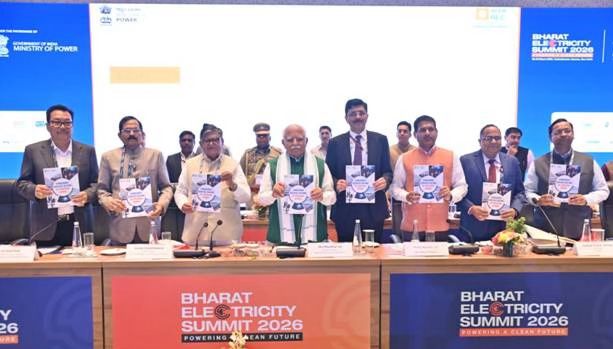
Two key reports for FY 2024–25 were released during the meeting:
- Consumer Service Ratings of DISCOMs (CSRD)
- Distributing Utilities Ranking (DUR) Report
The CSRD report evaluates power distribution companies based on consumer service parameters such as billing accuracy, grievance redressal, and transparency in tariffs.
Out of 66 DISCOMs assessed, 6 received the highest A+ rating, 21 were rated A, and 27 received B+.
Improving Service Standards
The findings indicate an overall improvement in service quality across the country.
More utilities are now in higher performance categories, while fewer fall into lower rating bands, suggesting better consumer service and operational efficiency.
The DUR report, meanwhile, provides a broader assessment of utilities, covering financial health, operational performance, and institutional capability.
Context and Background
DISCOMs play a critical role in India’s power sector, acting as the link between electricity generation and end consumers.
In recent years, the government has introduced reforms to improve their financial sustainability and service delivery, including smart metering and performance benchmarking.
Public Impact
Improved performance of DISCOMs can lead to better electricity supply, fewer outages, and improved customer service for consumers.
Efficient distribution systems also help reduce losses and support the integration of renewable energy into the grid.
Conclusion
The ministerial meeting at the Bharat Electricity Summit highlights the government’s focus on strengthening energy security while improving service delivery.
With ongoing reforms and better-performing utilities, the power sector is expected to play a key role in supporting India’s long-term development goals.
Source: PIB
Last Updated on: Friday, March 20, 2026 5:43 pm by Monisha Angara | Published by: Monisha Angara on Friday, March 20, 2026 5:43 pm | News Categories: Bengaluru
About The Author