

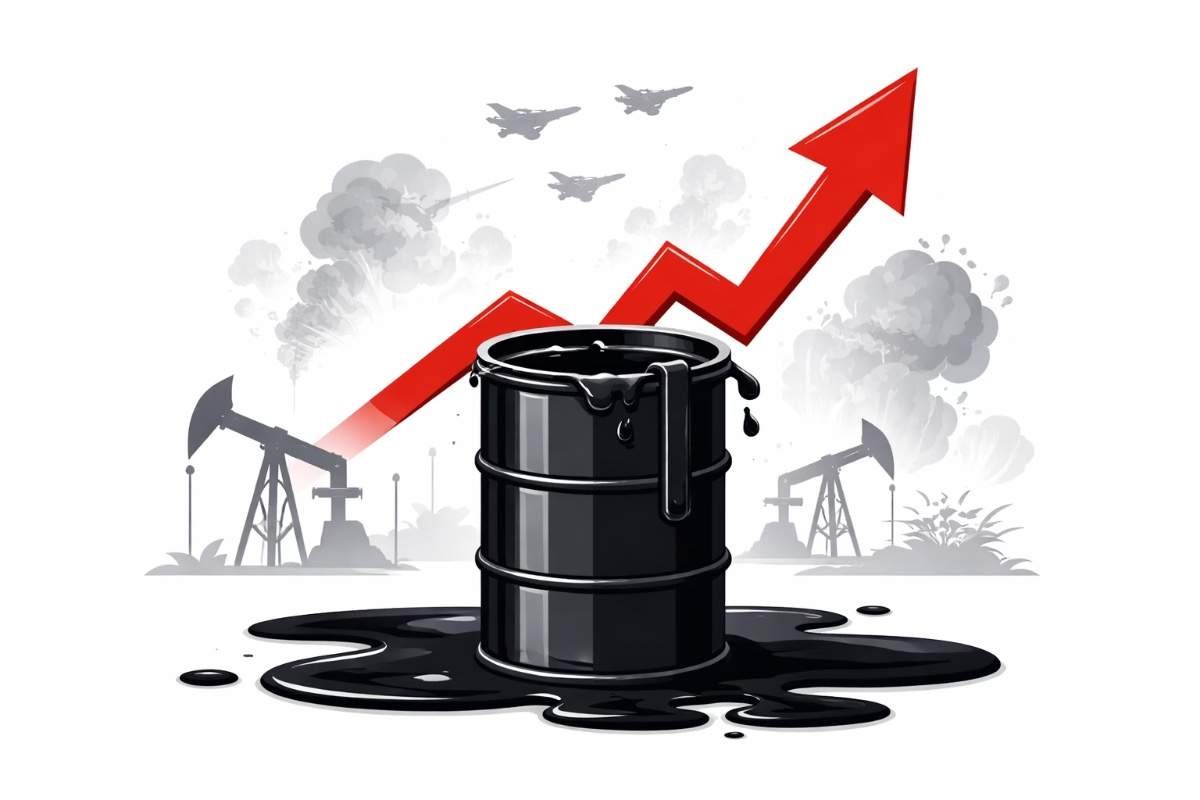
Global oil markets have entered a period of sharp volatility after Brent crude oil prices surged above $114 per barrel, the highest level since 2022, following escalating tensions linked to the ongoing Iran–Israel conflict.
The sudden jump in oil prices is sending shockwaves through financial markets, raising concerns about global inflation, fuel costs, and economic stability. The surge comes as military actions and security threats in the Middle East threaten the flow of crude oil from one of the world’s most critical energy regions.
For countries like India, which depend heavily on imported crude oil, the price spike could affect petrol and diesel prices, inflation, and government finances in the coming months.
Below is a clear breakdown of what is happening in global oil markets, why prices are rising sharply, and what it means for India and the global economy.
Brent Crude Crosses $114: Biggest Oil Market Shock in Years
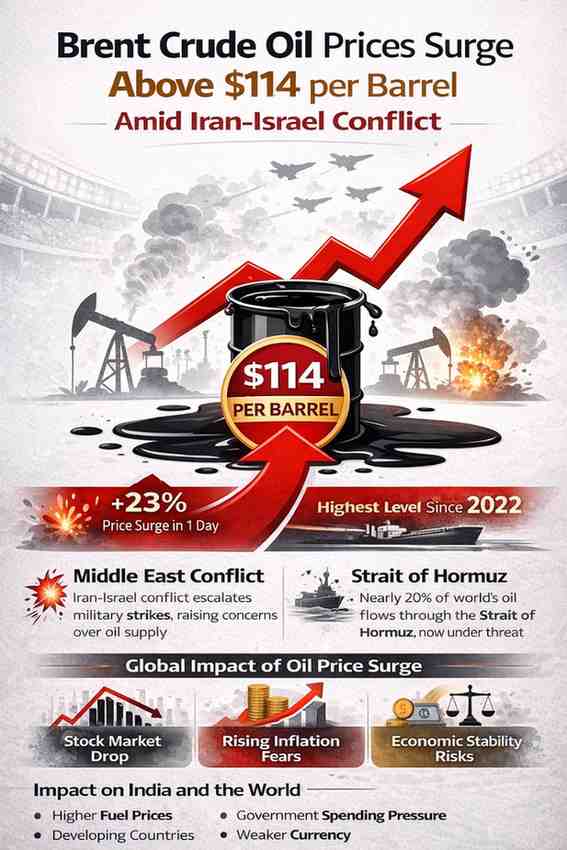
Brent crude the global benchmark for oil prices climbed above $114 per barrel during trading, marking a major surge from recent levels.
The price spike represents a dramatic increase of more than 23% compared with the previous trading session, reflecting intense market fears over supply disruptions from the Middle East.
At the same time:
• West Texas Intermediate (WTI) crude also rose to around $114 per barrel
• The price jump is the largest rise in oil markets since 2022
• Oil prices have climbed sharply since the conflict intensified in late February 2026
Global markets reacted immediately. Stock markets in several regions declined as investors worried about rising inflation and slowing economic growth.
Why Oil Prices Are Rising So Fast
Conflict Disrupting Global Energy Supply
The biggest factor behind the oil rally is the military conflict involving Iran and Israel, which has expanded into a wider regional crisis affecting key energy routes.
The war began after joint U.S.–Israel strikes on Iran on February 28, 2026, followed by Iranian retaliation and attacks across the region.
This conflict has directly affected oil infrastructure, shipping routes, and energy production in the Gulf region.
As a result, oil markets are reacting to fears that global supply could shrink quickly if the conflict continues.
Strait of Hormuz Disruption
A major trigger for the price spike is disruption in the Strait of Hormuz, one of the world’s most important energy chokepoints.
Key facts about this route:
• Nearly 20% of the world’s daily oil supply passes through the Strait of Hormuz
• It connects major oil exporters like Saudi Arabia, Iraq, Kuwait, the UAE, and Iran to global markets
• Tanker traffic has slowed sharply due to security threats and missile attacks
The risk of shipping disruptions has forced many oil tankers to avoid the region or delay shipments, tightening global supply.
When markets fear supply shortages, oil prices tend to rise quickly which is exactly what is happening now.
Energy Infrastructure and Production Hit
Beyond shipping routes, the conflict has also impacted energy facilities and storage sites in the region.
Reports indicate that several oil depots and infrastructure sites have been affected during military strikes.
Some regional producers have also reduced production due to logistical challenges and storage limitations.
When production drops while demand remains steady, the global energy market becomes tighter, pushing prices higher.
Global Markets React to Oil Shock
The oil price surge is not only affecting energy markets.
Financial markets around the world have reacted sharply:
• Stock markets in Asia and the United States fell after the oil rally
• Investors moved funds toward safer assets like the U.S. dollar
• Concerns about inflation and economic slowdown increased
Higher oil prices can have wide effects across the global economy because oil is used in transportation, manufacturing, and power generation.
When energy becomes expensive, businesses face higher costs, and consumers pay more for fuel and everyday goods.
Impact on India: Fuel Prices and Inflation Risks
India is the third-largest oil importer in the world, which means global crude price changes directly affect the country.
India imports more than 80% of its crude oil requirements from international markets.
When Brent crude rises sharply:
• Fuel import costs increase
• Pressure rises on the Indian rupee
• Inflation risks grow due to higher transport and logistics costs
Recent market movements already show the rupee weakening slightly amid the oil surge and global uncertainty.
If crude prices remain elevated, it could lead to higher fuel costs and broader price increases across the economy.
Why the Middle East Matters to Global Oil
The Middle East remains the world’s most important oil-producing region.
Several of the largest oil exporters are located there, including:
• Saudi Arabia
• Iran
• Iraq
• Kuwait
• United Arab Emirates
Any disruption in this region can rapidly affect global energy markets.
Because oil is traded internationally, even countries far from the conflict including India, China, Japan, and European nations feel the impact.
Inflation and Economic Growth Concerns
Economists are closely watching the oil surge because energy prices play a major role in global inflation.
When oil prices rise:
• Transport costs increase
• Manufacturing becomes more expensive
• Food prices may rise due to higher logistics costs
This can force central banks to delay interest rate cuts or tighten monetary policy.
Financial analysts have warned that a prolonged oil shock could slow economic growth worldwide.
How Governments May Respond
Governments and policymakers may take several steps if oil prices remain elevated.
Possible responses include:
• Releasing strategic petroleum reserves
• Increasing oil production in other regions
• Diplomatic efforts to stabilise the Middle East
• Adjusting fuel taxes or subsidies
Energy producers outside the Middle East could also increase supply to stabilise prices, although such changes usually take time to affect global markets.
Could Oil Prices Rise Even Further?
Energy markets are now highly sensitive to geopolitical developments.
If the conflict spreads further or shipping through the Strait of Hormuz remains restricted, prices could remain volatile.
Markets will closely watch:
• Military developments in the Middle East
• Shipping traffic through key oil routes
• Production decisions by major exporters
Any new disruption could push prices even higher.
What Happens Next
The global oil market is entering a period of uncertainty.
Brent crude crossing $114 per barrel signals how quickly geopolitical tensions can reshape energy markets.
For India and other oil-importing nations, the coming weeks will be crucial. Governments, businesses, and consumers will all be watching crude oil prices closely.
The direction of the conflict in the Middle East will likely determine whether oil prices stabilise — or continue to rise further.
Disclaimer: The information presented in this article is intended for general informational purposes only. While every effort is made to ensure accuracy, completeness, and timeliness, data such as prices, market figures, government notifications, weather updates, holiday announcements, and public advisories are subject to change and may vary based on location and official revisions. Readers are strongly encouraged to verify details from relevant official sources before making financial, investment, career, travel, or personal decisions. This publication does not provide financial, investment, legal, or professional advice and shall not be held liable for any losses, damages, or actions taken in reliance on the information provided.
Last Updated on: Monday, March 9, 2026 10:28 am by Outlook News Team | Published by: Outlook News Team on Monday, March 9, 2026 10:28 am | News Categories: Business
About The Author