
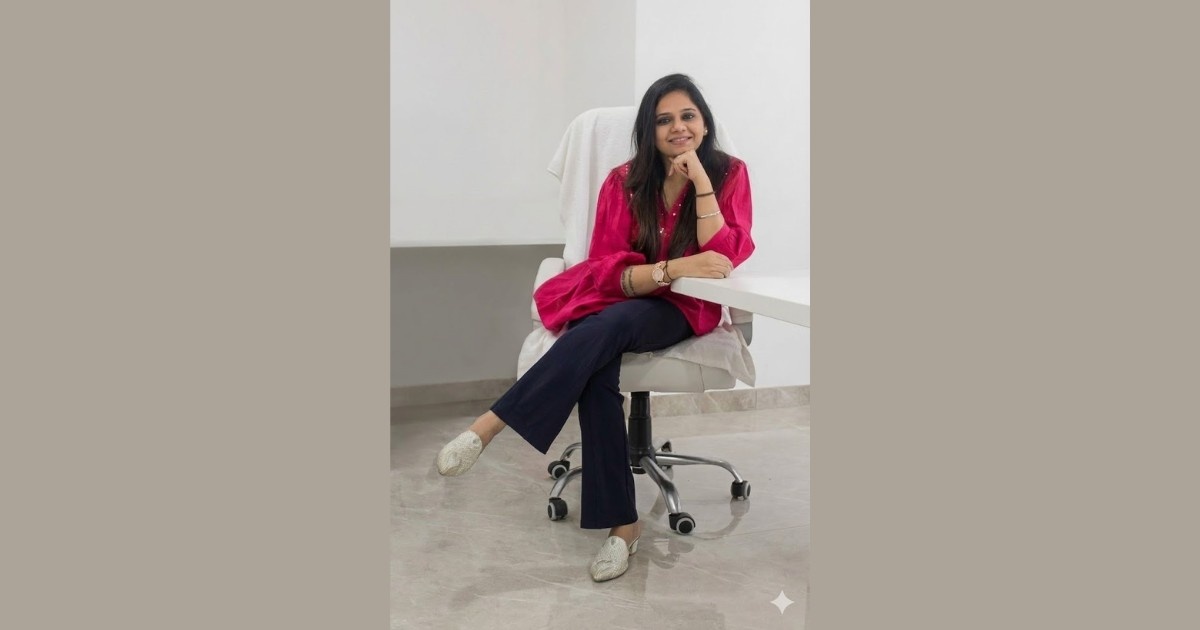
By Arushi Govil (Dreamer-in-Chief) – Co-Founder & Director, Kayhan Entertainment,
An integrated IP-led ecosystem with a strategic focus on IP ownership and creative exports
A few years ago, we found ourselves asking a simple but uncomfortable question: Why were we helping build some of the world’s most iconic stories—but none of our own?
India’s animation and VFX talent has long been part of global blockbusters. We’ve contributed to characters, worlds, and franchises that audiences everywhere recognize. The pipelines were strong, the work was consistent, and the scale was impressive. But something didn’t add up. We were building for the world but not for ourselves. We were creating value but not owning it. And over time, that gap between creation and ownership became impossible to ignore.
So, we made a conscious choice: instead of continuing to be a part of global pipelines, we would step out and start building our own. Not just content but intellectual property. Not just projects but worlds. Because the real question was never whether India could deliver at scale. It was whether India could imagine at scale—and own what it creates.
For decades, India has been the silent engine powering global animation. From Hollywood films to international television series, Indian studios have built a reputation for quality, efficiency, and reliability. That phase was necessary. It built capability, talent, and credibility. But it was only the beginning.
Today, the industry stands at a turning point. Much like India’s transition from IT services to product-led innovation, animation is now moving from execution to ownership. And that changes everything.
From Working for the World to Creating for the World. The traditional model was straightforward: deliver high-quality work for global studios, scale efficiently, and operate within established systems. It worked. But it also came with limitations—limited creative control, limited long-term value, and limited ownership.
The next phase is fundamentally different. It is about creating stories rooted in our own cultural context—and letting those stories travel the world. That shift may sound subtle, but it is transformative. Execution creates output. Ownership creates assets. And in today’s economy, assets define value.
Why This Shift is Happening Now. This is not an isolated change—it is being driven by global forces. Streaming platforms have opened up demand for diverse, original storytelling. Audiences are no longer looking for homogenised content—they are seeking authenticity. Stories that feel specific, yet universal.
At the same time, the rise of the orange economy has repositioned creativity as a serious economic driver. Intellectual property is no longer just art—it is an export. Technology has also levelled the playing field. With advancements in real-time tools and AI, the ability to create high-quality content is more accessible than ever.
And importantly, IP is no longer confined to a single format. A story today can evolve into a universe—spanning animation, gaming, merchandise, and immersive experiences.
India’s Moment: A Natural Advantage. India is uniquely positioned to lead this shift. Few countries have the depth of storytelling that India does. Our mythology, folklore, and contemporary narratives offer an almost limitless reservoir of ideas—many of which remain untapped globally.
At the same time, we have a large, young, and digitally skilled workforce entering the AVGC sector. India combines something rare: engineering precision and storytelling potential. And our traditional cost advantage is evolving into something more meaningful—a cost-to-creativity advantage.
The Real Shift: Mindset. But the biggest change required is not in infrastructure or technology. It is in mindset. For years, we have been trained to execute. To deliver. To optimise. Now we need to create.
India does not have a talent gap—it has a storytelling confidence gap. Building original IP requires a different approach: investing in ideas before they are proven, building writers’ rooms, nurturing creators, and embracing uncertainty. It requires thinking long-term.
Building an Ecosystem, Not Just Content. When we chose to move away from pure services, the intent was not just to build a studio—it was to contribute to an ecosystem. Because IP cannot be built in isolation. It needs creators, platforms, collaborators, distribution, and a culture that supports original thinking. It needs belief.
The goal is not just to create stories—but to create an environment where stories can be consistently imagined, developed, and scaled. From India. For the world.
The Economics of Ownership. At its core, this shift is economic. Execution is linear. Ownership is exponential. Service models generate revenue tied to time and output. IP, on the other hand, creates compounding value—through licensing, franchising, merchandising, and global distribution. It turns stories into long-term assets. And that is where the real transformation lies.
AI: Accelerating, Not Replacing. Artificial intelligence is becoming an important part of this evolution. It is improving workflows, enabling faster prototyping, and reducing production friction. It allows creators to focus more on ideas and less on process.
But AI does not replace storytelling. AI can help us build faster—but it cannot decide what is worth building. Stories are shaped by human experience—by culture, emotion, and perspective. As technology increases the volume of content, the need for original, meaningful IP will only grow stronger.
The Road Ahead. India has already proven that it can build for the world. Now it must build for itself—and let that travel the world. This requires investment in IP creation, stronger creative ecosystems, and a willingness to take risks on original ideas.
It requires a shift from being participants in global content to becoming owners of it. The opportunity is not just to grow an industry—it is to define a new creative economy.
India’s animation IP moment is here. The question is no longer whether we can create at scale. It is whether we are ready to own what we create.
Last Updated on: Thursday, April 16, 2026 4:16 pm by Outlook News Team | Published by: Outlook News Team on Thursday, April 16, 2026 4:16 pm | News Categories: Brand Post
About The Author