

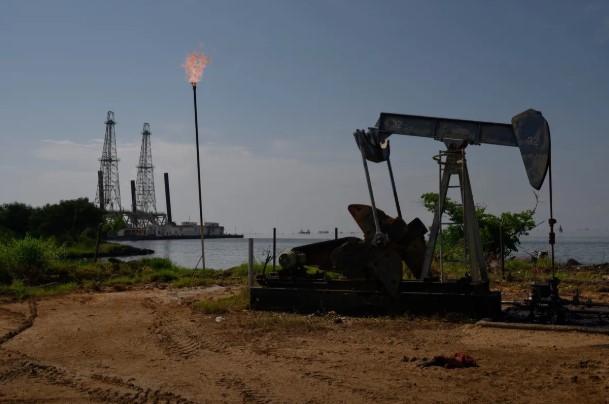
Brent and WTI gain sharply amid uncertainty over US–Iran ceasefire and continued disruption in key shipping route
Global crude oil prices moved higher on Tuesday as renewed tensions in West Asia raised concerns about supply disruptions, particularly around the strategically critical Strait of Hormuz. Market sentiment turned cautious following uncertainty surrounding a proposed ceasefire between the United States and Iran.
Benchmark crude prices recorded notable gains during early trading hours, reflecting fears that instability in the region could impact global energy supplies.
Oil Prices See Strong Uptick
International benchmark Brent crude rose by over 2.5%, trading close to $97 per barrel, while U.S. benchmark West Texas Intermediate (WTI) climbed more than 3.5%, approaching similar levels.
The rise follows a period of volatility driven by geopolitical developments, with traders reacting to signals that the recently announced truce may not hold.
Key Drivers Behind the Price Surge
Several factors contributed to the upward movement in oil prices:
- Ongoing uncertainty over the US–Iran ceasefire
- Reports of continued military activity in parts of West Asia
- Renewed concerns about disruptions in oil transit routes
- Threats to shipping security in the Strait of Hormuz
The Strait of Hormuz is one of the world’s most critical energy corridors, handling an estimated 20–30% of global oil and gas shipments. Any disruption in this region can quickly impact global supply chains and pricing.
Expert View
Anil Bhandari noted that prolonged instability in the region could significantly affect both oil production and transportation.
He cautioned that if tensions escalate further, energy markets may face sustained volatility, with potential ripple effects across global economies.
Context: Why Hormuz Matters
The Strait of Hormuz connects major oil-producing nations in the Gulf to international markets. Countries such as Saudi Arabia, the UAE, and Kuwait rely heavily on this route for exports.
Historically, geopolitical tensions in this region have triggered sharp movements in oil prices, making it a closely watched flashpoint for global markets.
Public Impact
Rising crude oil prices can have direct consequences for consumers and businesses:
- Increased fuel prices, including petrol and diesel
- Higher transportation and logistics costs
- Potential inflationary pressure on goods and services
- Impact on global trade and economic growth
For countries like India, which depend heavily on oil imports, sustained price increases could affect fiscal balances and consumer spending.
Conclusion
The recent spike in crude oil prices highlights how geopolitical uncertainty continues to influence global energy markets. With doubts over the durability of the US–Iran ceasefire and ongoing risks in the Strait of Hormuz, market volatility is likely to persist in the near term.
Much will depend on diplomatic developments in the coming days, as any escalation or stabilisation could significantly alter the trajectory of global oil prices.
Input & Images : Hindusthan Samachar
Add outlooknews.in as preferred source on google – click here
Also read – Japan to Host First Men’s T20 Internationals at New Asian Games Cricket Stadium
Last Updated on: Thursday, April 9, 2026 4:46 pm by Monisha Angara | Published by: Monisha Angara on Thursday, April 9, 2026 4:46 pm | News Categories: Business
About The Author