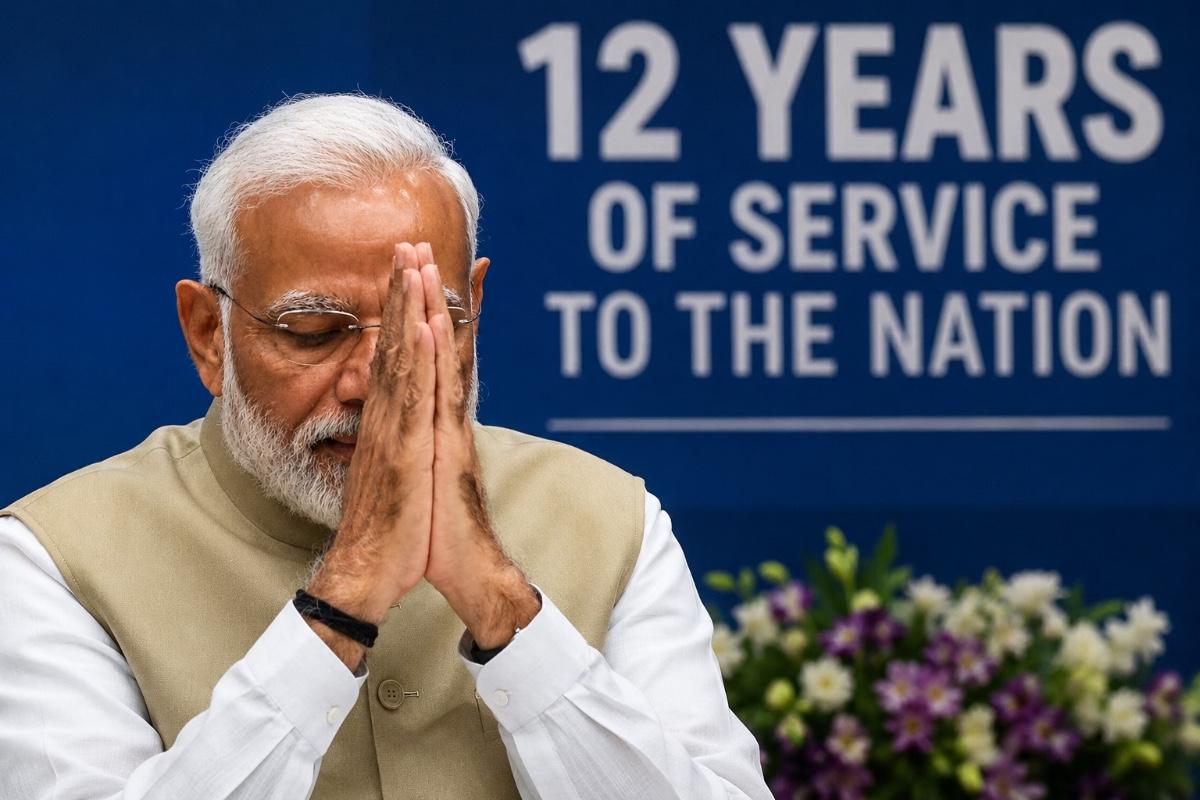

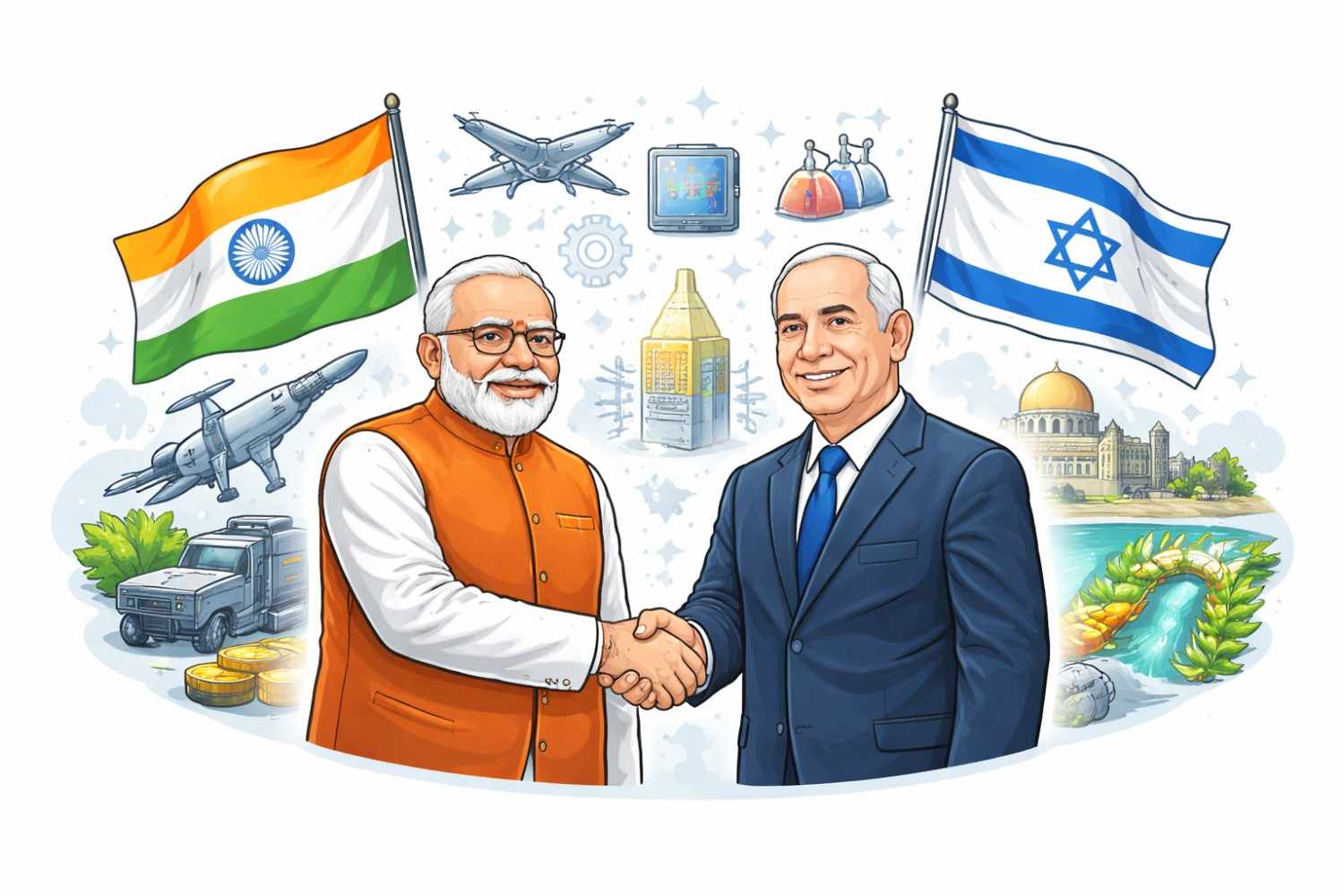
Prime Minister Narendra Modi’s visit to Israel marked a significant chapter in India’s foreign policy, blending strategic diplomacy with cultural outreach. The visit, which was historic in scope and symbolism, reflected the steady rise of India-Israel ties across defence, technology, agriculture and people-to-people engagement.
A Historic Diplomatic Moment
When Prime Minister Modi travelled to Israel in 2017, he became the first Indian Prime Minister to undertake a standalone visit to the country since the establishment of full diplomatic relations in 1992. The trip signalled a shift towards a more open and confident engagement with Israel.
He was received at the airport by Israeli Prime Minister Benjamin Netanyahu, underlining the importance Israel attached to the visit. The two leaders held detailed talks covering defence cooperation, innovation partnerships, counter-terrorism efforts, water management and agricultural research.
Officials from both sides described the visit as a step forward in building a “strategic partnership,” a term that reflects cooperation beyond routine diplomatic exchanges.
Strengthening Defence and Security Cooperation
Defence has long been a central pillar of India-Israel relations. Israel is among India’s key defence suppliers, providing advanced systems and technology. During the visit, both countries reviewed ongoing defence projects and discussed expanding collaboration in areas such as missile systems, surveillance technology and cybersecurity.
While specific agreements were announced during the trip, government statements emphasised long-term cooperation rather than short-term transactions. Security and intelligence-sharing mechanisms were also part of the broader discussions.
Focus on Innovation and Technology
A major highlight of the visit was the push to link Israel’s innovation ecosystem with India’s growing startup sector. Israel is often referred to as a “Startup Nation” due to its strong record in technology and research-driven enterprises.
Both countries agreed to strengthen joint research programmes and innovation funds. Cooperation in areas such as artificial intelligence, water conservation, space technology and agricultural productivity received attention.
India’s development priorities, including digital transformation and rural modernisation, were cited as key areas where Israeli expertise could be applied.
Water and Agriculture: Practical Partnerships
Water management and agriculture formed a core part of the engagement. Israel’s advanced irrigation systems and desert farming techniques have already been introduced in several Indian states through Centres of Excellence.
During the visit, the leaders reviewed ongoing projects aimed at improving crop yields and water efficiency. These initiatives are particularly relevant for India, where water scarcity and climate-related challenges affect millions of farmers.
Officials highlighted that the collaboration focuses on practical solutions that can deliver measurable benefits on the ground.
Cultural and Symbolic Significance
Beyond diplomacy and trade, the visit carried strong cultural symbolism. Prime Minister Modi paid tribute at Yad Vashem, Israel’s official memorial to Holocaust victims, reflecting India’s respect for Jewish history and heritage.
He also met members of the Indian diaspora in Israel, strengthening community ties. India and Israel share deep historical links, including the presence of Jewish communities in India for centuries without recorded persecution.
The visit avoided combining travel to the Palestinian territories, a departure from past diplomatic practice. Analysts noted that this approach signalled a more de-hyphenated policy — treating relations with Israel and Palestine as independent tracks.
Regional and Global Context
The visit came at a time when India was expanding its engagement in West Asia, balancing ties with Israel, Palestine and key Gulf countries. India maintains strong strategic and energy partnerships across the region.
Foreign policy experts observed that the outreach to Israel did not signal a shift away from India’s traditional support for a two-state solution in the Israeli-Palestinian conflict. Official statements during the period reiterated India’s long-standing position supporting peaceful dialogue.
Long-Term Impact on Bilateral Relations
Since the visit, India-Israel relations have continued to expand. High-level exchanges have increased, including reciprocal visits by Israeli leadership to India. Bilateral trade, excluding defence, has grown steadily, covering sectors such as diamonds, chemicals, electronics and agriculture.
The visit is widely seen as a defining moment that elevated ties to a more visible and structured partnership. It demonstrated India’s intent to pursue strategic autonomy while strengthening relations with key global partners.
As India deepens its global engagement, Prime Minister Modi’s Israel visit remains a landmark event that reshaped the tone and trajectory of bilateral cooperation, combining diplomacy, development priorities and cultural respect within a broader strategic framework.
Last Updated on: Friday, February 27, 2026 3:04 pm by Outlook News Team | Published by: Outlook News Team on Wednesday, February 25, 2026 5:32 pm | News Categories: India
About The Author