

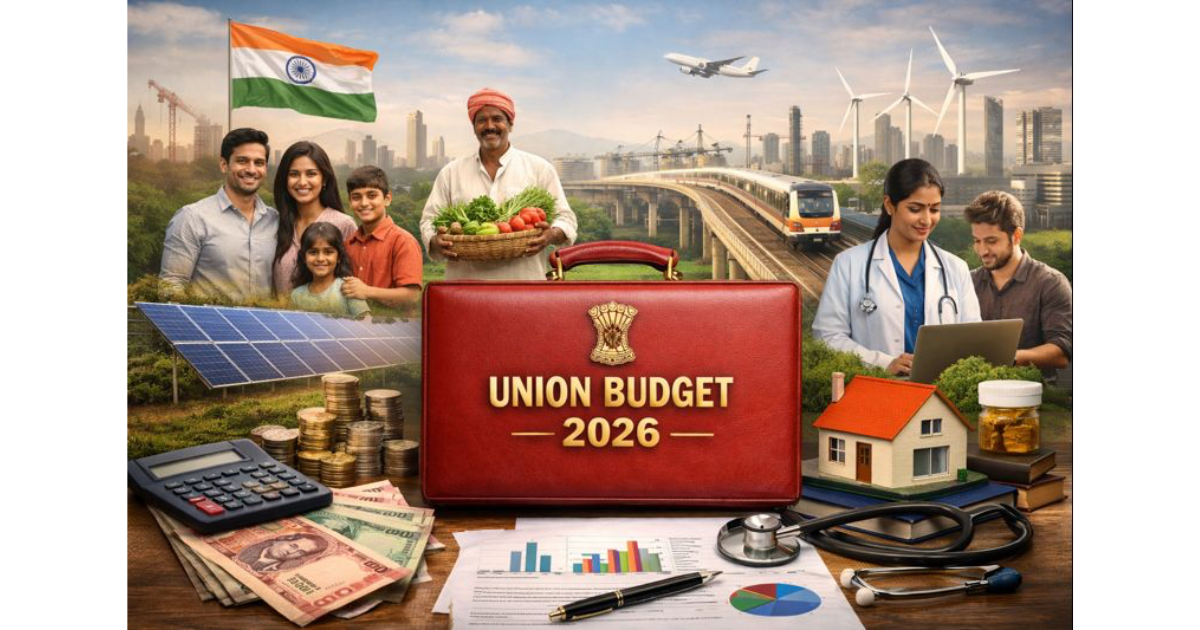
India’s Union Budget 2026 has been presented at a time when the economy is navigating a delicate balance between sustained growth, global uncertainty, and rising aspirations at home. Rather than dramatic headline-grabbing announcements, the budget adopts a calibrated approach, focusing on steady reforms, fiscal discipline, and targeted relief for households. For common citizens, the impact of this budget lies less in sweeping changes and more in how incremental policy shifts touch daily life, from taxes and prices to jobs and social security.
Focus on the Middle Class: Taxes and Disposable Income
One of the most closely watched aspects of any Union Budget is personal taxation, and Budget 2026 signals continuity with gradual easing for the middle class. The government has reiterated its commitment to a simpler and more predictable tax regime, encouraging more taxpayers to shift to the newer system while retaining flexibility for those who depend on deductions. For salaried individuals, modest adjustments in slabs and rebates translate into slightly higher take-home pay, offering relief amid persistent inflationary pressures.
Beyond income tax, the emphasis on stability in indirect taxes is equally significant. By avoiding major hikes in GST rates on essential goods and services, the budget seeks to protect household consumption. For families managing monthly expenses, this restraint helps keep everyday items such as food, medicines, and basic services relatively affordable.
Cost of Living: Inflation, Food, and Fuel
Budget 2026 places strong emphasis on managing the cost of living, particularly food inflation, which directly affects common citizens. Increased allocations for agriculture, storage infrastructure, and supply-chain efficiency aim to reduce post-harvest losses and price volatility. By strengthening procurement systems and supporting farmers with better access to markets, the government hopes to ensure stable prices for consumers while safeguarding farmer incomes.
On fuel and energy, the budget continues the strategy of cushioning consumers from global price shocks without resorting to unsustainable subsidies. Investments in renewable energy, electric mobility, and domestic energy production are framed as long-term solutions that could gradually reduce dependence on imported fuels, indirectly benefiting households through more stable energy costs in the years ahead.
Employment and Skills: Jobs Beyond Headlines
Job creation remains a central concern, especially for youth and first-time job seekers. Budget 2026 reinforces its focus on employment generation through infrastructure spending, manufacturing incentives, and skill development programs. Large-scale public investment in roads, railways, housing, and urban infrastructure is expected to create direct and indirect employment, particularly for semi-skilled and unskilled workers.
For educated youth, the emphasis on digital skills, artificial intelligence, and emerging technologies signals a push toward future-ready employment. Expanded funding for skilling initiatives and industry-linked training programs is designed to bridge the gap between education and employability, a challenge that many families experience firsthand.
Rural India: Income Support and Essential Services
Rural households stand to benefit from continued support for agriculture, allied activities, and rural infrastructure. Budget 2026 strengthens schemes related to irrigation, crop insurance, and credit access, aiming to stabilize farm incomes in the face of climate-related risks. For rural citizens, improved connectivity through roads, digital networks, and logistics infrastructure is not just about convenience but also about better access to markets, healthcare, and education.
The budget’s focus on rural housing, drinking water, and sanitation further underscores its intent to improve quality of life beyond urban centers. These investments, while not immediately visible, have a long-term impact on health outcomes and household expenses.
Health and Education: Quiet but Crucial Gains
Health and education may not always dominate budget headlines, but their implications for common citizens are profound. Budget 2026 continues to increase allocations for public healthcare, with a focus on primary health centers, preventive care, and affordable medicines. Strengthening public health systems reduces out-of-pocket expenses, which remain a major financial burden for many families.
In education, the budget emphasizes digital learning, teacher training, and infrastructure upgrades. For students and parents, this translates into better access to quality education, particularly in smaller towns and rural areas, where digital platforms are increasingly bridging gaps.
Social Security and the Elderly
For senior citizens and vulnerable sections, Budget 2026 reinforces the social security net. Enhanced support for pensions, insurance coverage, and savings schemes reflects the government’s recognition of an ageing population. These measures provide a sense of financial security to retirees and reduce dependence on family support, a growing concern in changing social structures.
Infrastructure and Urban Life
Urban citizens are likely to feel the effects of Budget 2026 through continued investments in transport, housing, and public services. Metro expansions, affordable housing projects, and urban renewal initiatives aim to reduce congestion, improve mobility, and make cities more livable. While such projects take time to materialize, their long-term benefits include reduced commute times, lower pollution, and improved access to services.
Fiscal Discipline and Long-Term Confidence
Perhaps the most understated but important aspect of Union Budget 2026 is its emphasis on fiscal discipline. By keeping deficits under control while continuing capital expenditure, the government signals stability to markets and investors. For common citizens, this translates into lower inflationary risks and a more stable economic environment, which ultimately affects jobs, savings, and purchasing power.
What It Means for the Common Citizen
Union Budget 2026 may not deliver dramatic giveaways, but it reflects a deliberate strategy of steady progress. For the average Indian household, its impact will be felt through slightly higher disposable incomes, controlled prices of essentials, better job prospects, and gradual improvements in public services. The budget’s true success will depend on effective implementation, but its intent is clear: to balance growth with inclusivity, ensuring that economic progress translates into tangible benefits for everyday life.
As India moves forward in 2026, the budget sets the tone for cautious optimism, offering reassurance that while challenges remain, policy direction is aligned with the needs and aspirations of common citizens.
Add outlooknews.in as a preferred source on google – click here
Last Updated on: Monday, February 2, 2026 11:06 am by Outlook News Team | Published by: Outlook News Team on Monday, February 2, 2026 11:06 am | News Categories: News
About The Author